
From Jiuli to Guifang: 1300 Years
By Altanbagana Baatar
DBA Candidate| Independent Historian
ImperialGG Historical Research Seriers
24 June 2026
Abstract
This article examines the long transformation of the northern frontier of East Asia between the mytho-historical traditions associated with the Jiuli and the historically documented appearance of the Guifang during the late Shang period. Covering approximately thirteen centuries, this study explores the gradual emergence of distinct frontier societies beyond the agricultural centers of the Yellow River basin. Drawing upon classical Chinese texts, archaeological evidence, oracle bone inscriptions, and modern scholarship, the article investigates the development of mobility, pastoral adaptation, tribal alliance structures, and frontier warfare. Particular attention is given to the Guifang, whose repeated appearance in Shang oracle bone inscriptions provides some of the earliest written evidence for sustained conflict between frontier populations and sedentary states in East Asia. Rather than interpreting this period as a historical void between legendary and documented history, the study argues that it represents a formative era in which the ecological, economic, and political foundations of the later steppe world were gradually established. The article further situates the Jiuli and Guifang within broader debates concerning the origins of frontier societies and the long-term development of the Eurasian steppe tradition.
1. Introduction
The history of the Eurasian steppe did not begin with the Xiongnu, the Turks, or the Mongols. Long before the emergence of the great nomadic empires that would dominate the Inner Asian frontier, the regions north of the Yellow River basin were already inhabited by societies whose economies, political structures, and ways of life differed markedly from those of the agricultural states developing in the Central Plains. Yet the early history of these frontier populations remains one of the least understood periods in East Asian history.
Modern scholarship has traditionally focused on the rise of complex states in the Yellow River basin and the development of dynastic civilization in ancient China. By comparison, the peoples living beyond the northern frontier often appear only indirectly in the historical record, usually through the perspective of sedentary states that regarded them as rivals, trading partners, or military adversaries. As Nicola Di Cosmo has observed, the frontier was not a fixed boundary separating two worlds but a dynamic zone of interaction in which cultural exchange, migration, conflict, and adaptation occurred continuously (Di Cosmo 2002).
Among the earliest names associated with this frontier are the Jiuli (九黎) and the Guifang (鬼方). The Jiuli occupy an important place within the mytho-historical traditions of early China, particularly through narratives concerning Chi You and the legendary struggles preceding the formation of the earliest political order in the Central Plains. The Guifang, by contrast, emerge within the historical record itself, appearing repeatedly in the oracle bone inscriptions of the Shang Dynasty as a northern frontier population engaged in sustained conflict with the Shang state (Keightley 1978; Keightley 1999).
This article examines the period between these two traditions, tracing approximately thirteen centuries of frontier development from the legendary age associated with the Jiuli to the historically documented conflicts between the Shang and the Guifang. It argues that this era should not be viewed as a “Dark Age” separating myth from history, but rather as a formative period during which the foundations of later frontier societies were established. During these centuries, ecological adaptation, increasing mobility, pastoral economies, clan-based political organization, and evolving military traditions gradually produced a distinctive frontier world beyond the agricultural core of ancient China.
By combining textual traditions, archaeological evidence, oracle bone inscriptions, and modern historiography, this study seeks to place the Jiuli and the Guifang within the broader history of the northern frontier. In doing so, it explores how the long divergence between steppe and sown, mobility and settlement, frontier and state, began to shape one of the most enduring historical dynamics in Eurasia.
-
- Di Cosmo, Nicola. Ancient China and Its Enemies. Cambridge University Press, 2002.
-
- Keightley, David N. Sources of Shang History. University of California Press, 1978.
-
- Keightley, David N. “The Shang: China’s First Historical Dynasty.” In The Cambridge History of Ancient China. Cambridge University Press, 1999.
-
- 1. Timeline
| Period | Approx. Date | Notes |
| Jiuli Confederation | c. 2600–2300 BCE | Mytho-historical frontier confederation |
| Transitional Period | c. 2300–1300 BCE | Archaeologically obscure period |
| Guifang | c. 1300–900 BCE | Recorded in Shang oracle bones |
| Xianyun | c. 1000–700 BCE | Mentioned in Zhou sources |
| Di Confederations | c. 900–800 BCE | Northern frontier groups |
| Rong Confederations | c. 800–700 BCE | Western and northern frontier powers |
| Beidi | c. 700–300 BCE | Major northern confederations |
| Proto-Xiongnu | c. 340–209 BCE | Pre-imperial frontier alliances |
| Xiongnu Empire | 209 BCE–93 CE | First great steppe empire |
-
- Barfield, Thomas J. The Perilous Frontier: Nomadic Empires and China. Oxford: Blackwell, 1989.
-
- Chang, K. C. The Archaeology of Ancient China. Yale University Press, 1986.
-
- Lewis, Mark Edward. The Construction of Space in Early China. SUNY Press, 2006.
-
- Li Feng. Early China: A Social and Cultural History. Cambridge University Press, 2013.
-
- Sima Qian. Shiji (Records of the Grand Historian).
-
- Guoyu (Discourses of the States).
-
- Lüshi Chunqiu (Master Lü’s Spring and Autumn Annals).
-
- Shanhaijing (Classic of Mountains and Seas).
3. Ecology and the Formation of the Northern Frontier
To understand the emergence of the Jiuli, the Guifang, and the later frontier societies of Inner Asia, it is necessary to examine the ecological conditions that shaped their development. The northern frontier of ancient China was not merely a political boundary separating different peoples. It was an environmental transition zone extending from the agricultural regions of the Yellow River basin to the grasslands, forests, mountains, and semi-arid landscapes of the northern frontier. Over many centuries, this ecological divide encouraged the development of distinct economic systems, social structures, and cultural traditions (Barfield 1989; Di Cosmo 2002).
The core regions of early Chinese civilization developed within the fertile river valleys of northern China. Agriculture based upon millet cultivation allowed for increasingly dense populations, permanent settlements, food surpluses, and the emergence of centralized political authority. By the late Neolithic and early Bronze Age, communities within the Yellow River basin were constructing fortified settlements, developing ritual institutions, and establishing hierarchical systems of governance (Li Feng 2013).
Beyond these agricultural centers lay a very different world. The northern frontier encompassed the Ordos region, the steppe margins of modern Inner Mongolia, the uplands bordering the Mongolian Plateau, and numerous transitional ecological zones where rainfall was less predictable and large-scale agriculture was often difficult to sustain. In these environments, populations adopted flexible subsistence strategies that combined hunting, fishing, herding, seasonal mobility, and limited cultivation (Chang 1986).
The gradual expansion of pastoralism played a particularly important role in transforming the frontier. Archaeological evidence suggests that communities inhabiting northern China increasingly incorporated domesticated animals into their economies during the late third and second millennia BCE. Sheep, goats, cattle, and horses became valuable economic resources, providing food, transport, raw materials, and wealth. Unlike agricultural production, which required fixed fields and permanent settlement, animal husbandry encouraged mobility and adaptation to seasonal environmental conditions (Anthony 2007).
Among these animals, the horse possessed exceptional significance. Although fully developed mounted warfare would emerge much later, the increasing importance of horses transformed transportation, communication, and patterns of movement across the frontier. Communities capable of moving rapidly across open terrain possessed strategic advantages that were largely unavailable to sedentary agricultural populations. The horse gradually became one of the defining features of frontier life and would eventually serve as the foundation of later steppe military systems (Anthony 2007).
Camels also deserve consideration within the broader ecology of the northern frontier. While horses remained the principal symbol of mobility and military power, camels offered unique advantages in arid and semi-arid environments. Their ability to carry heavy loads over long distances with limited access to water made them valuable transport animals in regions bordering the deserts of northern China and Inner Asia. Although evidence for extensive camel utilization during the Jiuli and early Guifang periods remains limited, archaeological discoveries indicate that camel domestication and transport networks would later become increasingly important throughout the frontier world (Di Cosmo 2002).
Environmental conditions influenced not only economic life but also political organization. Agricultural societies depended upon territorial administration, irrigation systems, labor coordination, and permanent settlements. Frontier communities, by contrast, often required greater flexibility. Seasonal migration, dispersed populations, and changing environmental conditions encouraged political structures based upon kinship, clan alliances, and personal leadership rather than fixed bureaucratic institutions (Barfield 1989).
This ecological divergence contributed to the gradual formation of two distinct historical trajectories. In the river valleys, states became increasingly centralized, urbanized, and administratively complex. Across the frontier, mobility, pastoral adaptation, and regional alliance networks assumed greater importance. Neither world existed in complete isolation. Trade, migration, technological exchange, and warfare connected the two regions continuously. Yet the environmental realities of the frontier encouraged social and political developments that differed fundamentally from those of the agricultural heartlands.
Recent archaeological research has increasingly emphasized the importance of these frontier zones as regions of innovation rather than peripheral margins. Metallurgical technologies, animal domestication, exchange networks, and military adaptations often moved across ecological boundaries, linking communities from the Yellow River basin to the Mongolian Plateau. The frontier therefore functioned not merely as a line of separation but as a dynamic zone of interaction where different ways of life encountered, influenced, and transformed one another (Di Cosmo 2002; Li Feng 2013).
By the late second millennium BCE, the cumulative effects of these ecological processes had begun to reshape the northern frontier. Mobile pastoral communities, regional alliance networks, and increasingly specialized frontier economies were becoming more visible within both the archaeological and historical record. It was within this evolving environment that groups such as the Guifang would emerge as significant actors in the history of East Asia. The roots of the later steppe world did not appear suddenly with the rise of the Xiongnu or other nomadic confederations. Rather, they were the product of a long ecological and social transformation that had been unfolding across the northern frontier for many centuries.
-
- Anthony, David W. The Horse, the Wheel, and Language. Princeton University Press, 2007.
-
- Barfield, Thomas J. The Perilous Frontier: Nomadic Empires and China. Blackwell, 1989.
-
- Chang, K. C. The Archaeology of Ancient China. Yale University Press, 1986.
-
- Di Cosmo, Nicola. Ancient China and Its Enemies: The Rise of Nomadic Power in East Asian History. Cambridge University Press, 2002.
-
- Li Feng. Early China: A Social and Cultural History. Cambridge University Press, 2013.
4. The Rise of the Guifang
Among the numerous frontier peoples mentioned in early Chinese sources, few occupy a more important position in the transition from legend to documented history than the Guifang (鬼方). Unlike the Jiuli, whose memory survives primarily through later literary traditions, the Guifang appear directly within contemporary Shang-period records. Their repeated presence in oracle bone inscriptions provides some of the earliest written evidence for organized frontier populations operating beyond the agricultural heartlands of Bronze Age China.
The emergence of the Guifang marks a significant turning point in the history of the northern frontier. For the first time, historians encounter a frontier people whose activities can be observed through contemporaneous written sources rather than solely through later mythological traditions. Although many questions regarding their identity remain unresolved, the Guifang occupy a crucial place in understanding the development of frontier societies during the late second millennium BCE.
The Guifang in Shang Records
The principal evidence concerning the Guifang comes from the oracle bone inscriptions excavated at Yinxu, the last capital of the Shang Dynasty near modern Anyang in Henan Province. These inscriptions record divinations performed on behalf of Shang kings and constitute the earliest substantial body of written evidence in East Asian history (Keightley 1978).
Among the thousands of inscriptions recovered from Yinxu are numerous references to military campaigns directed against the Guifang. Shang rulers repeatedly consulted ancestral spirits concerning the outcome of military expeditions, asking whether attacks would succeed, whether enemy forces would be encountered, and whether victory would bring prisoners, livestock, or other spoils (Keightley 1999).
The frequency of these references demonstrates that the Guifang were not viewed as an isolated or temporary threat. Rather, they represented a persistent frontier power capable of influencing Shang military planning over extended periods.
Unlike many later historical sources, the oracle bone inscriptions provide evidence produced during the events themselves. Although the records are often brief and formulaic, they possess exceptional historical value precisely because they are contemporary documents rather than retrospective narratives.
Locating the Guifang
One of the most debated questions in modern scholarship concerns the geographical location of the Guifang.
The oracle bone inscriptions do not provide precise maps or detailed ethnographic descriptions. As a result, historians must reconstruct the approximate location of the Guifang through indirect evidence.
Most scholars place them somewhere along the northern and northwestern frontier of the Shang world. Possible locations include the northern Ordos region, parts of modern Inner Mongolia, and frontier zones situated between the agricultural centers of northern China and the grasslands extending toward the Mongolian Plateau (Di Cosmo 2002).
The uncertainty surrounding their location reflects the nature of frontier societies themselves. Unlike agricultural states with fixed capitals and clearly defined territories, frontier populations often occupied broad ecological regions characterized by seasonal movement and flexible political boundaries.
Consequently, the Guifang should probably not be imagined as inhabitants of a single kingdom with rigid territorial borders. They were more likely associated with a wider frontier zone whose populations moved across multiple ecological regions according to economic and political circumstances.
Economy and Way of Life
Although direct evidence remains limited, both archaeological research and historical reconstruction suggest that the Guifang practiced economic strategies that differed significantly from those of the Shang.
The Shang economy depended heavily upon agriculture, especially millet cultivation, supported by permanent settlements and complex systems of administration. The Guifang, by contrast, appear to have relied upon more flexible economic practices suited to frontier environments.
These likely included:
-
- Animal husbandry
-
- Hunting
-
- Seasonal mobility
-
- Exchange with neighboring communities
-
- Raiding and warfare
-
- The importance of livestock is suggested both by the ecological conditions of the northern frontier and by the repeated references to captured animals within Shang military records.
Archaeological evidence from northern frontier regions demonstrates increasing reliance upon pastoral resources during the late Bronze Age. Herding provided food, clothing, transportation, and wealth while allowing communities to exploit environments less suitable for intensive agriculture (Chang 1986).
Such economic flexibility provided important advantages during periods of environmental stress and military conflict.
- The importance of livestock is suggested both by the ecological conditions of the northern frontier and by the repeated references to captured animals within Shang military records.
Political Organization
The political structure of the Guifang remains uncertain, but modern historians generally reject the notion that they were a simple tribal group lacking organization.
The ability to conduct repeated military operations against the Shang suggests some degree of coordinated leadership and alliance-building.
Thomas Barfield has emphasized that frontier societies frequently organized themselves through flexible confederations capable of expanding and contracting according to military and political circumstances (Barfield 1989). Such systems often relied upon personal leadership, kinship networks, and negotiated alliances rather than permanent bureaucratic institutions.
The Guifang may therefore represent an early example of a frontier confederation whose authority depended upon military effectiveness and intergroup cooperation.
This interpretation helps explain how frontier populations could challenge larger agricultural states despite possessing smaller populations and fewer permanent resources.
Frontier Relations with the Shang
Relations between the Guifang and the Shang were not defined exclusively by warfare.
Throughout history, frontiers have functioned simultaneously as zones of conflict and exchange. Trade, migration, diplomacy, intermarriage, and cultural interaction frequently accompanied military confrontation.
Although the surviving oracle bone inscriptions emphasize warfare, this reflects the concerns of the Shang court rather than the totality of frontier life.
The Guifang and the Shang almost certainly interacted through multiple channels. Frontier communities supplied goods, animals, raw materials, and information that could not easily be obtained within agricultural regions. Likewise, Shang products and technologies circulated beyond the frontier.
The relationship was therefore complex, involving both cooperation and competition.
This pattern would later characterize interactions between numerous frontier societies and Chinese states throughout subsequent centuries.
The Guifang and the Origins of the Steppe Frontier
Perhaps the greatest significance of the Guifang lies not in their immediate military activities but in what they reveal about the broader development of the northern frontier.
The Guifang occupied a transitional position between the largely legendary frontier societies represented by the Jiuli traditions and the historically documented nomadic confederations that emerged during the first millennium BCE.
Many characteristics associated with later frontier powers are already visible:
-
- High mobility.
-
- Flexible alliance networks.
-
- Mixed pastoral economies.
-
- Military adaptation to frontier conditions.
-
- Repeated interaction with agricultural states.
-
- At the same time, important differences remained. The fully developed mounted warfare associated with later steppe empires had not yet emerged, and the political structures of the Guifang were likely less centralized than those of later nomadic confederations.
Nevertheless, the Guifang demonstrate that many of the social and ecological foundations of frontier power were already taking shape by the late Shang period.
- At the same time, important differences remained. The fully developed mounted warfare associated with later steppe empires had not yet emerged, and the political structures of the Guifang were likely less centralized than those of later nomadic confederations.
Historical Significance
The historical importance of the Guifang extends far beyond their role as adversaries of the Shang Dynasty.
They provide one of the earliest documented examples of organized frontier populations operating beyond the agricultural core of East Asia. Through the oracle bone inscriptions, historians can observe the emergence of patterns that would recur throughout subsequent centuries: frontier mobility, military competition, ecological adaptation, and complex interaction between settled states and non-state societies.
The Guifang therefore occupy a pivotal position in the history of the Eurasian frontier. They stand at the threshold between myth and history, between the remembered world of the Jiuli and the historically documented frontier societies that would eventually produce the great steppe traditions of Inner Asia.
-
- Barfield, Thomas J. The Perilous Frontier: Nomadic Empires and China. Blackwell, 1989.
-
- Chang, K. C. The Archaeology of Ancient China. Yale University Press, 1986.
-
- Di Cosmo, Nicola. Ancient China and Its Enemies: The Rise of Nomadic Power in East Asian History. Cambridge University Press, 2002.
-
- Keightley, David N. Sources of Shang History: The Oracle-Bone Inscriptions of Bronze Age China. University of California Press, 1978.
-
- Keightley, David N. “The Shang: China’s First Historical Dynasty.” In The Cambridge History of Ancient China. Cambridge University Press, 1999.
5. Oracle Bone Evidence and the Campaigns of Wu Ding
The Guifang occupy a unique position in the study of early East Asian frontier history because they appear not merely in later historical traditions but within contemporary written records. The most important evidence concerning the Guifang comes from the oracle bone inscriptions of the late Shang Dynasty, particularly those dating to the reign of King Wu Ding (武丁), who ruled during the thirteenth century BCE.
Oracle Bones as Historical Sources
Oracle bones were primarily ox scapulae and turtle plastrons used in royal divination ceremonies. Questions concerning warfare, agriculture, hunting, weather, ritual obligations, royal births, and state affairs were inscribed onto the bones before they were heated and cracked. Diviners interpreted the resulting fractures as messages from royal ancestors and supernatural powers.
The inscriptions generally follow a formulaic structure, recording:
-
- The date.
-
- The diviner.
-
- The question posed.
-
- The interpretation.
-
- Occasionally the outcome.
-
- Although brief, these inscriptions provide direct evidence of the concerns occupying the Shang court.
David Keightley has argued that oracle bone inscriptions offer an unparalleled window into the mentality of the Shang ruling elite because they reveal not only political decisions but also the religious assumptions underlying state authority (Keightley 1978).
Among the most frequently recurring military concerns were campaigns against frontier populations, including the Guifang.
- Although brief, these inscriptions provide direct evidence of the concerns occupying the Shang court.
The Guifang in the Oracle Bones
The name Guifang appears repeatedly throughout the inscriptions associated with the reign of Wu Ding.
Typical divinations include questions such as:
“Should the king attack the Guifang?”
“Will the campaign against the Guifang be successful?”
“Will there be misfortune if troops are sent against the Guifang?”
“Will prisoners be taken from the Guifang?”
Although these inscriptions are brief, their cumulative significance is considerable. The repeated references demonstrate that the Guifang represented a persistent strategic concern rather than an isolated military problem.
Unlike occasional raiders, they appear as a frontier population capable of sustaining long-term resistance against Shang military operations.
The frequency of military divinations concerning the Guifang suggests that campaigns against them formed a recurring component of Shang frontier policy during Wu Ding’s reign.
King Wu Ding and the Expansion of Shang Power
Wu Ding is widely regarded as one of the most capable rulers of the Shang Dynasty.
Under his leadership, Shang political influence expanded significantly, military campaigns intensified, and royal authority became more firmly established throughout northern China (Keightley 1999).
The oracle bones reveal a ruler who was personally involved in military decision-making. Rather than delegating warfare entirely to subordinates, Wu Ding repeatedly sought ancestral approval for campaigns and frequently led military expeditions himself.
His reign coincided with a period of increasing frontier activity, during which the Shang confronted multiple neighboring groups.
Among these frontier peoples, the Guifang occupied a particularly important position.
The repeated appearance of their name in royal divinations suggests that they were among the most formidable opponents encountered by the Shang state.
The Three-Year Campaign
Later historical traditions preserve the memory of a prolonged conflict between Wu Ding and the Guifang.
According to these accounts, the struggle lasted approximately three years before Shang forces finally secured victory.
Although the oracle bone inscriptions do not provide a continuous narrative of the campaign, they support the conclusion that military operations against the Guifang occurred repeatedly over an extended period.
The conflict likely consisted of multiple expeditions rather than a single decisive battle.
Such warfare would have involved:
-
- Frontier patrols.
-
- Punitive raids.
-
- Livestock seizures.
-
- Prisoner capture.
-
- Strategic reconnaissance.
-
- Seasonal military operations.
-
- This pattern is consistent with the realities of frontier warfare throughout Eurasian history, where mobile populations rarely concentrated their forces for decisive engagements and instead relied upon movement, local knowledge, and strategic flexibility.
The Guifang therefore presented challenges very different from those encountered in campaigns against sedentary rivals.
- This pattern is consistent with the realities of frontier warfare throughout Eurasian history, where mobile populations rarely concentrated their forces for decisive engagements and instead relied upon movement, local knowledge, and strategic flexibility.
Fu Hao and Shang Military Leadership
No discussion of Wu Ding’s military campaigns would be complete without mentioning Fu Hao (婦好), one of the most remarkable figures of the Shang Dynasty.
Fu Hao was both a royal consort and a military commander whose existence is confirmed by oracle bone inscriptions and archaeological discoveries.
Her tomb, excavated at Yinxu in 1976, contained weapons, ritual objects, and evidence of high political status, confirming her important role within the Shang state (Chang 1980).
Several oracle bone inscriptions record Fu Hao leading military expeditions on behalf of the Shang king.
Although historians cannot state with certainty that she personally commanded campaigns against the Guifang, her activities demonstrate the scale and sophistication of Shang military organization during Wu Ding’s reign.
The participation of figures such as Fu Hao illustrates that frontier warfare occupied a central place within the political life of the Shang court.
Frontier Warfare and Military Adaptation
The campaigns against the Guifang reveal important features of early frontier warfare.
The Shang military relied heavily upon:
-
- Infantry forces.
-
- Bronze weapons.
-
- Chariot units.
-
- Organized logistical support.
-
- The Guifang likely employed different methods adapted to the ecological realities of the frontier.
Although fully developed mounted warfare had not yet emerged, frontier populations enjoyed significant advantages in mobility, knowledge of terrain, and operational flexibility.
The conflict therefore represented more than a struggle between two political groups.
It was also a confrontation between different military systems shaped by different environments.
Many of the strategic problems encountered by the Shang would reappear throughout later Chinese history.
Questions of frontier defense, mobility, intelligence gathering, and rapid response remained central concerns for Chinese states confronting steppe societies for more than two millennia.
- The Guifang likely employed different methods adapted to the ecological realities of the frontier.
Religious Warfare and Royal Authority
The oracle bone inscriptions reveal another important dimension of the conflict.
Military campaigns were not viewed solely as political or strategic undertakings. They were deeply embedded within the religious worldview of the Shang state.
Before launching expeditions, the king consulted royal ancestors regarding:
-
- The likelihood of victory.
-
- The timing of military operations.
-
- Potential casualties.
-
- The favor of supernatural forces.
-
- Success in warfare was interpreted as evidence of ancestral support and royal legitimacy.
Defeat, by contrast, could be understood as a sign of ritual failure or divine displeasure.
The Guifang campaigns therefore occupied a dual role within Shang society.
They were simultaneously military operations and sacred acts performed under ancestral supervision.
This combination of warfare, kingship, and ritual authority represents one of the defining characteristics of Shang political culture (Keightley 1978).
- Success in warfare was interpreted as evidence of ancestral support and royal legitimacy.
Historical Significance
The Guifang campaigns of Wu Ding occupy a pivotal position in the history of East Asia.
For the first time, historians can observe sustained interaction between an agricultural Bronze Age state and organized frontier populations through contemporary written records.
The oracle bones reveal a frontier that was neither empty nor passive. Beyond the limits of Shang authority existed societies capable of resisting military expansion, shaping frontier policy, and influencing the strategic calculations of one of East Asia’s earliest states.
Although much about the Guifang remains uncertain, their appearance in the oracle bones marks an important transition from the largely mythological frontier represented by the Jiuli traditions to the historically documented frontier of the late Bronze Age.
The campaigns of Wu Ding therefore represent more than isolated military expeditions. They constitute one of the earliest recorded chapters in the long history of interaction between the agricultural civilizations of East Asia and the mobile societies of the northern frontier—a relationship that would continue to shape the continent for the next three thousand years.
-
- Among the many frontier peoples mentioned in Shang inscriptions, the Guifang appear with notable frequency. The repeated references indicate that they were not a minor tribal group but a significant frontier power capable of influencing Shang military policy.
-
- Among the many frontier peoples mentioned in Shang inscriptions, the Guifang appear with notable frequency. The repeated references indicate that they were not a minor tribal group but a significant frontier power capable of influencing Shang military policy.
-
- Chang, K. C. The Shang Civilization. Yale University Press, 1980.
-
- Keightley, David N. Sources of Shang History: The Oracle-Bone Inscriptions of Bronze Age China. University of California Press, 1978.
-
- Keightley, David N. “The Shang: China’s First Historical Dynasty.” In The Cambridge History of Ancient China. Cambridge University Press, 1999.
-
- Li Feng. Early China: A Social and Cultural History. Cambridge University Press, 2013.
-
- Rawson, Jessica. Ancient China: Art and Archaeology. British Museum Press, 1980.
6. Mobility, Pastoralism, and the Emergence of Steppe Traditions
The history of the northern frontier cannot be understood solely through military campaigns or political confrontation. Beneath the conflicts recorded in Shang oracle bone inscriptions lay deeper economic and ecological transformations that gradually reshaped the societies of Inner Asia. Long before the rise of the Xiongnu Empire, the peoples of the northern frontier were developing patterns of mobility, subsistence, and social organization that would eventually become defining characteristics of the Eurasian steppe world.
The emergence of these traditions was neither sudden nor uniform. Rather, it was the product of centuries of adaptation to the environmental conditions of northern China, Inner Mongolia, and the Mongolian Plateau. Across these regions, populations confronted landscapes that differed significantly from the agricultural heartlands of the Yellow River basin. Seasonal fluctuations in rainfall, extensive grasslands, semi-arid environments, and large distances between resource zones encouraged economic strategies that emphasized flexibility and mobility rather than permanent settlement (Barfield 1989; Di Cosmo 2002).
Mobility as an Ecological Strategy
For frontier communities, mobility was not simply a cultural preference but an economic necessity.
Agricultural societies concentrated labor and resources in fixed locations. Their survival depended upon fields, irrigation systems, granaries, and permanent settlements. Frontier populations, by contrast, often relied upon dispersed resources spread across vast territories. Seasonal movement allowed herders and hunters to exploit changing ecological conditions while avoiding overuse of local pastures.
As a result, mobility became deeply embedded within social and political life.
Communities developed knowledge of migration routes, seasonal grazing areas, water sources, and regional exchange networks. Leadership often depended upon the ability to coordinate movement, manage alliances, and respond rapidly to environmental challenges.
Over generations, mobility became one of the defining characteristics of frontier society.
The Expansion of Pastoral Economies
Archaeological research indicates that animal husbandry became increasingly important throughout northern China and Inner Asia during the late Neolithic and Bronze Age periods (Chang 1986; Li Feng 2013).
Livestock provided multiple advantages:
-
- Meat and dairy products.
-
- Hides and wool.
-
- Transport and traction.
-
- Portable wealth.
-
- Economic resilience during environmental fluctuations.
-
- Unlike agricultural production, herding allowed communities to exploit ecological zones unsuitable for intensive cultivation.
Sheep and goats became particularly valuable because of their adaptability to steppe environments. Cattle provided additional labor and resources, while horses increasingly transformed transportation and communication.
The cumulative effect of these developments was the gradual emergence of economies capable of supporting larger and more mobile populations across the frontier.
- Unlike agricultural production, herding allowed communities to exploit ecological zones unsuitable for intensive cultivation.
Horses and the Transformation of Frontier Life
Among all domesticated animals, none exerted a greater influence upon the history of the Eurasian steppe than the horse.
Although mounted warfare would not reach its full development until the first millennium BCE, the growing importance of horses during the Bronze Age fundamentally altered patterns of movement and interaction (Anthony 2007).
The horse expanded the geographical horizons of frontier societies.
Travel became faster.
Communication networks expanded.
Trade routes became more accessible.
Military operations could cover greater distances.
The frontier populations encountered by the Shang may not yet have possessed the highly specialized cavalry systems associated with later nomadic empires, but the foundations of horse-centered mobility were already emerging.
The significance of this transformation cannot be overstated. The horse would eventually become the central instrument through which the Xiongnu, Turks, Mongols, and other steppe peoples projected power across Eurasia.
Camels and Long-Distance Transport
While horses dominated military mobility, camels gradually assumed an important role in transport and logistics throughout the arid regions of Inner Asia.
The ecological conditions of northern China and the regions bordering the Gobi Desert favored animals capable of surviving long journeys with limited water supplies.
Camels offered unique advantages:
-
- Exceptional endurance.
-
- Heavy carrying capacity.
-
- Adaptation to arid environments.
-
- Long-distance transport capability.
-
- Although direct evidence for extensive camel utilization among the early Guifang remains limited, archaeological discoveries demonstrate the increasing importance of camel husbandry across northern frontier regions during later periods (Di Cosmo 2002).
The development of camel-based transport expanded exchange networks and facilitated communication across regions where environmental conditions challenged other forms of transport.
Together, horses and camels contributed to the growing integration of frontier societies across vast distances.
- Although direct evidence for extensive camel utilization among the early Guifang remains limited, archaeological discoveries demonstrate the increasing importance of camel husbandry across northern frontier regions during later periods (Di Cosmo 2002).
Kinship, Alliances, and Political Flexibility
The ecological realities of frontier life influenced political organization as much as economic activity.
Agricultural states typically relied upon territorial administration, taxation, and permanent institutions. Frontier societies often developed alternative forms of political integration.
Kinship networks played a central role.
Clan relationships provided mechanisms for cooperation, conflict resolution, and collective defense.
Alliance systems linked communities across large territories.
Leadership frequently depended upon personal authority, military success, and the ability to maintain support among allied groups (Barfield 1989).
Such political systems were highly adaptable.
Confederations could expand during periods of military opportunity and fragment during times of instability.
This flexibility often frustrated agricultural states, which sought to identify clear political authorities with whom treaties could be negotiated or military victories secured.
The Guifang may represent one of the earliest historically documented examples of this broader frontier pattern.
Frontier Warfare and the Development of Military Traditions
The economic and political characteristics of frontier societies inevitably influenced warfare.
Mobile communities could avoid direct confrontation when necessary, relocate resources, exploit local knowledge, and strike unexpectedly against vulnerable targets.
Military success depended less upon fortifications and more upon mobility, intelligence, and strategic flexibility.
These principles would later become hallmarks of steppe warfare.
It is important, however, not to project later nomadic military systems directly onto the Bronze Age frontier.
Each emerged within distinct historical circumstances.
Nevertheless, the broader patterns of mobility, alliance-building, and adaptation visible among the Guifang foreshadow developments that would become increasingly important in later centuries.
From Frontier Communities to Steppe Traditions
The significance of the Guifang and other early frontier peoples lies not in their direct connection to any particular later ethnic group but in their contribution to the long-term evolution of the steppe world.
Modern scholarship generally rejects simplistic narratives that seek to identify direct and unbroken ethnic continuity between Bronze Age frontier populations and later historical peoples. The history of Inner Asia involved repeated migrations, cultural exchanges, political transformations, and demographic changes over thousands of years (Di Cosmo 2002).
Yet continuity can be observed at another level.
Across many centuries, frontier societies repeatedly adapted to similar ecological conditions and developed comparable solutions to common challenges.
Mobility.
Pastoralism.
Alliance networks.
Military flexibility.
Long-distance communication.
These characteristics emerged gradually and persisted long after individual groups disappeared from the historical record.
The Foundations of the Steppe World
By the end of the late Shang period, many of the fundamental elements that would later characterize the Eurasian steppe had already begun to take shape.
The frontier remained ethnically diverse and politically fragmented.
No great nomadic empire yet existed.
Nevertheless, the ecological, economic, and social foundations of frontier power were becoming increasingly visible.
The Guifang therefore represent more than a single frontier population mentioned in ancient records. They illustrate a broader historical process through which mobile societies adapted to the environments of Inner Asia and developed institutions distinct from those of the agricultural states to the south.
In this sense, the rise of the Guifang marks an important stage in the long history of the steppe. The traditions that later enabled the emergence of the Xiongnu, the Turks, and the Mongols were not created suddenly by any one people. They were the result of centuries of ecological adaptation and social transformation across the northern frontier of East Asia.
The story of the Guifang thus forms part of a much larger narrative—the gradual formation of the steppe world itself.
-
- Anthony, David W. The Horse, the Wheel, and Language. Princeton University Press, 2007.
-
- Barfield, Thomas J. The Perilous Frontier: Nomadic Empires and China. Blackwell, 1989.
-
- Chang, K. C. The Archaeology of Ancient China. Yale University Press, 1986.
-
- Di Cosmo, Nicola. Ancient China and Its Enemies. Cambridge University Press, 2002.
-
- Li Feng. Early China: A Social and Cultural History. Cambridge University Press, 2013.
-
- Anthony, David W. The Horse, the Wheel, and Language. Princeton University Press, 2007.
-
- Barfield, Thomas J. The Perilous Frontier: Nomadic Empires and China. Blackwell, 1989.
-
- Chang, K. C. The Archaeology of Ancient China. Yale University Press, 1986.
-
- Di Cosmo, Nicola. Ancient China and Its Enemies. Cambridge University Press, 2002.
-
- Li Feng. Early China: A Social and Cultural History. Cambridge University Press, 2013.
-
- Barfield, Thomas J. The Perilous Frontier: Nomadic Empires and China. Blackwell, 1989.
-
- Di Cosmo, Nicola. Ancient China and Its Enemies. Cambridge University Press, 2002.
-
- Jeong, Choongwon et al. “A Dynamic 6,000-Year Genetic History of Eurasia’s Eastern Steppe.” Cell 183, no. 4 (2020): 890–904.
-
- Keightley, David N. Sources of Shang History. University of California Press, 1978.
-
- Lee, Juhyeon et al. “Genetic Population Structure of the Xiongnu Empire at Imperial and Local Scales.” Science Advances 9, no. 15 (2023).
-
- Lewis, Mark Edward. The Construction of Space in Early China. SUNY Press, 2006.
-
- Li Feng. Early China: A Social and Cultural History. Cambridge University Press, 2013.
8. Conclusion
The history of the northern frontier of East Asia did not begin with the rise of the Xiongnu, nor did it emerge suddenly with the appearance of the great nomadic empires that later dominated the Eurasian steppe. Long before these developments, the frontier had already undergone centuries of ecological adaptation, social transformation, and political experimentation.
This study has traced that process from the mytho-historical traditions associated with the Jiuli to the historically documented appearance of the Guifang during the late Shang period. Although separated by approximately thirteen centuries, these two traditions illuminate different stages in the formation of the frontier world. The Jiuli preserve cultural memories of early populations living beyond the agricultural centers of the Central Plains, while the Guifang represent one of the earliest frontier societies whose existence can be confirmed through contemporary written evidence.
The emergence of the northern frontier was shaped fundamentally by ecology. The contrast between the agricultural river valleys of northern China and the grasslands, uplands, and semi-arid environments of the frontier encouraged the development of different economic and social systems. While the societies of the Central Plains increasingly relied upon permanent settlements, intensive agriculture, and centralized administration, many frontier communities adopted flexible strategies based upon mobility, animal husbandry, regional exchange, and kinship networks.
The oracle bone inscriptions of the Shang Dynasty reveal that these frontier societies were neither isolated nor insignificant. The repeated military campaigns conducted against the Guifang demonstrate that the northern frontier had already become an important arena of political and military interaction by the thirteenth century BCE. The Guifang were not merely enemies of the Shang state; they were participants in a broader historical process through which frontier communities adapted to challenging environments and developed institutions distinct from those of the agricultural heartlands.
At the same time, the evidence cautions against overly simplistic interpretations. Neither the Jiuli nor the Guifang can be identified with certainty as direct ancestors of any later historical people. Modern archaeology, textual criticism, and archaeogenetics all suggest a far more complex picture involving migration, cultural exchange, demographic continuity, and political transformation across many centuries. The populations of the northern frontier were dynamic rather than static, and their histories cannot be reduced to a single line of ethnic descent.
Yet continuity remains visible in other forms. Across the centuries separating the Jiuli, the Guifang, the Rong, the Di, the Xiongnu, and later frontier societies, recurring patterns can be observed: mobility, adaptation to frontier environments, reliance upon livestock economies, flexible political organization, and sustained interaction with agricultural states. These patterns represent some of the deepest structural foundations of Inner Asian history.
The significance of the Jiuli and the Guifang therefore extends beyond the question of who they were. More importantly, they reveal how the frontier itself was formed. Their stories illuminate the early stages of a historical process that would eventually shape the rise of the great steppe traditions of Eurasia. Long before the emergence of imperial nomadic confederations, the essential conditions of frontier life had already begun to take shape across the northern landscapes of East Asia.
From Jiuli to Guifang, the frontier was never a silent border. It was a dynamic zone of interaction, conflict, adaptation, and innovation. It was here, between the cultivated fields of the south and the open horizons of the north, that some of the fundamental patterns of Eurasian history were first forged.
Genetic Evidence and the Deep Population History of the Mongolian Plateau
Recent advances in archaeogenetics have fundamentally reshaped our understanding of the prehistoric population history of the Mongolian Plateau. Ancient DNA studies conducted by international research teams, including scholars from Mongolia, China, Europe, and North America, increasingly suggest that the populations inhabiting Mongolia possessed a distinct genetic profile long before the emergence of the earliest Chinese states in the Yellow River basin.
Genomic evidence indicates that populations associated with the Mongolian Plateau and the broader Northeast Asian region formed a significant component of what researchers describe as Ancient Northeast Asian (ANA) ancestry. This population was already established across northern East Asia during the early Holocene and remained an important genetic foundation for later populations of Mongolia and the Eastern Steppe (Jeong et al. 2020).
At the same time, ancient DNA recovered from Neolithic agricultural communities in the Yellow River basin demonstrates the existence of a separate demographic center associated with the origins of millet farming and the development of early Chinese civilization. Although interactions, migrations, and episodes of gene flow occurred between northern frontier populations and agricultural societies to the south, current evidence suggests that these regions emerged from different prehistoric population histories rather than from a single homogeneous ancestral population (Ning et al. 2020).
These findings challenge earlier interpretations that viewed the populations of the Eastern Steppe merely as peripheral offshoots of agricultural societies in northern China. Instead, archaeogenetic research increasingly supports the view that the Mongolian Plateau represented an independent center of human occupation and demographic development extending back many millennia.
Studies of ancient burials associated with the Xiongnu period have further demonstrated substantial biological continuity across the Eastern Eurasian Steppe. While the Xiongnu Empire incorporated diverse populations from across Inner Asia, many of the genetic components present among Xiongnu communities continued to persist among later populations of Mongolia. These findings suggest long-term demographic continuity rather than repeated episodes of complete population replacement (Lee et al. 2023).
Importantly, modern genetic research does not support simplistic notions of ethnic purity or uninterrupted descent from a single ancient population. Like all historical peoples, modern Mongolians emerged through complex processes involving migration, interaction, assimilation, and cultural change over thousands of years. Nevertheless, the available evidence strongly indicates that the Mongolian Plateau maintained a deep and continuous population history that was not simply derived from the expansion of ancient Yellow River agricultural communities.
From a broader historical perspective, these discoveries reinforce the view that the Eastern Steppe constituted one of the major centers of human development in Northeast Asia. Long before the rise of the Xiongnu Empire, the Turkic Khaganates, or the Mongol Empire, the peoples of the Mongolian Plateau had already developed within a distinct ecological and demographic landscape whose roots extend deep into prehistory.
For this reason, the history of Mongolia should be understood not as a peripheral chapter of another civilization’s past, but as part of an independent and long-standing historical tradition that contributed significantly to the formation of Inner Asia and the wider Eurasian world.
-
- Jeong, Choongwon et al. A Dynamic 6,000-Year Genetic History of Eurasia’s Eastern Steppe. Cell 183, no. 4 (2020): 890–904.
-
- Lee, Juhyeon et al. Genetic Population Structure of the Xiongnu Empire at Imperial and Local Scales. Science Advances 9, no. 15 (2023).
-
- Ning, Chao et al. Ancient Genomes from Northern China Suggest Links Between Subsistence Changes and Human Migration. Nature Communications 11 (2020).
The Xiongnu did not emerge from a historical vacuum. Behind the first great nomadic empire stood centuries of frontier development, ecological adaptation, and political evolution. The Jiuli, Guifang, Xianyun, Rong, and Di represent successive chapters in a much longer history of the northern frontier. Whether connected through direct descent or through the continuity of frontier traditions, they remind us that the roots of Inner Asian civilization extend far deeper into antiquity than the written histories of empire alone.
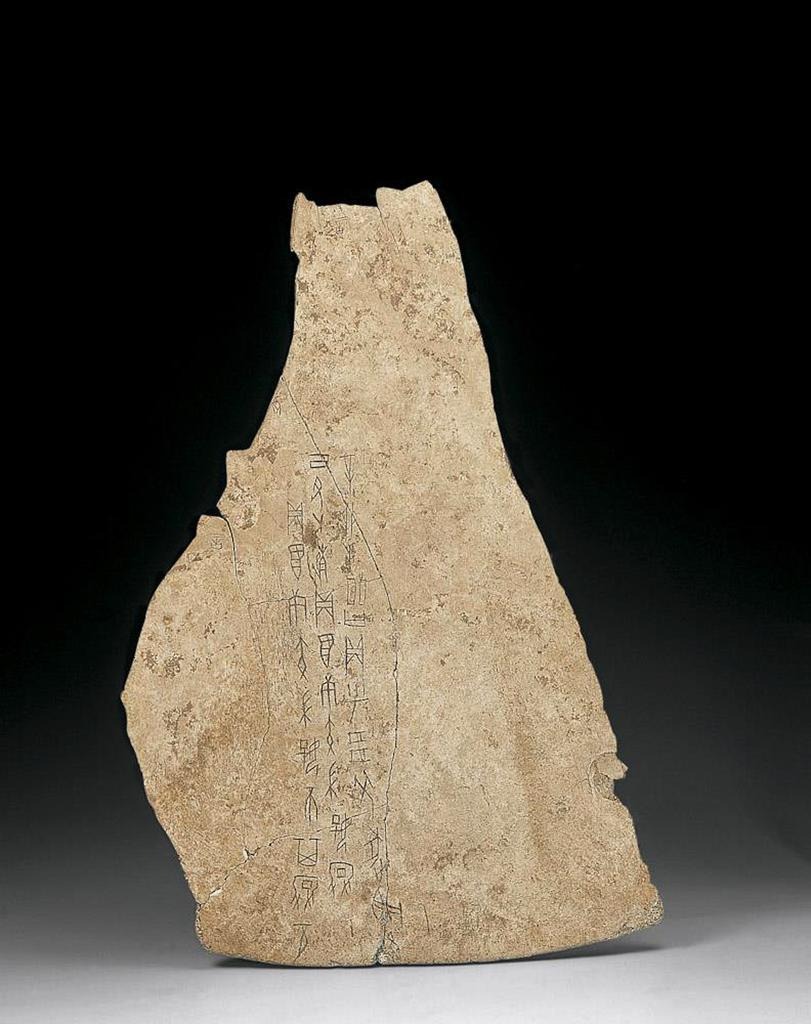
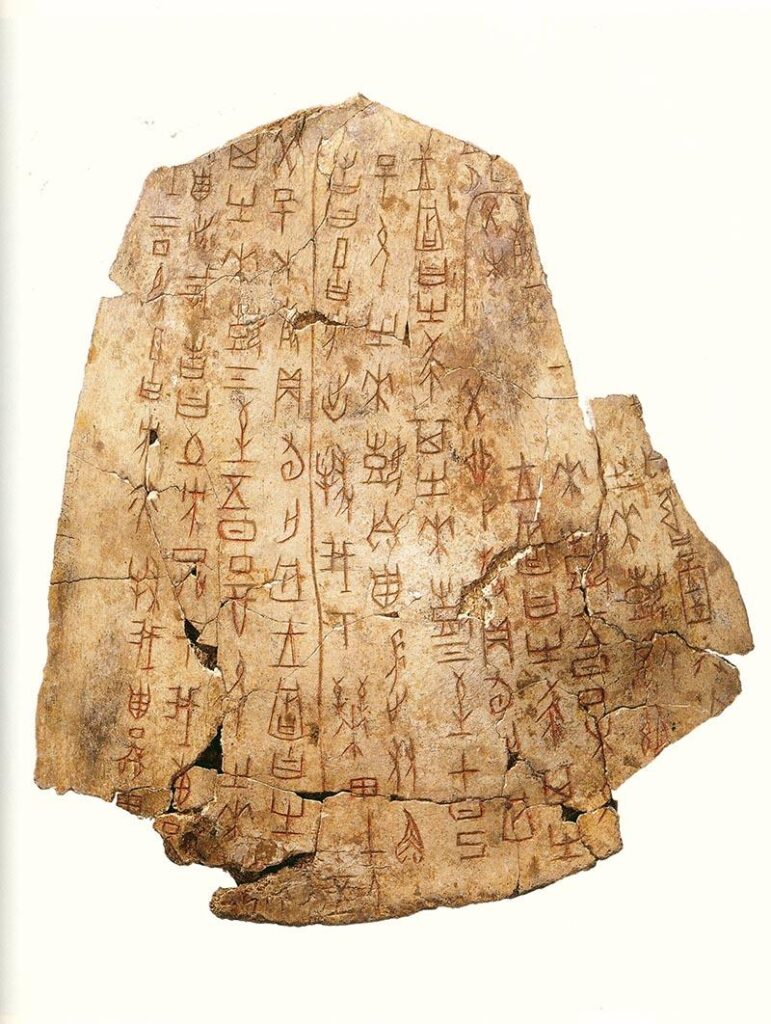
Figure 1. Shang Oracle Bone Inscription from Yinxu
Oracle bone inscriptions excavated from Yinxu (Anyang) constitute the earliest substantial body of written records in East Asia. Many inscriptions record divinations concerning military campaigns against frontier peoples, including the Guifang.
Figure 2. Oracle Bone Inscription (Close-up)
Close-up of Shang characters inscribed on an oracle bone. Several inscriptions record divinations concerning military campaigns against the Guifang.
These inscriptions represent the earliest substantial corpus of written records in East Asia and provide a rare glimpse into the political, military, and religious concerns of a Bronze Age state. Unlike later historical chronicles composed centuries after the events they describe, oracle bones were produced during the reigns of the kings themselves. They therefore constitute one of the most valuable primary sources available for reconstructing the relationship between the Shang and their northern frontier rivals (Keightley 1978; Keightley 1999).m 5. Oracle Bone Evidence and the Campaigns of Wu Ding.