
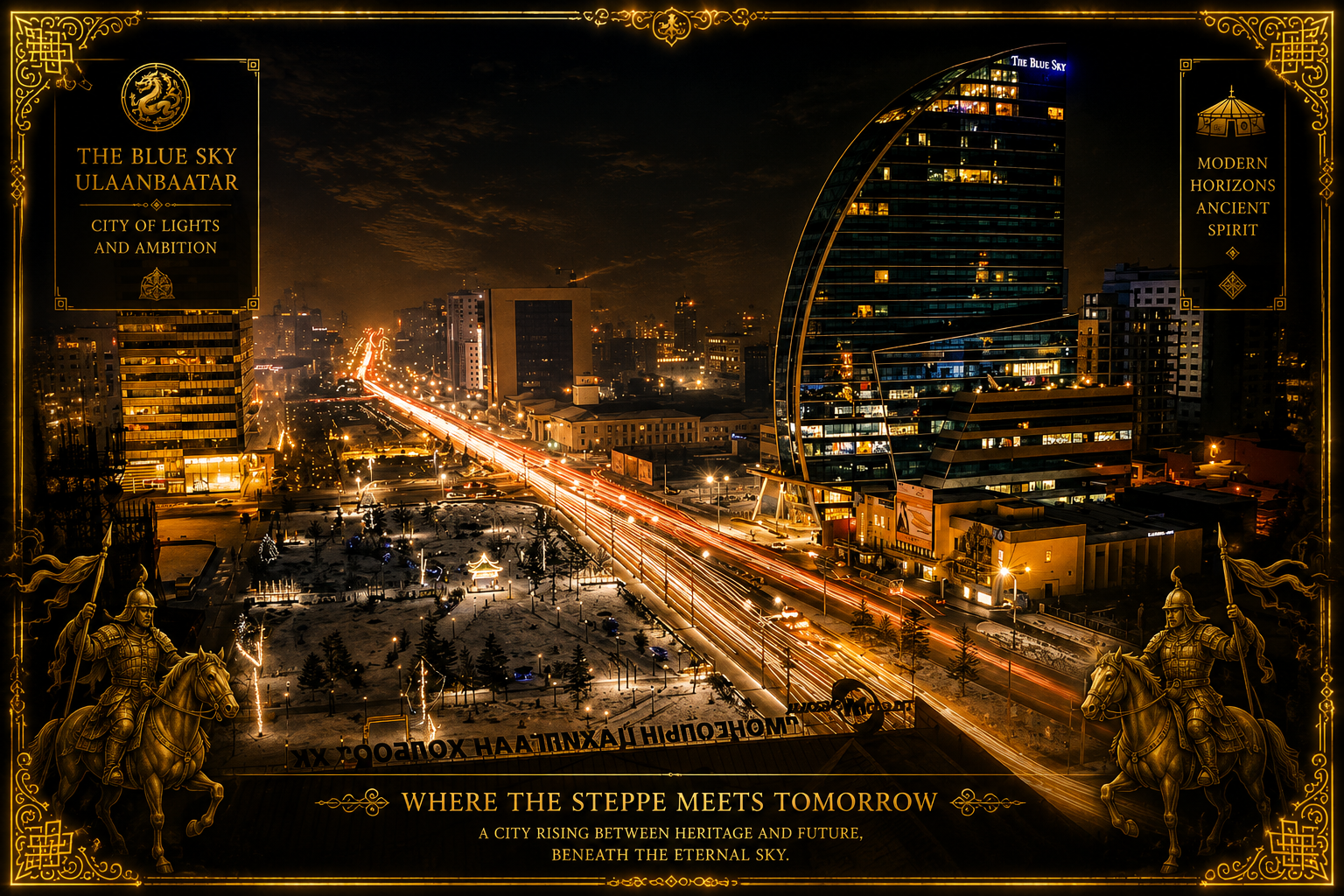
Land, People, and Legacy
Explore Mongolia’s landscapes, history, culture, and enduring traditions. From the vast grasslands of the steppe to the heritage of nomadic civilization, discover the land that stood at the crossroads of Eurasian history.
The Liberation of Khovd in 1912: Consolidating the Territorial Sovereignty of the Bogd Khanate of Mongolia
By Altanbagana Baatar
DBA Candidate| Independent Historian
ImperialGG Historical Research Seriers
06 June 2026
Abstract
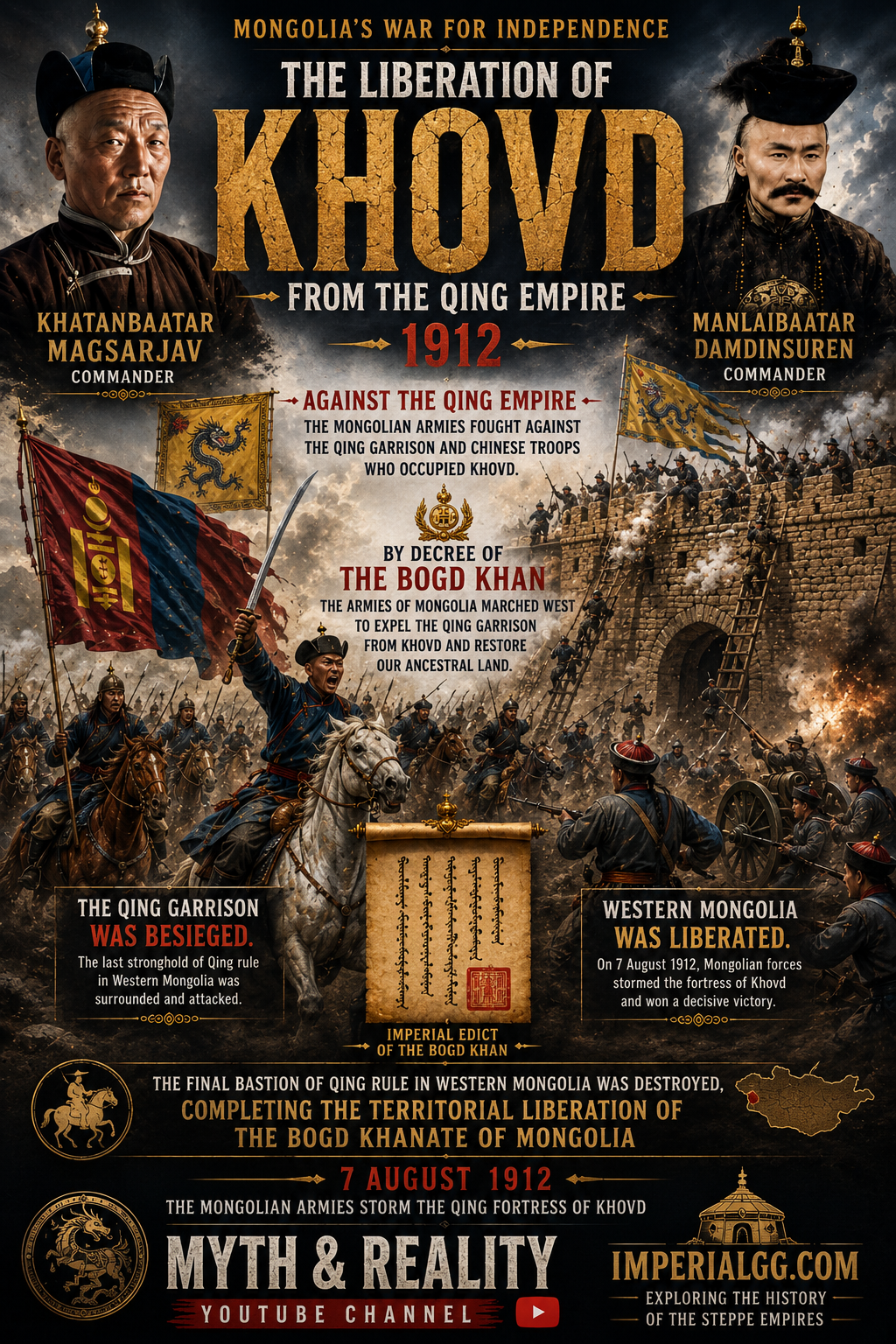
The liberation of Khovd in 1912 constituted one of the most significant military achievements of Mongolia’s National Revolution of 1911. Although Mongolia had proclaimed its independence from the Qing Empire in December 1911, effective control over all Mongolian territories remained incomplete. Khovd, the principal administrative and military center of western Mongolia, continued to be held by Qing forces and represented the last major bastion of Qing authority in the region. The capture of Khovd by Mongolian forces in August 1912 not only eliminated this remaining stronghold but also consolidated the territorial integrity and political legitimacy of the newly established Bogd Khanate of Mongolia. This article examines the strategic importance of Khovd, the military campaign leading to its liberation, and its broader historical significance within the context of Mongolia’s state-building process.
Introduction
The collapse of the Qing Empire in the early twentieth century fundamentally altered the political landscape of Inner Asia. On 29 December 1911, Outer Mongolia proclaimed its independence and enthroned the Eighth Jebtsundamba Khutuktu as the Bogd Khan, thereby establishing the Bogd Khanate of Mongolia.^1 Yet the declaration of independence did not automatically translate into effective sovereignty over all territories historically associated with Mongolia.
In western Mongolia, the city of Khovd remained under the authority of Qing officials and their military garrison. Because of its strategic location and its role as the administrative center of the frontier, Khovd posed both a political and military challenge to the newly established Mongolian government. So long as the city remained in Qing hands, Mongolia’s independence could not be regarded as territorially complete.
The Strategic Importance of Khovd
Since the eighteenth century, Khovd had served as one of the Qing Empire’s principal frontier administrative centers in western Mongolia.^2 The city housed the Qing amban, maintained a permanent military garrison, and functioned as an important commercial center connecting Mongolia with Xinjiang and Central Asia.
Control of Khovd was therefore of considerable strategic importance. The city represented the institutional embodiment of Qing authority in western Mongolia and served as the primary instrument through which the Qing administration exercised political influence over the Oirat and western Mongolian tribes.
Following Mongolia’s declaration of independence in 1911, the Qing authorities in Khovd refused to recognize the new government in Urga and anticipated military assistance from neighboring regions of China and Xinjiang.^3 The persistence of Qing control in Khovd consequently became a matter of national security for the Bogd Khanate.
Preparations for the Campaign
In the spring of 1912, the Mongolian government resolved to launch a military expedition to liberate Khovd. The campaign represented a broad national effort and involved not only troops from Khalkha Mongolia but also contingents drawn from the Dörbet, Torgut, Zakhchin, and Ööld communities of western Mongolia.^4
The operation was commanded by two distinguished military leaders, Magsarjav and Damdinsüren, both of whom would later become celebrated national heroes. Although the Mongolian forces were relatively poorly equipped and possessed limited artillery and ammunition, they benefited from superior mobility, extensive local support, and a strong sense of national purpose.^5
The campaign therefore reflected an important characteristic of the Mongolian Revolution itself: the mobilization of diverse regional groups in pursuit of a common political objective—the preservation and consolidation of national independence.
The Siege and Capture of Khovd
By late July 1912, Mongolian forces had surrounded Khovd and effectively isolated the city from external assistance.^6 The defenders occupied a fortified settlement protected by earthen walls and manned by Qing troops and local auxiliaries.
After several weeks of siege operations and intermittent skirmishes, the Mongolian commanders decided to launch a general assault. On 7 August 1912, Mongolian troops attacked from multiple directions and succeeded in breaching the city’s defenses.^7
Fierce fighting ensued within the city itself. Despite determined resistance by the defenders, the Mongolian forces ultimately secured victory and captured Khovd. The fall of the city marked the destruction of the last major Qing military position in western Mongolia.
Contemporary accounts emphasize not only the courage of the attacking forces but also the substantial assistance provided by local inhabitants, whose cooperation contributed significantly to the success of the campaign.^8
Historical Significance
The liberation of Khovd had consequences extending far beyond the capture of a single city. First, it effectively terminated Qing authority in western Mongolia and brought most of the region under the control of the Bogd Khanate.^9
Second, the victory greatly strengthened the legitimacy of the new Mongolian state. Independence proclaimed in 1911 had now been reinforced through military success and territorial consolidation.
Third, the campaign demonstrated the capacity of the nascent Mongolian state to organize military operations and defend its sovereignty. This achievement carried important symbolic significance, fostering a sense of national unity among diverse Mongolian communities.
In recognition of their services, Magsarjav and Damdinsüren were awarded the titles of Khatanbaatar (“Heroic Champion”) and Manlaibaatar (“Foremost Hero”), respectively, and entered the pantheon of Mongolia’s national heroes.^10
Conclusion
The liberation of Khovd in 1912 occupies a central place in the history of modern Mongolia. It was not merely a local military engagement but a decisive step in the consolidation of Mongolia’s territorial sovereignty and statehood. By eliminating the final major center of Qing authority in western Mongolia, the campaign transformed Mongolia’s declaration of independence into a more tangible political reality.
As such, the Battle of Khovd should be understood as one of the defining episodes of the Mongolian National Revolution and an essential milestone in the formation of the modern Mongolian state.
Notes
- Christopher P. Atwood, Encyclopedia of Mongolia and the Mongol Empire (New York: Facts on File, 2004), 39–40.
- Urgunge Onon and Derrick Pritchatt, Asia’s First Modern Revolution: Mongolia Proclaims Its Independence in 1911 (Leiden: Brill, 1989), 116.
- B. Shirendev, History of the Mongolian People’s Revolution, vol. 1 (Ulaanbaatar, 1969), 148–150.
- J. Boldbaatar, History of Mongolia (Ulaanbaatar, 2011), 344.
- L. Jamsran, A Concise History of Mongolian Military Affairs, vol. 2 (Ulaanbaatar, 1996), 87.
- Onon and Pritchatt, Asia’s First Modern Revolution, 119.
- D. Gongor, Khalkh Tovchoon, vol. 2 (Ulaanbaatar, 1978), 412.
- Khatanbaatar Magsarjav, My Service to the Mongolian State (Ulaanbaatar, 1994), 53–56.
- Atwood, Encyclopedia of Mongolia and the Mongol Empire, 309.
- L. Jamsran, A Concise History of Mongolian Military Affairs, 89–90.
Bibliography
Atwood, Christopher P. Encyclopedia of Mongolia and the Mongol Empire. New York: Facts on File, 2004.
Boldbaatar, J. History of Mongolia. Ulaanbaatar, 2011.
Gongor, D. Khalkh Tovchoon. Vol. 2. Ulaanbaatar, 1978.
Jamsran, L. A Concise History of Mongolian Military Affairs. Vol. 2. Ulaanbaatar, 1996.
Magsarjav, Khatanbaatar. My Service to the Mongolian State. Ulaanbaatar, 1994.
Onon, Urgunge, and Derrick Pritchatt. Asia’s First Modern Revolution: Mongolia Proclaims Its Independence in 1911. Leiden: Brill, 1989.
Shirendev, B. History of the Mongolian People’s Revolution. Vol. 1. Ulaanbaatar, 1969.
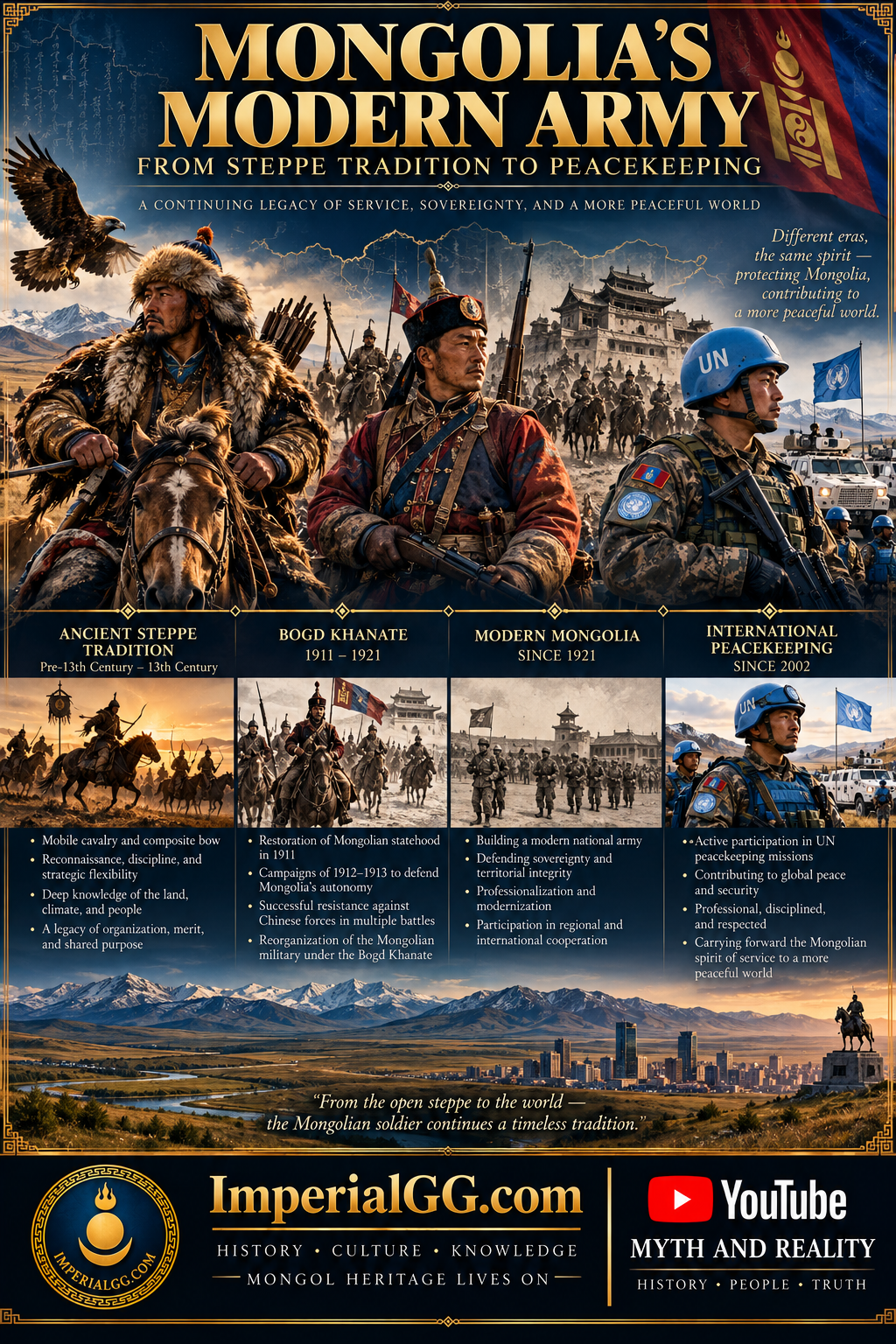
THE MODERN MONGOLIAN ARMED FORCES
By Altanbagana Baatar
DBA Candidate| Independent Historian
ImperialGG Historical Research Seriers
19 September 2026
FROM THE XIONGNU STEPPE TO CHINGGIS KHAN AND THE BOGD KHANATE
INTRODUCTION
The history of the modern Mongolian Armed Forces cannot be understood solely from the institutional foundation of the twentieth century. Its organizational history begins in the modern sense with the creation of state military institutions after the restoration of Mongolian independence in 1911 and, more decisively, with the establishment of the People’s Revolutionary Army in 1921. Yet the military culture from which these institutions emerged was much older. Across the history of Inner Asia, political authority, pastoral society, mobility, military organization, and the defense of territory were closely interconnected. The Xiongnu Empire developed a highly organized military-administrative structure; later steppe polities inherited and modified elements of this tradition; and Chinggis Khan transformed earlier Inner Asian military practices into a centralized imperial military system whose organization was capable of sustaining campaigns across Eurasia. The modern Mongolian armed forces therefore represent neither a simple continuation of the armies of antiquity nor an institution created without historical precedent. They are better understood as a modern state institution that developed within a society possessing a long and distinctive military tradition. Battle of Qurman
This distinction is essential. There is no uninterrupted institutional chain running directly from the Xiongnu army to the present-day Mongolian Armed Forces. The political systems, technologies, command structures, weapons, logistics, and strategic environments changed profoundly across two millennia. What can be examined, however, is the persistence, adaptation, and reinterpretation of certain military principles within the Inner Asian historical environment: mobility, mounted warfare, rapid concentration and dispersal, decentralized movement under coordinated command, reconnaissance, the integration of military and administrative organization, and the ability of a state to mobilize pastoral populations. The historical question is therefore not whether the modern Mongolian soldier is literally the institutional successor of the Xiongnu warrior, but how older military traditions were transformed as Mongolian society moved from nomadic imperial formations toward the modern territorial state. UChicago Knowledge
THE XIONGNU AND THE EARLY INNER ASIAN MILITARY TRADITION
The Xiongnu Empire provides one of the earliest well-documented examples of large-scale state organization on the eastern Eurasian steppe. Chinese historical sources describe a political and military structure organized through numerical groupings of ten, one hundred, one thousand, and ten thousand. Modern scholarship has debated the precise nature of this system and the extent to which it was military, administrative, or social, but the evidence supports the existence of a hierarchical structure capable of coordinating substantial mounted forces under centralized authority. Archaeological and historical studies have further emphasized that the decimal system associated with the Xiongnu should not be treated as a uniquely Mongol invention appearing for the first time under Chinggis Khan. Rather, it belonged to a much older Inner Asian political and military repertoire. PubMed Central (PMC)
The significance of the Xiongnu precedent lies not simply in the existence of cavalry. Mounted warfare was fundamental to the economic and ecological environment of the steppe, but effective military power required more than individual horsemanship. Large-scale campaigns demanded mechanisms for mobilization, command, communication, discipline, and the coordination of dispersed communities. The Xiongnu political system demonstrates that steppe societies could create military organizations extending beyond the level of individual tribes or local communities. This broader tradition became one of the historical foundations upon which later Inner Asian states developed their own forms of military organization. OpenBU
CHINGGIS KHAN AND THE TRANSFORMATION OF STEPPE MILITARY ORGANIZATION
Chinggis Khan’s importance in military history lies not simply in his use of cavalry, bows, or steppe mobility. His more fundamental contribution was the transformation of these existing capabilities into a highly coordinated state military system. Scholarship on Mongol military organization emphasizes that the decimal structure—units of ten, one hundred, one thousand, and ten thousand—had precedents in Inner Asia, but Chinggis Khan adapted it to a new political purpose. The crucial transformation was the weakening of older tribal divisions and the redistribution of people into military-administrative units directly connected to the authority of the Khan. Battle of Qurman
This transformation meant that military organization could no longer be understood simply as an alliance of separate tribal forces. The army increasingly became an instrument of centralized political authority. The mingɣan and tümen structures provided mechanisms for mobilization, command, and accountability, while the appointment of commanders by the Khan strengthened the connection between military authority and the central state. The result was a system in which mobility and pastoral military culture were combined with an increasingly disciplined administrative structure. Modern scholarship therefore emphasizes that Mongol military success depended not merely upon the physical abilities of individual horsemen but upon organization, command, discipline, logistics, and collective coordination. KCI
The Mongol military tradition also proved adaptable. As the empire expanded into China, Central Asia, Iran, and other regions, the military incorporated soldiers from conquered and allied populations and developed different forms of garrison, siege, and administrative organization. Recent scholarship on the Yuan military system shows that even after the Mongols entered the Chinese political environment, elements of the earlier Mongol military system remained important while being adapted to new conditions. This capacity for institutional adaptation is an important part of the Mongol military legacy. KCI
FROM IMPERIAL MILITARY POWER TO THE MODERN MONGOLIAN STATE
The transition from the imperial world of the Mongols to the modern Mongolian state was neither direct nor institutionally continuous. Between the collapse of the Yuan political order and the twentieth century, Mongolian political structures underwent major transformations, while the Qing Empire incorporated Mongolia into a different imperial framework. Nevertheless, military culture remained embedded in Mongolian society, and the restoration of Mongolian statehood in 1911 immediately raised the problem of creating institutions capable of defending that sovereignty.
The establishment of the Bogd Khanate in 1911 therefore represents an important stage in the emergence of modern Mongolian military institutions. The newly restored state created a Ministry of Military Affairs among its principal ministries. The Ministry of Defence of Mongolia identifies 1911 as the beginning of the modern institutional development of the national defense administration, while the modern armed forces themselves are conventionally traced to the formation of the People’s Revolutionary Army in 1921. Ministry of Defense of Mongolia
The significance of the Bogd Khan period is that Mongolia was attempting to translate an older military society into the institutional framework of a modern sovereign state. The problem was no longer simply how to mobilize warriors for a campaign. A modern state required permanent military institutions, military administration, weapons procurement, training, command structures, and diplomatic relationships affecting military capacity. The Bogd Khan government therefore sought foreign assistance, acquired weapons from Russia, and established military training institutions. The Ministry of Defence records that Russian military specialists were invited and military training was established at Khujirbulangi during this period. Tourist Info Center
THE BATTLE OF KHOVD: 1912
The liberation of Khovd in 1912 was one of the most important military operations during the early period of the Bogd Khanate. Mongolian forces under commanders including Manlaibaatar Damdinsüren (Манлайбаатар Дамдинсүрэн), Khatanbaatar Magsarjav (Хатанбаатар Магсаржав), Ja Lama (Жа лам), and Sodnomyn Damdinbazar (Содномын Дамдинбазар) attacked the Qing garrison at Khovd. The fighting culminated in the capture of Khovd in August 1912 and the expulsion of the remaining Qing authorities from western Mongolia. Wikipedia
Khovd is significant for the history of the modern Mongolian military because it demonstrates the coexistence of two military forms: traditional Mongolian mounted mobilization and the emerging requirements of organized state warfare. The operation required the concentration of forces, command coordination, surrounding and attacking a fortified urban position, and the management of the political consequences of military victory. It therefore belongs to the transitional period in which the military capabilities of the steppe were being applied within a modern state-building project.
THE FIVE ROUTES CAMPAIGN OF 1913
The most important demonstration of the military capacity of the Bogd Khanate came in the campaign known as the Battle of the Five Routes (Таван замын байлдаан) in 1913. The Mongolian History Dictionary describes it as a war undertaken to liberate Inner Mongolia from the forces of the Republic of China. Following the restoration of Mongolian independence, Mongolian forces moved south along five principal routes, and fighting began in Inner Mongolia during the spring of 1913. On 1 July 1913, Manlaibaatar Damdinsürэн was appointed commander of the southern forces by Bogd Khan, after which Mongolian military operations intensified. Mongoltoli
The campaign demonstrated the continued importance of mobility and dispersed operations in Mongolian warfare. Forces operated along several directions rather than concentrating immediately into a single massed army. Mongolian commanders included Manlaibaatar Damdinsüren, Yalguun Baatar Sumya (Ялгуун баатар Сумъяа), and other senior officials and military leaders. The campaign covered a large geographical area, and Mongolian forces achieved substantial battlefield successes during its initial and middle stages. Contemporary and later Mongolian historical accounts emphasize repeated Mongolian successes against Chinese forces in several sectors. Mongoltoli
However, an academic treatment must distinguish tactical and operational successes from the final strategic outcome. The Five Routes campaign did not end with a permanent Mongolian military victory over the Republic of China. Mongolian forces eventually withdrew from Inner Mongolia amid external political pressure and difficulties including the interruption of supplies and Russian opposition to the continuation of the campaign. Scholarly research on the Bogd Khan government’s attempt to integrate Inner Mongolia likewise concludes that the effort ultimately failed because the Mongolian government faced opposition from both the Republic of China and Russia and lacked the resources necessary to sustain the campaign. KCI
This distinction actually makes the Five Routes campaign more historically significant, not less. It demonstrates that the early twentieth-century Mongolian military retained considerable battlefield effectiveness despite operating with limited resources, but it also reveals the difference between winning engagements and sustaining a modern war against a larger state under international geopolitical constraints. The campaign therefore represents a transitional moment between traditional Mongolian operational mobility and the strategic requirements of modern interstate warfare.
THE MILITARY TRADITION OF MANLAIBAATAR DAMDINSÜREN
Manlaibaatar Damdinsüren provides an important individual example of this transition. He had participated in the liberation of Khovd and later commanded forces during the Five Routes campaign. Archival accounts cited in Mongolian historical writing record that between July 1912 and January 1914 he participated in numerous engagements while serving in command positions on the western and southern frontiers. One archival-based account records 103 encounters with enemy forces during that period. This figure should not be confused with 103 victories over China; it refers to the number of recorded engagements attributed to his military service during the specified period. GoGo.mn
This distinction is particularly important for understanding Mongolian military history. The strength demonstrated by commanders such as Damdinsüren was not simply a matter of inherited heroic reputation. Their campaigns required reconnaissance, movement, coordination, logistics, command, and adaptation to modern firearms and battlefield conditions. The Bogd Khanate was attempting to transform the military capabilities of a society with a long mounted-warrior tradition into the armed forces of a sovereign modern state.
FROM 1911 TO 1921: THE FORMATION OF THE MODERN ARMED FORCES
The institutional development accelerated after 1921. The Ministry of Defence identifies the formation of the People’s Revolutionary Army in March 1921 as the beginning of the modern history of Mongolia’s armed forces. The Central Defence Archive likewise preserves military records beginning with the revolutionary army and its operations from 1921 onward. Ministry of Defense of Mongolia
This period should not be interpreted as the abandonment of Mongolia’s older military tradition. Rather, older forms of military knowledge were increasingly placed inside modern institutions. Mounted mobility remained important, but it was now combined with firearms, formal military administration, professional training, staff organization, communications, and eventually mechanized and specialized military branches. The historical transformation therefore proceeded through institutional modernization rather than cultural erasure.
The later twentieth century brought further changes. Mongolia developed specialized military branches, mechanized formations, artillery, air-defense forces, communications units, and other professional capabilities. The Ministry of Defence describes the expansion of the Mongolian People’s Army during the 1960s and its reorganization during the 1970s and 1980s into a combined-arms structure containing motorized formations and specialized units. Ministry of Defense of Mongolia
1939, 1945, AND THE MODERNIZATION OF MONGOLIAN WARFARE
The twentieth century transformed Mongolian warfare still further. The Battle of Khalkhin Gol in 1939 demonstrated that Mongolia’s defense could no longer depend primarily upon traditional mounted warfare. Armored vehicles, artillery, aviation, communications, logistics, and combined-arms operations became decisive components of modern warfare.
The 1945 campaign further demonstrated the transformation of the Mongolian military environment. Mongolian forces participated alongside Soviet forces in operations against Japanese forces in Northeast Asia. The Ministry of Defence identifies the 1939 Khalkhin Gol war, the 1945 liberation campaign, and the western frontier armed clashes as major stages in the twentieth-century development of Mongolia’s armed forces. Ministry of Defense of Mongolia
Thus, by the middle of the twentieth century, the Mongolian military had moved decisively beyond the technological framework of the medieval steppe. Yet the older cultural emphasis on mobility, endurance, fieldcraft, horsemanship, and adaptation to Mongolia’s geography remained part of military identity, even as the actual instruments of warfare changed.
FROM THE MONGOL EMPIRE TO THE CONTEMPORARY ARMED FORCES
The contemporary Mongolian Armed Forces are therefore the product of several historical transformations rather than a single uninterrupted institution. The earliest layer consists of the military cultures of the Inner Asian steppe, including the Xiongnu and subsequent nomadic states. The second major transformation occurred under Chinggis Khan, who reorganized steppe military society into a centralized imperial military system. The third occurred during the restoration of Mongolian statehood in 1911, when the Bogd Khanate began creating modern ministries, military administration, weapons procurement, and training structures. The fourth began in 1921 with the institutional foundation of the modern armed forces. Subsequent decades introduced mechanization, specialized branches, modern staff structures, and international military cooperation. Battle of Qurman
The continuity is therefore best understood at the level of military culture and adaptive principles, not identical institutions. The modern Mongolian Armed Forces do not fight with the weapons of the Xiongnu or the Mongol Empire, and their command structures cannot simply be equated with those of the thirteenth century. Nevertheless, the historical memory of the steppe military tradition remains part of the institutional identity of the modern Mongolian military. The Ministry of Defence itself explicitly presents the history of the armed forces as extending from the ancient steppe states and Chinggis Khan through the twentieth-century armed forces and into the present. President.mn
THE CENTRAL QUESTION: WHAT SURVIVED?
The most productive question is therefore not whether the modern Mongolian army is “the same army” as that of Chinggis Khan. It is not. The more useful historical question is what elements of an older military civilization survived by changing their form.
Mobility became mechanized mobility. Mounted reconnaissance was supplemented by modern communications and surveillance. The warrior household became a professional military institution. Tribal mobilization was replaced by state-administered recruitment and professional service. The composite bow gave way to firearms and modern weapons. The campaign commander became part of a formal command structure. Yet the broader cultural importance of endurance, mobility, field awareness, adaptation to difficult terrain, and the defense of the homeland continued to possess meaning within Mongolian military identity.
This pattern resembles the transformation of the Mongol military system during the Yuan period itself. Modern scholarship has shown that Mongol military institutions changed considerably as the empire encountered new political and geographic environments, yet important elements of the earlier Mongol system remained embedded within those adaptations. The lesson is that military traditions survive not because institutions remain frozen, but because societies repeatedly reinterpret inherited practices under new technological and political conditions. KCI
AUTHOR’S THESIS
The history of the modern Mongolian Armed Forces should be understood as a long process of transformation from steppe military civilization to modern state military organization. The relationship between the ancient and modern periods is neither one of uninterrupted institutional continuity nor one of complete rupture. The Xiongnu and later Inner Asian states established traditions of centralized mobilization, mounted warfare, numerical organization, and military-administrative integration; Chinggis Khan transformed these traditions into a highly centralized imperial military system; the Bogd Khanate attempted to convert Mongolia’s inherited military capacity into the defense institutions of a restored sovereign state; and the modern armed forces developed from 1921 onward through professionalization, technological modernization, and institutional adaptation. Socionauki
The Battle of the Five Routes of 1913 occupies a particularly important position within this history because it demonstrates both sides of Mongolia’s military transition. On the battlefield, Mongolian forces were capable of conducting large-scale, multi-directional operations and achieving significant successes against Chinese forces. Yet the eventual withdrawal demonstrates that battlefield effectiveness alone could not guarantee strategic success in the international system of the twentieth century. Military power had become inseparable from weapons supply, logistics, diplomacy, foreign intervention, state capacity, and international politics. Mongoltoli
The modern Mongolian Armed Forces therefore represent neither a relic of the medieval steppe nor an institution disconnected from Mongolia’s deeper past. They are a modern military institution carrying a historical military culture that has repeatedly adapted to new political orders, technologies, and strategic environments. The central continuity is not the horse, the bow, or any particular formation. It is the historical capacity of Mongolian military society to adapt its inherited traditions to changing conditions while preserving the fundamental connection between state sovereignty, mobility, discipline, and national defense.
SELECTED BIBLIOGRAPHY
Atwood, Christopher P. Encyclopedia of Mongolia and the Mongol Empire. Facts on File, 2004. Discussion of the Inner Asian decimal organization and its development from the Xiongnu through the Mongol period. Battle of Qurman
Cho, Won. “Changes and the Maintenance of the Mongol Military Tradition in the Yuan: Focused on the Establishment and Operation of the Military System under Kublai Khan.” Historical and Cultural Studies, no. 85 (2023): 209–240. DOI: 10.18347/hufshis.2023.85.209. KCI
Yoon, Eun-Sook. “The Nomadic Tactics of the Mongolian Military.” Mongolian Studies, no. 28 (2010): 1–29. DOI: 10.17292/kams.2010..28.001. KCI
Монголын түүхийн тайлбар толь. “Таван замын байлдаан.” Монголын түүхийн тайлбар толь. Mongoltoli
МУИС, Түүхийн тэнхим. “Таван замын байлдаан – 110 жил” эрдэм шинжилгээний хурал. Department of Education
Монгол Улсын Батлан хамгаалах яам. Монгол Улсын Зэвсэгт хүчний түүх, орчин цагийн Зэвсэгт хүчний 100 жилийн материалууд. Ministry of Defense of Mongolia
Монгол Улсын Ерөнхийлөгчийн Тамгын газар. “Орчин цагийн Зэвсэгт хүчин үүсэж хөгжсөний 100 жилийн ой.” 2021.
MONGOLIA’S 21 AIMAGS
ADMINISTRATIVE SPACE AND HISTORICAL LANDSCAPE
INTRODUCTION
Modern Mongolia is administratively organized into 21 aimags (provinces) and the capital city of Ulaanbaatar. This structure constitutes the principal territorial framework of the contemporary Mongolian state. Under Article 57 of the Constitution of Mongolia, the country is divided administratively into provinces and a capital city, while provinces are further subdivided into lower-level administrative units.¹
The present administrative map, however, should not be confused with the much older geographic and historical organization of the Mongolian landscape. The territories encompassed by today’s aimags contain mountain systems, forest-steppe zones, grasslands, deserts, river basins, archaeological landscapes, historic settlements, and routes of mobility that long predate the modern provincial system.
For historical research, therefore, the aimag can be understood simultaneously as a modern administrative unit and a geographic framework through which older layers of Mongolian history can be studied.
THE 21 AIMAGS
The 21 provinces of Mongolia are:
Arkhangai · Bayan-Ölgii · Bayankhongor · Bulgan · Darkhan-Uul · Dornod · Dornogovi · Dundgovi · Govi-Altai · Govisümber · Khentii · Khovd · Khövsgöl · Ömnögovi · Orkhon · Selenge · Sükhbaatar · Töv · Uvs · Zavkhan
The capital, Ulaanbaatar, constitutes a separate administrative unit rather than an additional aimag. Mongolia’s National Statistical Office maintains administrative and territorial statistics separately for the 21 aimags and the capital.²
The contemporary administrative system also extends below the provincial level. Aimags are subdivided into soums, while the capital is organized through districts and khoroos.³
GEOGRAPHY AND REGIONAL DIVERSITY
Mongolia occupies approximately 1.56 million square kilometers between Russia and China. Its geography encompasses an extensive transition from northern forest and lake environments through mountain and steppe systems to the arid landscapes of the Gobi.⁴
The northern aimags, including Khövsgöl, Bulgan, and Selenge, contain important forest, lake, and river environments associated with the transition between the Siberian taiga and the Mongolian steppe.
Central Mongolia includes landscapes associated with the Khangai and Khentii mountain systems, broad grasslands, river valleys, and important archaeological and historical sites. The central region has also played a major role in the historical geography of the Mongolian steppe.
Western Mongolia — particularly Bayan-Ölgii, Khovd, Uvs, Zavkhan, and Govi-Altai — is characterized by the Altai and associated mountain systems, high valleys, lakes, dry steppe, and desert environments.⁵
Eastern Mongolia presents a markedly different landscape. Dornod and Sükhbaatar, together with eastern parts of Khentii, contain extensive steppe environments that form part of the wider grassland zone of Inner Asia.
The southern provinces — including Ömnögovi, Dornogovi, Dundgovi, and parts of Bayankhongor — extend across the Gobi region, where aridity, sparse vegetation, seasonal water sources, mineral resources, and long-distance routes of movement have shaped human occupation.
THE AIMAG AS A HISTORICAL-GEOGRAPHICAL UNIT
The modern boundaries of the aimags should not be projected backward onto earlier historical periods. Ancient and medieval political territories did not necessarily correspond to today’s provincial borders.
Instead, contemporary administrative boundaries provide a practical framework for organizing archaeological, historical, environmental, and demographic evidence.
This distinction is particularly important for research on the Mongol Empire and earlier steppe societies. A single historical landscape may now extend across several aimags, while a single modern aimag may contain archaeological evidence belonging to multiple cultural and chronological periods.
Consequently, the study of Mongolia’s history requires the intersection of administrative geography, physical geography, archaeology, historical texts, and spatial analysis rather than reliance on modern provincial boundaries alone.
FROM TAIGA TO GOBI
Mongolia’s geographic diversity can be understood as a series of ecological transitions:
FOREST AND LAKE → MOUNTAIN → STEPPE → SEMI-DESERT → GOBI
These transitions were not simply environmental phenomena. They influenced patterns of pastoral mobility, settlement, seasonal migration, resource use, communication, and political interaction across Inner Asia.
The Mongolian landscape therefore represents a historical system in which environment and human movement were continuously interconnected.
The modern 21 aimags provide a contemporary administrative map of this landscape, while archaeology and historical geography allow researchers to reconstruct the much older spatial systems that existed before the formation of the present state.
AUTHOR’S THESIS
Mongolia’s 21 aimags should be understood not merely as administrative divisions, but as contemporary geographic frameworks through which the country’s deeper historical, archaeological, ecological, and cultural landscapes can be investigated.
Their modern boundaries are relatively recent in historical terms; the landscapes they contain are not.
A systematic study of Mongolia therefore benefits from placing the contemporary administrative map alongside ancient settlement patterns, archaeological cultures, mountain and river systems, pastoral routes, historical political centers, and long-distance networks of exchange.
In this sense, the map of the 21 aimags is not the end point of historical geography. It is a starting framework for investigating the much deeper history of the Mongolian land.
CONCLUSION
The 21 aimags and Ulaanbaatar form the principal administrative geography of contemporary Mongolia. Yet beneath this modern territorial structure lies a landscape shaped over millennia by environmental change, human mobility, pastoral economies, political formations, cultural interaction, and long-distance exchange.
Understanding Mongolia therefore requires two maps to be read together:
the modern administrative map of the Mongolian state, and the historical-geographical map of Inner Asia.
The first defines contemporary territorial administration. The second reveals the deeper historical landscape. For ImperialGG, studying the relationship between these two maps provides a foundation for examining Mongolia’s history from the earliest archaeological cultures through the era of the Mongol Empire and into the modern state.
FOOTNOTES
1. Constitution of Mongolia, Chapter Four, Article 57, “Administrative and Territorial Units.” The Constitution establishes the division of Mongolia into provinces and a capital city and defines the administrative hierarchy below them.
2. National Statistics Office of Mongolia, Administrative and Territorial Units, by Region, Aimags and the Capital, by Year. The national statistical database maintains administrative and territorial data for the aimags and the capital.
3. National Statistics Office of Mongolia, Administrative and Territorial Units. The administrative structure includes aimags, soums, and lower-level territorial units, while Ulaanbaatar has its own district-based administrative structure.
4. Invest Mongolia, “Mongolia at a Glance: Geography and Climate.” The source describes Mongolia’s location between Russia and China, its approximately 1.5 million km² territory, and its major geographic transitions from northern forests and lakes through steppe and mountains to the Gobi.
5. Health Development Center of Mongolia, Methodology, section 3.1, “Research Area.” The study identifies major geographic regions including western mountain areas, eastern steppe, southern Khangai-Gobi environments, and the central Khentii region.
SELECTED REFERENCES
- Constitution of Mongolia. Chapter Four: Administrative and Territorial Units. Constitutional Court of Mongolia.
- National Statistics Office of Mongolia. Administrative and Territorial Units, by Region, Aimags and the Capital, by Year.
- National Statistics Office of Mongolia. Report of Unified Land Territory of Mongolia, by Aimags and the Capital.
- Invest Mongolia. Mongolia at a Glance: Geography and Climate.
- Health Development Center of Mongolia. Methodology: Research Area.
IMPERIALGG.COM
HISTORY • GEOGRAPHY • HERITAGE • RESEARCH

MONGOLIA’S FIRST COSMONAUT

MONGOLIA’S FIRST COSMONAUT
Jügderdemidiin Gürragchaa (born 5 December 1947) is a Mongolian cosmonaut, military officer, and aerospace engineer who became the first Mongolian to travel into space. He flew aboard Soyuz 39 from the Baikonur Cosmodrome on 22 March 1981, together with Soviet cosmonaut Vladimir Aleksandrovich Dzhanibekov, as part of the Soviet–Mongolian participation in the Interkosmos program.¹
The mission lasted 7 days, 20 hours, and 42 minutes, during which the spacecraft and crew completed 124 orbits of Earth before returning on 30 March 1981.² The flight placed Mongolia within the relatively small group of countries that had sent a national representative into human spaceflight during the first decades of the Space Age.³
EARLY LIFE AND EDUCATION
Jügderdemidiin Gürragchaa was born on 5 December 1947 in Gurvanbulag, Bulgan Province, Mongolia. He completed his early education in Bulgan before entering military service in 1966.⁴
His professional career developed within military aviation. He received aviation-related technical training in the Soviet Union and subsequently studied at the Zhukovsky Air Force Engineering Academy in Moscow.⁵ His technical and military background later became an important part of his selection for the Interkosmos space program.
In 1978, Gürragchaa entered the Soviet cosmonaut training system associated with the Yuri A. Gagarin Cosmonaut Training Center. He trained alongside fellow Mongolian candidate Maidarjavyn Ganzorig, who served as his backup for the planned Mongolian–Soviet mission.⁶
THE INTERKOSMOS PROGRAM
Gürragchaa’s selection must be understood within the context of the Interkosmos program, an international Soviet space-cooperation initiative that involved scientific and spaceflight cooperation with several countries.
The program provided opportunities for cosmonauts from participating states to fly on Soviet spacecraft while conducting scientific experiments and representing their countries in international space cooperation. Mongolia participated in this framework through scientific and technological cooperation with the Soviet Union.⁷
The Mongolian mission was therefore not an independent national spaceflight. It was a joint Soviet–Mongolian mission conducted within the broader Interkosmos framework. This distinction is important when describing Mongolia’s early space history.⁸
SOYUZ 39
On 22 March 1981, Vladimir Dzhanibekov and Jügderdemidiin Gürragchaa launched aboard the Soyuz 39 spacecraft from the Baikonur Cosmodrome.
NASA’s historical record identifies the Soyuz 39 crew as Vladimir V. Dzhanibekov and Jugdjerdemidiyn Gurragcha, noting that Gürragchaa became the first Mongolian to orbit Earth.⁹
The spacecraft subsequently docked with the Salyut 6 orbital station, where the visiting crew joined the resident Soviet cosmonauts Vladimir Kovalyonok and Viktor Savinykh. The resulting orbital complex brought together the Soyuz 39 crew, the Salyut 6 station, and the resident Soyuz spacecraft.¹⁰
The mission concluded on 30 March 1981, after 7 days, 20 hours, and 42 minutes in space. The crew had completed 124 revolutions around Earth.¹¹
SCIENTIFIC WORK IN ORBIT
The Soyuz 39 mission was not primarily a symbolic flight. It included a substantial scientific program involving observations and experiments conducted aboard the Salyut 6 orbital station.
According to Mongolia’s Institute of Astronomy and Geophysics, the mission included more than 30 scientific experiments covering areas such as:
- space physics;
- space technology;
- Earth observation;
- biomedical research; and
- environmental and observational studies.¹²
The Mongolian scientific contribution was particularly significant because it connected the country’s scientific institutions with orbital research.
The mission also included observations of Mongolia from space. A later account by Gürragchaa describes carrying a star map containing approximately 1,400 Mongolian place names used by Mongolians in earlier historical periods.¹³ This provides an unusual connection between Mongolian historical geography and twentieth-century space exploration.
MONGOLIA SEEN FROM SPACE
One of the broader historical dimensions of the mission was the observation of Mongolia from orbit.
Earth observation was an important component of the Salyut-era scientific program, and the Soyuz 39 mission provided an opportunity for Mongolian researchers to participate in observations of the country’s territory from space.¹⁴
This was significant not simply as a national achievement but as an early stage in Mongolia’s development of space-based Earth observation and scientific research.
In this sense, Gürragchaa’s flight represented two parallel developments:
a Mongolian human being entering space, and Mongolian scientific institutions beginning to participate in orbital research.
MONGOLIA ENTERS THE HISTORY OF HUMAN SPACEFLIGHT
Gürragchaa is generally described in Mongolian institutional sources as the first Mongolian in space, the second Asian, and the 101st human to travel into space.¹⁵
The chronology of Asian human spaceflight places Vietnamese cosmonaut Phạm Tuân before Gürragchaa, making Gürragchaa the second person from an Asian country to travel into space under that commonly used national classification.¹⁶
More broadly, NASA’s historical spaceflight records identify Soyuz 39 as the mission on which Gürragchaa became the first Mongolian to orbit Earth.¹⁷
These distinctions matter because terms such as first Asian, first national astronaut, and 101st human can depend on the historical classification system being used. For an academic treatment, the most unambiguous formulation is: Jügderdemidiin Gürragchaa was the first Mongolian to travel into space and orbit Earth.
AFTER THE SPACEFLIGHT
Following his spaceflight, Gürragchaa continued his career in Mongolia’s military and public institutions.
He eventually attained the rank of Major General and later served in senior public positions, including as Minister of Defence of Mongolia from 2000 to 2004.¹⁸
His post-flight career therefore extended beyond space exploration into Mongolia’s military and governmental institutions.
The historical significance of his career consequently lies in two distinct phases: his role as a participant in the early international human-spaceflight program and his later position within the Mongolian state.
LEGACY
Gürragchaa’s 1981 mission remains a significant episode in Mongolia’s modern scientific history. The flight connected Mongolia to the international history of human spaceflight at a time when access to orbital missions was limited to a relatively small number of countries and international partners.
It also contributed to the development of Mongolian scientific participation in Earth observation, space physics, technology, and biomedical research.¹⁹
The significance of the mission should therefore not be reduced to the fact that a Mongolian entered space. It represented an intersection of international diplomacy, military aviation, scientific cooperation, technological development, and national representation during the Cold War Space Age.
AUTHOR’S THESIS
Jügderdemidiin Gürragchaa’s 1981 spaceflight should be understood not merely as a symbolic national achievement, but as a historical intersection between Mongolia’s scientific development, Soviet-era international cooperation, and the global expansion of human spaceflight.
His journey aboard Soyuz 39 placed a Mongolian participant within an international scientific program while simultaneously introducing Mongolia’s territory, scientific interests, and national identity into the emerging orbital age.
The deeper historical significance of the mission therefore lies in the connection between human spaceflight and scientific institution-building.
Gürragchaa did not fly into space as an isolated individual. His mission emerged from a network involving Mongolian scientific institutions, military aviation, Soviet aerospace technology, the Interkosmos program, and the international scientific community.
CONCLUSION
On 22 March 1981, Jügderdemidiin Gürragchaa became the first Mongolian to travel into space aboard Soyuz 39.
During the following eight days, he participated in an international orbital mission, conducted scientific work aboard the Salyut 6 station, observed Earth from orbit, and helped establish Mongolia’s place within the history of human spaceflight.
His mission remains an important chapter in the history of modern Mongolia — not only as the story of Mongolia’s first cosmonaut, but also as an early chapter in the country’s continuing relationship with space science, Earth observation, technology, and international scientific cooperation.
FOOTNOTES
1. Institute of Astronomy and Geophysics, Mongolian Academy of Sciences, “Introduction,” describing the 22 March 1981 Soyuz-39 launch under the Interkosmos program and identifying J. Gürragchaa as Mongolia’s first cosmonaut.
2. Mongolian Academy of Sciences, “Program of a week-long flight of cosmonauts, J. Gurragchaa and B.A. Janibekov,” recording a mission duration of 7 days, 20 hours, 42 minutes and 124 Earth orbits.
3. Institute of Astronomy and Geophysics, Mongolian Academy of Sciences, historical account of the Soyuz-39 mission and Mongolia’s participation in orbital scientific research.
4. Bulgan Province Government, biography of Jügderdemidiin Gürragchaa, identifying Gurvanbulag, Bulgan Province, as his birthplace and documenting his education and entry into military service.
5. Bulgan Province Government, biographical record of Gürragchaa’s military aviation training and education in the Soviet Union.
6. Biographical accounts of Gürragchaa identify his 1978 entry into cosmonaut training and his preparation alongside Maidarjavyn Ganzorig.
7. The Institute of Astronomy and Geophysics describes the Soyuz-39 flight as part of the international Interkosmos program.
8. NASA’s historical spaceflight record identifies Soyuz 39 as a mission involving Soviet cosmonaut Vladimir V. Dzhanibekov and Mongolian cosmonaut Jugdjerdemidiyn Gurragcha, and notes that the mission docked with Salyut 6.
9. NASA, U.S. and Russian Human Spaceflight, Appendix C, listing Soyuz 39 on 22 March 1981 and identifying Gürragchaa as the first Mongolian to orbit Earth.
10. Institute of Astronomy and Geophysics, Mongolian Academy of Sciences, account of the Soyuz-39 / Salyut-6 / Soyuz-T4 orbital complex.
11. Mongolian Academy of Sciences, mission program for Gürragchaa and Dzhanibekov.
12. Institute of Astronomy and Geophysics, Mongolian Academy of Sciences, description of the more than 30 scientific experiments conducted during the mission.
13. Gürragchaa’s account reproduced in the proceedings of the Asian Conference on Remote Sensing describes his carrying a star map containing approximately 1,400 Mongolian names during the Soyuz-39 mission.
14. Institute of Astronomy and Geophysics, Mongolian Academy of Sciences, identifies Earth observation as one of the principal scientific fields of the mission.
15. Mongolian Academy of Sciences records Gürragchaa as the first Mongolian, second Asian, and 101st human to travel into space.
16. Contemporary historical listings of Asian human spaceflight place Vietnamese cosmonaut Phạm Tuân’s Soyuz 37 mission in July 1980 before Gürragchaa’s Soyuz 39 mission in March 1981.
17. NASA’s historical record specifically identifies Gürragchaa as the first Mongolian to orbit Earth.
18. International Biographical Centre records Gürragchaa as the first Mongolian to fly in space and notes his later service as Mongolia’s Minister of Defence from 2000 to 2004.
19. Institute of Astronomy and Geophysics, Mongolian Academy of Sciences, describes the mission’s scientific work in space physics, technology, Earth observation, and biomedical science.
SELECTED REFERENCES
- Institute of Astronomy and Geophysics, Mongolian Academy of Sciences. “Soyuz-39 / Salyut-6 and Mongolia’s First Cosmonaut.”
- Mongolian Academy of Sciences. “Program of a Week-Long Flight of Cosmonauts, J. Gurragchaa and B.A. Janibekov.”
- National Aeronautics and Space Administration (NASA). U.S. and Russian Human Spaceflight Historical Record, Appendix C.
- Bulgan Province Government. “Hero of Mongolia and Cosmonaut Jügderdemidiin Gürragchaa.”
- Asian Conference on Remote Sensing. Proceedings / Welcome Messages, account of Gürragchaa’s Soyuz-39 mission and scientific work.
Mongolian Academy of Intelligence
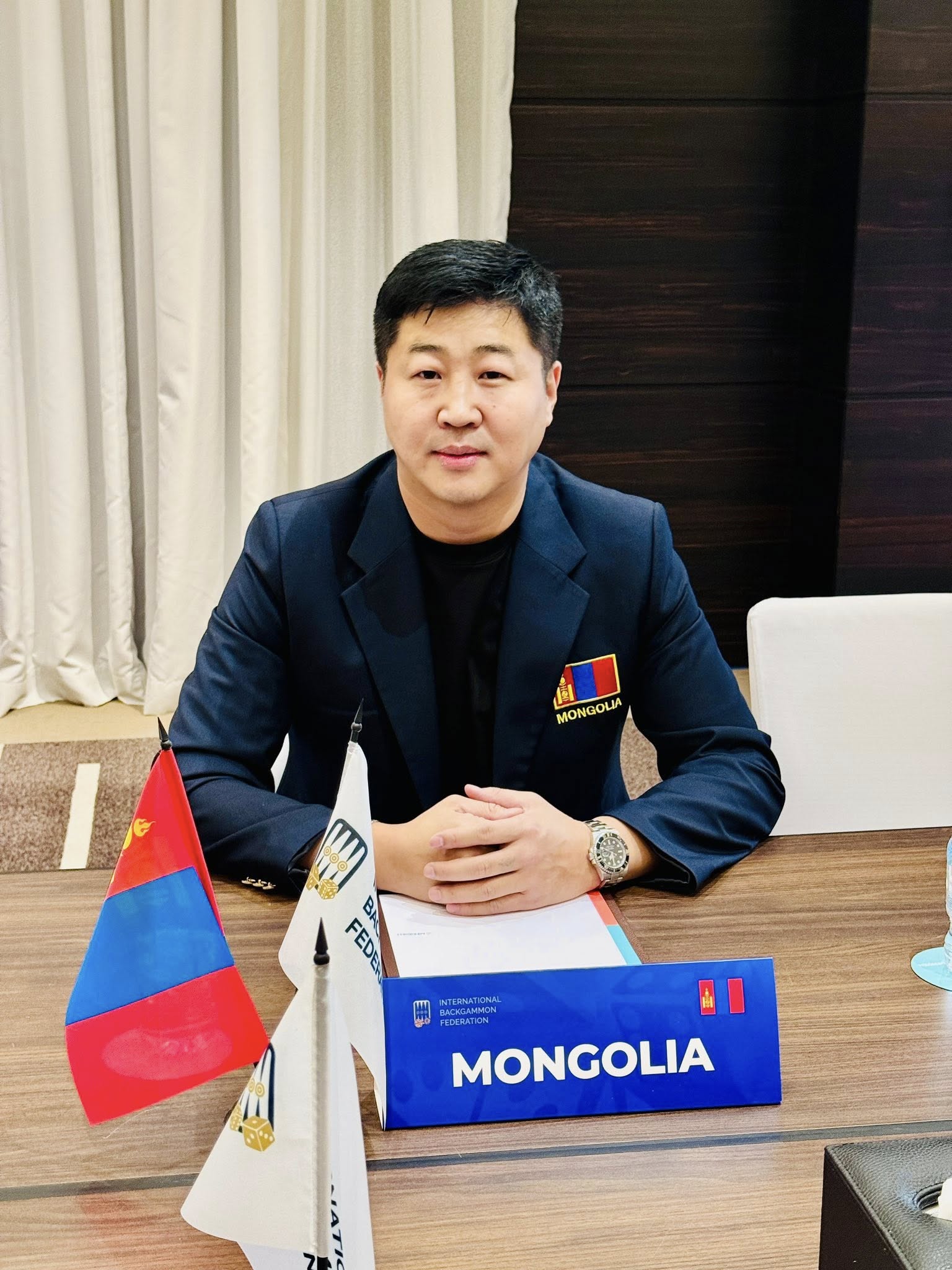
Khandsuren Khatanbaatar is the founder of the Mongolian
Intellectual Academy (Mongolian Academy of Intelligence / Mongolian Academy of Mastermind), established in 2009–2010 as an institution focused on mind sports, memory training, accelerated learning, speed reading, and cognitive development.
Education and Early Background
Khatanbaatar studied in Türkiye and graduated from Gazi University with a law degree and later pursued graduate studies in public administration. During his student years, he became interested in:
- memory systems and mnemonics
- speed reading
- mind mapping
- mental calculation and cognitive training
These studies later formed the intellectual basis for the Academy’s methodology.
Mind Sports Career: Khatanbaatar is widely recognized as one of Mongolia’s pioneering mind athletes and memory trainers. He earned international recognition through memory competitions and became known as a major promoter of memory sports in Mongolia. Sources identify him as a World Memory Championship silver medalist and founder of later international educational initiatives as well.
Building the Mongolian Intellectual Academy
Under his leadership, the Academy expanded from a training center into a broader educational network covering:
- Memory sports
- Mental arithmetic (Soroban / abacus)
- Speed reading
- Rubik’s Cube and sport stacking
- IQ and cognitive development programs
- Competition preparation
The institution reportedly expanded to dozens of branches domestically and internationally, with students winning large numbers of medals and world records in memory sports.
Educational Philosophy: Khatanbaatar’s approach goes beyond memorization itself. His central idea is often described as “learning how to learn” — improving learning speed, concentration, and intellectual performance through systematic methods and training.
He has emphasized that memory sports are not innate talent alone but techniques that can be taught and practiced.
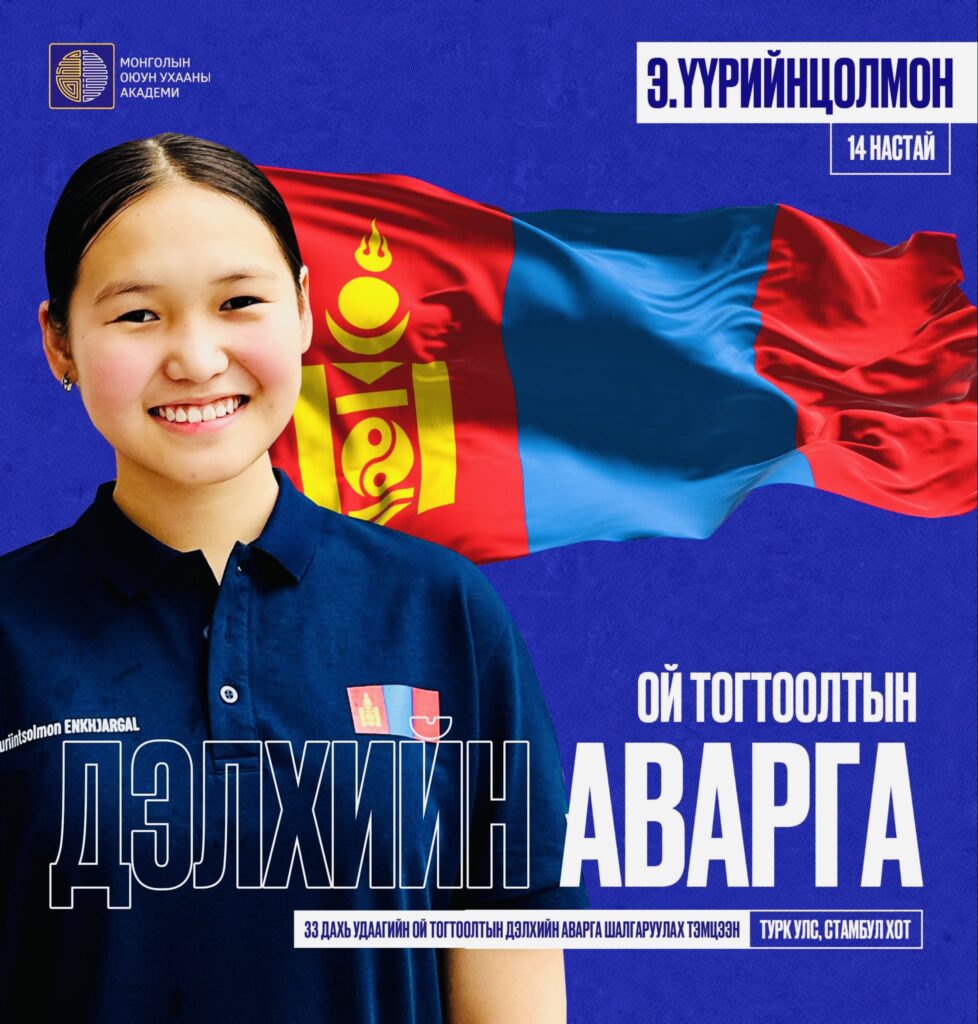
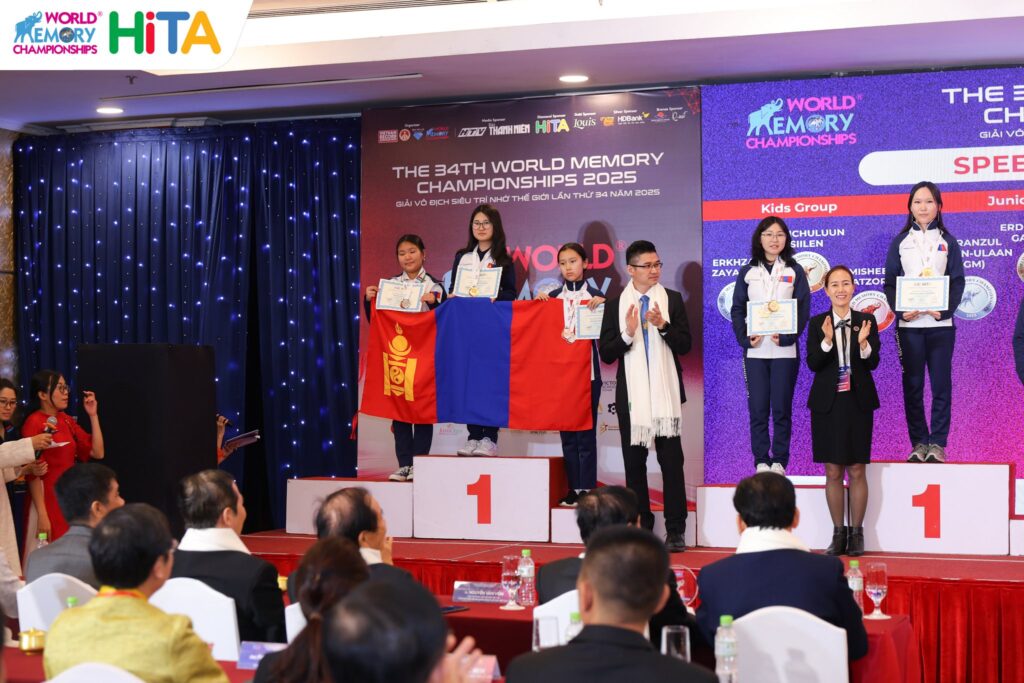
Mongolian Mind Athletes: A Decade of World Excellence (2016–2025)
Over the last decade, Mongolia has emerged as one of the world’s leading powers in mind sports and memory championships. Mongolian athletes have produced multiple world champions, set international records, and consistently ranked among the global elite in memory sports. From junior champions to adult world titles, Mongolian competitors have demonstrated remarkable excellence in memory, speed cards, cognitive performance, and intellectual competitions. Between 2017 and 2025, Mongolia produced several World Memory Champions and earned more than a thousand international medals.
This period represents the “Golden Decade” of Mongolian intellectual sports, establishing Mongolia as a major force on the world stage.
By the late 2010s, Mongolia had become one of the leading countries in memory sports, producing multiple world champions, international grandmasters, and Guinness record holders despite its small population.


Guinness World Records – Mongolian Mind Athletes
Mongolian memory athletes have achieved several Guinness-recognized world records in memory sports, establishing Mongolia as one of the strongest nations in the field.
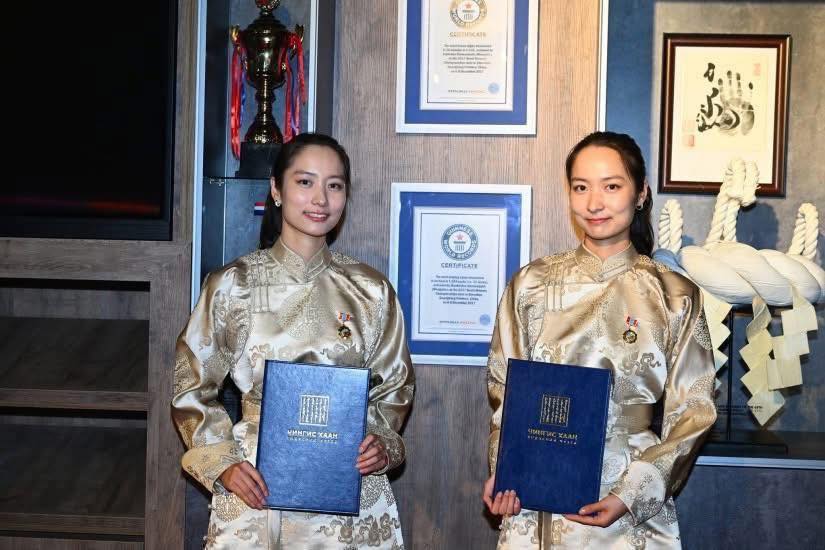
Twin Guinness Record Holders – Munkhshur & Enkhshur Narmandakh (2017)
At the 26th World Memory Championships (2017):
- Enkhshur Narmandakh memorized 5,445 binary digits in 30 minutes, earning a Guinness World Record recognition.
- Munkhshur Narmandakh memorized 37 decks of playing cards in one hour, also entering the Guinness World Records.
The twin sisters became internationally recognized as Mongolia’s Guinness World Record memory athletes and later accumulated more than 200 awards and dozens of trophies.
Shijir-Erdene Bat-Enkh – Speed Cards World Record
Mongolian memory athlete Shijir-Erdene Bat-Enkh set the world speed cards record by memorizing a shuffled deck of cards in 12.74 seconds (2017), becoming one of the fastest memory performances ever recorded.
Mongolia’s Global Legacy
By the late 2010s, Mongolia had become one of the leading countries in memory sports, producing multiple world champions, international grandmasters, and Guinness record holders despite its small population.
THE OLYMPIC HISTORY OF MONGOLIA
THE OLYMPIC HISTORY OF MONGOLIA
Mongolia began participating in the Olympic Games in 1964 and has since taken part in almost every Summer Olympic Games. The only exception was the 1984 Summer Olympics in Los Angeles, which Mongolia did not attend due to the boycott led by the Soviet Union and other socialist countries.
In the Winter Olympics, Mongolia has also participated since 1964, missing only the 1976 Winter Olympic Games. However, the country has yet to win a Winter Olympic medal.
The Mongolian National Olympic Committee was established in 1956. Following Mongolia’s admission to the United Nations in 1961, the International Olympic Committee officially recognized the committee in 1962.
Tokyo 1964 – Mongolia’s Olympic Debut
Mongolia made its Olympic debut at the 1964 Tokyo Olympic Games, where 21 athletes competed in freestyle wrestling, shooting, athletics, cycling, and artistic gymnastics.
Mexico City 1968
In 1968, sixteen athletes represented Mongolia at the Mexico City Olympic Games. The team won one silver medal through Jigjidiin Munkhbat and three bronze medals through Chimidbazaryn Damdinsharav, Danzandarjaagiin Sereeter, and Tumuriin Artag. Two additional athletes achieved diploma positions. Mongolia finished 27th among 112 participating nations.
Munich 1972
At the 1972 Munich Olympic Games, Mongolia sent 41 athletes and won one silver medal through Khorloogiin Bayanmunkh. The nation also earned two diploma finishes and ranked 36th among 121 countries.
Montreal 1976
At the 1976 Montreal Olympic Games, 33 Mongolian athletes competed. Zevegiin Oidov won a silver medal, while four athletes earned diploma positions. Mongolia finished 35th among 92 participating nations.
Moscow 1980
At the 1980 Moscow Olympic Games, Mongolia was represented by 43 athletes and won two silver medals through J. Davaajav and Ts. Damdin, as well as two bronze medals through D. Oyunbold and R. Davaadalai. The team also achieved five diploma finishes and ranked 22nd among 80 participating nations.
Los Angeles 1984
Mongolia did not compete at the 1984 Los Angeles Olympic Games because the socialist countries chose not to participate.
Seoul 1988
At the 1988 Seoul Olympic Games, Mongolia’s 28 athletes won one bronze medal through Nerguin Enkhbat. Sambist Sodnomyn Erkhembayar won a silver medal in a demonstration event, and Mongolian athletes achieved four diploma finishes. The country ranked 47th among 159 participating nations.
Barcelona 1992
At the 1992 Barcelona Olympic Games, Mongolia sent 33 athletes and won two bronze medals through Namjilyn Bayarsaikhan and Dorjsurengiin Munkhbayar.
Two more athletes earned diploma positions, and Mongolia finished 48th among 169 countries.
Atlanta 1996
At the 1996 Atlanta Olympic Games, Mongolia competed with 18 athletes and won one bronze medal through judoka Dorjpalamyn Narmandakh. The nation ranked 71st among 179 participating countries.
Sydney 2000
At the 2000 Sydney Olympic Games, Mongolia sent 20 athletes. Shooter Otryadyn Gundegmaa achieved a diploma finish, but the team returned home without a medal. Mongolia finished 150th among 199 participating nations.
Athens 2004
At the 2004 Athens Olympic Games, Khashbaataryn Tsagaanbaatar won Mongolia’s only medal, a bronze in judo.
Beijing 2008 – A Historic Breakthrough
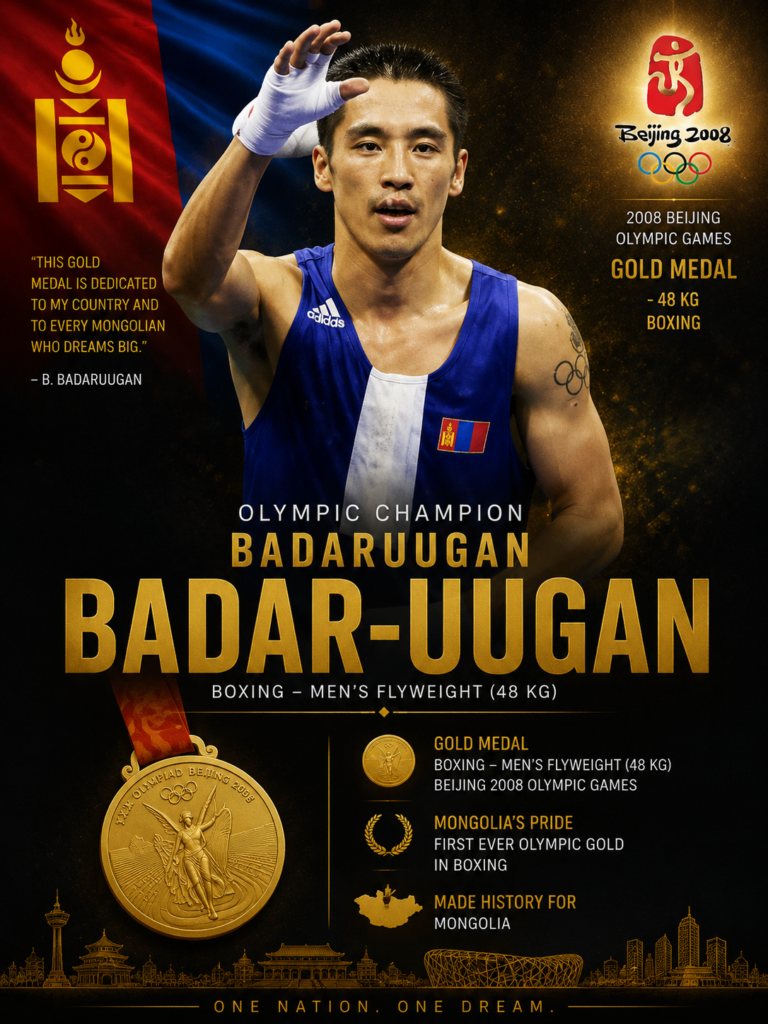
The 2008 Beijing Olympic Games marked a historic breakthrough for Mongolian sport. Twenty-eight athletes represented the country. Naidangiin Tuvshinbayar won gold in the men’s −100 kg judo event, while Enkhbatyn Badar-Uugan won gold in boxing, earning Mongolia’s first Olympic gold medals. Otryadyn Gundegmaa won a silver medal in the women’s 25 metre pistol event, and boxer Purevdorjiin Serdamba also claimed a silver medal.
London 2012
At the 2012 London Olympic Games, Olympic champion Naidangiin Tuvshinbayar won a silver medal, becoming Mongolia’s first double Olympic medalist. Niyambayaryn Tugstsogt won silver in boxing, while Sainjargalyn Nyam-Ochir, Soronzonboldyn Battsetseg, and Munkh-Erdeniin Uranchimeg won bronze medals. Mongolia returned home with a record five Olympic medals.
Rio de Janeiro 2016
At the 2016 Rio de Janeiro Olympic Games, judoka Dorjsurengiin Sumiyaa won a silver medal, while boxer Dorjnyambuugiin Otgondalai earned a bronze medal.
Tokyo 2020
At the 2020 Tokyo Olympic Games, Mongolia qualified 38 Olympic berths across eight sports and was represented by 43 athletes. The Games also marked a historic first, with five Mongolian international officials serving as Olympic judges and referees.
Mongolia’s Olympic Legacy
To date, Mongolia has won a total of 30 medals at the Summer Olympic Games: 2 gold, 11 silver, and 17 bronze.
Mongolian athletes have won Olympic medals in four sports: freestyle wrestling, judo, boxing, and shooting. Before the 2008 Beijing Olympic Games, Mongolia was the most successful nation never to have won an Olympic gold medal. That changed when Naidangiin Tuvshinbayar captured the country’s first Olympic gold medal in judo.
As of today, Mongolian athletes have won 11 Olympic medals in judo, 10 in freestyle wrestling, 7 in boxing, and 2 in shooting.
FROM TOKYO 1964 TO TOKYO 2020
A LEGACY OF CHAMPIONS. A NATION OF PRIDE.
NAIDAN TÜVSHINBAYAR

MONGOLIA’S FIRST OLYMPIC CHAMPION
Naidangiin Tüvshinbayar (born 1 June 1984) is a Mongolian judoka who became Mongolia’s first Olympic champion when he won the men’s −100 kg judo title at the 2008 Beijing Olympic Games. Four years later, he won the silver medal in the same Olympic weight category at London 2012, becoming the first Mongolian athlete to win two Olympic medals.¹
His Olympic career ultimately produced one gold and one silver medal, while his wider international record included Asian championship and Asian Games titles and a bronze medal at the 2017 World Championships.²
Tüvshinbayar’s 2008 victory represented a major turning point in Mongolia’s Olympic history. Before Beijing, Mongolia had won Olympic medals in several sports but had never won an Olympic gold medal. His victory was followed at the same Games by another Mongolian gold medal, won by boxer Enkhbatyn Badar-Uugan.³
EARLY LIFE
Naidangiin Tüvshinbayar was born on 1 June 1984 in Saikhan sum, Bulgan Province, Mongolia. He grew up in Bulgan and began participating in traditional Mongolian wrestling before moving toward judo.⁴
According to biographical information published by the Bulgan provincial government, his early wrestling instructor was Sh. Erdenechimeg [the provincial source gives the instructor’s name as Sh. Erdene-Ochir], and he later continued his education in Ulaanbaatar at the Avarga Institute of Physical Education.⁵
His sporting development therefore emerged from a distinctly Mongolian combat-sports environment in which Mongolian bökh, judo, and sambo overlapped during the formative years of his career.
By 2002, Tüvshinbayar had begun pursuing judo more seriously. He subsequently entered the national competitive system and by 2006 had joined Mongolia’s national judo team.⁶
FROM MONGOLIAN WRESTLING TO JUDO
Tüvshinbayar’s development is significant within the broader history of Mongolian judo because the sport was not isolated from Mongolia’s older wrestling traditions.
Mongolian athletes have historically moved between traditional bökh, sambo, and judo, disciplines that share elements of grappling, throwing, balance, and physical control. Tüvshinbayar’s own career followed this broader pattern. Before reaching the Olympic level, he competed in national and international events and began establishing himself in the −100 kg division.
His early international record included a fifth-place finish at the 2007 World Championships in Rio de Janeiro, demonstrating that he had entered the upper level of international judo before his Olympic breakthrough.⁷
THE ROAD TO BEIJING 2008
The qualification period preceding Beijing was decisive.
In 2008, Tüvshinbayar won the Paris Super World Cup, followed by a bronze medal at the Asian Championships, results that helped secure his qualification for the Beijing Olympic Games.⁸
The 2008 Olympic tournament would become the defining event of his career. On 9 August 2008, Tüvshinbayar competed in the men’s −100 kg division at the Beijing Olympic Games. The International Judo Federation records him as the tournament champion.⁹
BEIJING 2008: THE FIRST OLYMPIC GOLD
Tüvshinbayar’s path to the gold medal included victories over several highly accomplished opponents. Among the most notable was his first-round victory over Japan’s Keiji Suzuki, the reigning Olympic heavyweight champion. He subsequently defeated South Korea’s Jang Sung-ho, an Olympic silver medalist from Athens 2004.¹⁰
In the final, Tüvshinbayar faced Kazakhstan’s Askhat Zhitkeyev. The Mongolian won the final by waza-ari, securing the Olympic gold medal.¹¹ The result had an importance extending beyond the individual competition. It was the first Olympic gold medal in Mongolia’s history. The International Judo Federation explicitly identifies Tüvshinbayar’s Beijing victory as Mongolia’s first Olympic title.¹²
The Mongolian government’s sports history likewise records the 2008 Beijing Games as the point at which Mongolia obtained its first Olympic gold medal.¹³
A TURNING POINT IN MONGOLIAN OLYMPIC HISTORY
The significance of Beijing 2008 can be understood statistically as well as symbolically. Before the Beijing Games, Mongolia had participated in numerous Olympic Games and had accumulated silver and bronze medals, particularly in wrestling, boxing, judo, and shooting. Yet an Olympic gold remained absent from the country’s medal record.¹⁴
Tüvshinbayar’s victory changed that record. Later on the same Olympic stage, boxer Enkhbatyn Badar-Uugan also won gold, meaning that Mongolia left Beijing with two Olympic champions.¹⁵
The result marked a transition in Mongolian Olympic history from a country known primarily for producing medalists to one capable of producing Olympic champions.
LONDON 2012: A SECOND OLYMPIC MEDAL
Tüvshinbayar returned to the Olympic Games four years later. At the London 2012 Olympic Games, he again competed in the men’s −100 kg division. He reached the final and won the silver medal, losing the gold-medal bout to Russia’s Tagir Khaibulaev.¹⁶
The International Judo Federation records his London result as second place.¹⁷
The silver medal had a separate historical significance for Mongolia: Tüvshinbayar became the country’s first athlete to win two Olympic medals.¹⁸ His London achievement was particularly notable because he had been competing while carrying a significant leg injury. Mongolian official biographical accounts describe the injury as a major physical limitation during the tournament.¹⁹ Thus, his Olympic record after London stood at:
| Olympic Games | Event | Result |
|---|---|---|
| Beijing 2008 | Men’s −100 kg Judo | Gold |
| London 2012 | Men’s −100 kg Judo | Silver |
| Rio 2016 | Men’s −100 kg Judo | Round of 32 / =16th |
His total Olympic record was therefore two medals: one gold and one silver.²⁰
CONTINUING INTERNATIONAL CAREER
Tüvshinbayar continued competing internationally after the London Games. His later career included victories at major international competitions, including Grand Prix and Grand Slam events, as well as success at continental level.²¹
In 2014, he won the men’s −100 kg title at the Asian Games in Incheon.²²
He also won the 2016 Asian Championships in the −100 kg category.²³
His most notable late-career world-level result came at the 2017 World Judo Championships in Budapest, where he won bronze in the +100 kg division.²⁴
The medal was significant because it came in the heavyweight division rather than the −100 kg category in which he had won his Olympic title. The IJF described the result as a notable achievement for the Mongolian judoka, then competing at the World Championships after his earlier Olympic success.²⁵
OLYMPIC RECORD
Tüvshinbayar competed at three Olympic Games:
BEIJING 2008 : Gold — Men’s −100 kg
LONDON 2012 : Silver — Men’s −100 kg
RIO DE JANEIRO 2016 : Men’s −100 kg — 17th / =16th position . The International Judo Federation’s official athlete record lists his Olympic results as one gold and one silver.²⁶ Olympedia likewise records a total of two Olympic medals, consisting of one gold and one silver.²⁷
INTERNATIONAL MEDAL RECORD
Beyond the Olympics, Tüvshinbayar’s competitive record includes:
- Olympic Games: 1 gold, 1 silver
- Asian Games: 1 gold
- Asian Championships: 1 gold
- World Championships: 1 bronze
- World Championship team event: 1 bronze
- Numerous IJF World Tour victories and podium finishes.²⁸
His international career therefore extended considerably beyond his historic Beijing victory.
FROM ATHLETE TO OLYMPIC ADMINISTRATOR
Tüvshinbayar later became involved in Olympic administration. On 14 August 2020, he was elected President of the Mongolian National Olympic Committee (MNOC). The election was reported by the Association of National Olympic Committees and the Olympic Council of Asia.²⁹
His election represented a transition from elite athlete to institutional leadership within Mongolian sport. His presidency, however, was relatively brief, lasting approximately one year. Olympedia records his tenure as 2020–2021.³⁰
HISTORICAL SIGNIFICANCE
Tüvshinbayar’s importance in Mongolian sporting history rests on several interconnected developments. First, his victory at Beijing 2008 ended Mongolia’s long wait for an Olympic gold medal. Second, his London 2012 silver established him as Mongolia’s first two-time Olympic medalist.
Third, his career demonstrated the international competitiveness of Mongolian judo beyond a single Olympic tournament. Finally, his later participation in Olympic administration illustrates how elite athletes can move from representing a country in competition to participating in the institutional organization of its sporting movement.
AUTHOR’S THESIS
Naidangiin Tüvshinbayar’s historical significance lies not only in becoming Mongolia’s first Olympic champion, but in transforming the country’s relationship with Olympic success from medal participation into championship-level achievement. His Beijing victory was an individual sporting accomplishment, but its historical meaning was national in scale.
The subsequent London silver demonstrated that Beijing was not an isolated Olympic appearance: Tüvshinbayar returned to the Olympic podium four years later and became Mongolia’s first athlete to win two Olympic medals. His career therefore represents an important chapter in the development of modern Mongolian judo and Mongolia’s broader Olympic identity.
CONCLUSION
On 9 August 2008, Naidangiin Tüvshinbayar defeated Kazakhstan’s Askhat Zhitkeyev in the men’s −100 kg final in Beijing and became the first Olympic champion in Mongolian history.³¹
Four years later, he returned to the Olympic podium in London and won silver.
His final Olympic record — one gold and one silver — places him among the most historically significant athletes in Mongolia’s Olympic history.³²
More importantly, his career provides a lens through which to examine the development of Mongolian competitive sport: from traditional wrestling culture and Soviet-era sporting institutions to modern international judo and Olympic competition.
For ImperialGG, Tüvshinbayar’s story belongs not only to the history of sport, but also to the wider history of modern Mongolia, national representation, international competition, and the transformation of traditional physical culture into global sporting achievement.
FOOTNOTES
1. Olympedia, “Naidangiin Tüvshinbayar,” biographical and Olympic record, listing gold at Beijing 2008 and silver at London 2012.
2. International Judo Federation, athlete profile and results for Naidan Tuvshinbayar.
3. Sports Authority of Mongolia, “Mongolia at the Olympic Games,” documenting Tüvshinbayar’s gold and Enkhbatyn Badar-Uugan’s gold at Beijing 2008.
4. Bulgan Provincial Government, biographical account of Naidangiin Tüvshinbayar, including his birth in Saikhan sum, Bulgan Province.
5. Office of the President of Mongolia, biographical statement on Tüvshinbayar, including his education at Bulgan’s Erdemiin Örgöö school and Avarga Institute of Physical Education.
6. Olympic Council of Asia, biographical information noting that Tüvshinbayar joined Mongolia’s national judo team in 2006.
7. International Judo Federation, athlete results, recording Tüvshinbayar’s fifth-place result at the 2007 World Championships in Rio de Janeiro.
8. International Judo Federation, historical profile describing his 2008 qualification campaign and continental bronze.
9. International Judo Federation, Beijing 2008 official competition results, Men’s −100 kg.
10. International Judo Federation, retrospective account of Tüvshinbayar’s Beijing tournament, including victories over Keiji Suzuki and Jang Sung-ho.
11. International Judo Federation, Beijing 2008 Men’s −100 kg results, listing Naidan Tuvshinbayar first and Askhat Zhitkeyev second.
12. International Judo Federation, historical account describing Tüvshinbayar’s Beijing victory as Mongolia’s first Olympic title.
13. Sports Authority of Mongolia, historical Olympic overview identifying Tüvshinbayar’s Beijing gold as Mongolia’s first Olympic gold medal.
14. Sports Authority of Mongolia, historical overview of Mongolia’s Olympic medal record before Beijing 2008.
15. Sports Authority of Mongolia, Olympic history, documenting the two Mongolian gold medals at Beijing 2008.
16. Office of the President of Mongolia, biographical account identifying Tüvshinbayar’s London 2012 silver and his final against Russia’s Tagir Khaibulaev.
17. International Judo Federation, official athlete results, recording second place at London 2012.
18. Sports Authority of Mongolia, Olympic history, identifying Tüvshinbayar as Mongolia’s first athlete to win two Olympic medals.
19. Bulgan Provincial Government, biography describing his participation at London 2012 while dealing with a serious leg injury.
20. Olympedia, Olympic results for Beijing 2008, London 2012, and Rio 2016.
21. International Judo Federation, complete athlete results across Grand Prix, Grand Slam, World Cup, Masters, Continental Open, and championship competitions.
22. International Judo Federation, athlete results, recording first place at the 2014 Asian Games in Incheon.
23. International Judo Federation, athlete results, recording first place at the 2016 Asian Championships.
24. International Judo Federation, 2017 World Judo Championships, recording Tüvshinbayar’s bronze medal in the +100 kg category.
25. International Judo Federation, report on the 2017 World Championships describing Tüvshinbayar’s bronze-medal victory over Guram Tushishvili.
26. International Judo Federation, official athlete results.
27. Olympedia, Olympic medal record for Naidangiin Tüvshinbayar.
28. International Judo Federation, athlete results and Olympic/World/continental records.
29. Association of National Olympic Committees, “Olympic judoka Naidan Tüvshinbayar elected Mongolia NOC President,” 17 August 2020.
30. Olympedia, organizational record for Tüvshinbayar’s presidency of the Mongolian National Olympic Committee, 2020–2021.
31. International Judo Federation, Beijing 2008 official results and retrospective account.
32. Olympedia, Olympic medal record: one gold and one silver.
SELECTED REFERENCES
- International Judo Federation (IJF), Naidan Tuvshinbayar — Athlete Profile and Results. IJF Athlete Profile
- International Judo Federation, Beijing 2008 Olympic Games — Men’s −100 kg Results. IJF Competition Results
- Olympedia, Naidangiin Tüvshinbayar. Olympedia Biography
- Olympic Council of Asia, Mongolia NOC Elects Olympic Judo Champion as New President.
- Office of the President of Mongolia, Biographical Statement on Naidangiin Tüvshinbayar.
- Bulgan Provincial Government, Olympic Champion Naidangiin Tüvshinbayar.
IMPERIALGG.COM
HISTORY • GEOGRAPHY • HERITAGE • RESEARCH

JAMTSYN DAVAAJAV
MONGOLIA’S OLYMPIC SILVER MEDALIST AND NATIONAL WRESTLING CHAMPION
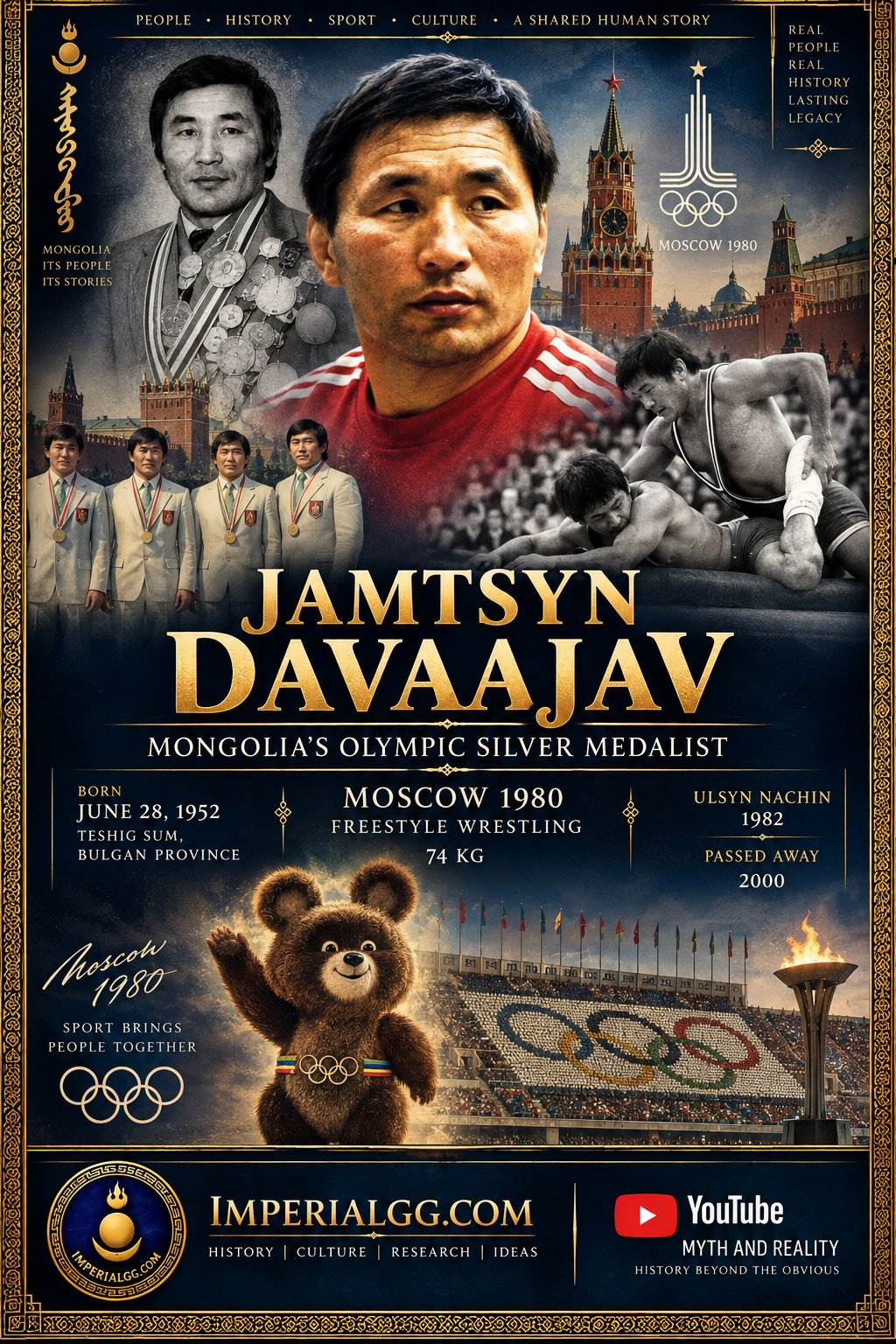
Jamtsyn Davaajav (1952–2000) was a Mongolian freestyle wrestler and national wrestler who won the silver medal in the men’s 74 kg freestyle wrestling event at the 1980 Moscow Olympic Games. He was subsequently recognized as a Merited Athlete of Mongolia and held the traditional Mongolian wrestling rank of ulsyn nachin (State Falcon).¹
Davaajav belonged to a generation of Mongolian wrestlers who established the country’s international reputation in freestyle wrestling during the 1970s and early 1980s. Before his Olympic success, he had already competed at world championships, continental competitions, the Universiade, and other major international tournaments.²
His career is particularly significant because it connected two traditions of Mongolian wrestling: modern international freestyle wrestling and the country’s indigenous bökh tradition.
EARLY LIFE AND SPORTING DEVELOPMENT
Jamtsyn Davaajav was born in Teshig sum, Bulgan Province, in 1952 and died in 2000. Mongolian sources identify him as having begun training in freestyle wrestling in 1968.³
He graduated from secondary school in Khutag-Öndör sum, Bulgan Province, in 1969, and subsequently completed teacher training at the Arkhangai Teachers’ School in 1972.⁴
His early sporting development was rapid. He became a two-time Mongolian junior champion and, in 1973, won a bronze medal at the international youth competition Nökhörlöl (“Friendship”), held in Mongolia. This result helped lead to his selection for the national team.⁵
The trajectory is important because Davaajav did not emerge suddenly at the 1980 Olympics. His Olympic medal was the culmination of more than a decade of competitive development.
RISE THROUGH MONGOLIAN FREESTYLE WRESTLING
During the second half of the 1970s, Davaajav became one of Mongolia’s leading wrestlers in the 74 kg division.
In 1975, he won a medal at the World Junior Championships, establishing himself internationally at a relatively young age.⁶
He subsequently became a regular competitor at senior international competitions. Mongolian records credit him with six national freestyle wrestling championship titles during his career.⁷
His international development accelerated in the years immediately preceding Moscow.
At the 1977 World Championships, he finished fourth in the 74 kg division. He again reached fourth place at the 1979 World Championships. Olympedia’s historical record also lists a fifth-place finish at the 1981 World Championships.⁸
These results place Davaajav among Mongolia’s strongest international freestyle wrestlers of the period, even before his Olympic medal.
INTERNATIONAL ACHIEVEMENTS BEFORE MOSCOW
Davaajav’s career included success across several international competitions. At the 1977 Summer Universiade, he won the bronze medal in men’s freestyle wrestling at 74 kg.⁹
At the 1978 Asian Games in Bangkok, he also won bronze in the 74 kg division.¹⁰
He continued to win major international tournaments in the years immediately preceding the Moscow Olympics, including the International tournament in 1979, 1980, and 1981 according to Mongolian sporting records.¹¹
This record illustrates the competitive environment in which he entered the 1980 Olympic Games. He was not an unknown challenger but an established international wrestler with repeated high finishes against leading opponents.
MOSCOW 1980
The 1980 Moscow Olympic Games represented the high point of Davaajav’s competitive career. He entered the men’s 74 kg freestyle wrestling tournament as a highly experienced international competitor.
The official Mongolian sports record lists Davaajav as the silver medalist in this division.¹²
His Olympic tournament was particularly demanding. In the opening round, he defeated Toneyé of Cameroon. He then defeated Juma of Pakistan, followed by Romania’s J. Pîrcălăbu, described in Mongolian sources as a European champion. He subsequently defeated Italy’s R. Nicolini.¹³ These victories placed Davaajav among the final contenders for the Olympic title.
THE PINIGIN BOUT
One of the most unusual episodes of Davaajav’s Olympic tournament came in his bout against Soviet wrestler Pavel Pinigin, the reigning Olympic and world champion.
The bout ended 2–2, and both wrestlers were disqualified for passivity under the competition rules then in force. Mongolian accounts describe the bout as lasting approximately eight minutes and forty seconds.¹⁴
The result was consequential for the tournament. Pinigin, competing in front of the home Soviet crowd, subsequently lost to Bulgaria’s Valentin Raychev in the other side of the tournament, while Davaajav advanced after defeating Czechoslovakia’s Dan Karabin.
THE SEMIFINAL AGAINST DAN KARABIN
Davaajav’s bout against Dan Karabin was effectively decisive for his medal position. Karabin was a world championship silver medalist, making the contest a meeting between two established international wrestlers.¹⁵
Davaajav won the bout 7–5, advancing to the Olympic final. The victory also guaranteed him at least a silver medal. For Mongolia, this meant that the 74 kg freestyle division would produce another Olympic medal for the country’s wrestling program.
THE OLYMPIC FINAL
In the gold-medal bout, Davaajav faced Valentin Raychev of Bulgaria. The final became one of the most closely remembered matches in the history of Mongolian wrestling. The score reached 5–5 late in the contest. Contemporary and retrospective Mongolian accounts emphasize how close Davaajav came to winning the Olympic title before Raychev secured the decisive scoring action near the end of the match.¹⁶
The official Olympic result was:
Gold — Valentin Raychev, Bulgaria
Silver — Jamtsyn Davaajav, Mongolia
Bronze — Dan Karabin, Czechoslovakia¹⁷
Davaajav therefore became the Olympic silver medalist in men’s freestyle wrestling at 74 kg.
THE SIGNIFICANCE OF THE MOSCOW SILVER
Davaajav’s silver medal belongs to a broader period of success for Mongolian wrestling at the Olympic Games. Mongolia had already won Olympic wrestling medals beginning with the 1968 Mexico City Games, and wrestlers such as Jigjidiin Mönkhbat, Khorloogiin Bayanmönkh, and Zevegyn Oidov had established a strong international tradition.¹⁸
Davaajav’s achievement at Moscow continued this tradition. The Mongolian freestyle wrestling team at Moscow 1980 included competitors across the full range of weight categories, and Davaajav’s silver was one of several significant results achieved by Mongolian wrestlers at the Games. The national sports record lists him as the silver medalist in the 74 kg division.¹⁹
His medal also came in the same Olympic Games in which Mongolia won another silver through judoka Tsendiin Damdin.
WORLD CHAMPIONSHIP RECORD
Davaajav’s Olympic achievement should be considered alongside his World Championship record.
His major World Championship results included:
| Year | Competition | Result |
|---|---|---|
| 1977 | World Championships, 74 kg | 4th |
| 1978 | World Championships, 74 kg | 4th |
| 1979 | World Championships, 74 kg | 4th |
| 1981 | World Championships, 74 kg | 5th |
The first three fourth-place finishes demonstrate how consistently close he was to the World Championship podium before and around his Olympic career.²⁰
This is an important distinction: Davaajav’s international career was characterized not by one isolated Olympic performance but by repeated participation among the world’s leading 74 kg wrestlers.
NATIONAL CHAMPIONSHIP RECORD
Within Mongolia, Davaajav was also a highly successful freestyle wrestler. Mongolian sports sources record national championship victories in:
1976 · 1977 · 1978 · 1980 · 1981
He also won silver at the 1982 Mongolian National Championships.²¹ His national record demonstrates that his Olympic achievement formed part of a sustained period of domestic dominance.
TRADITIONAL MONGOLIAN WRESTLING
Davaajav’s sporting identity extended beyond Olympic freestyle wrestling. In 1982, he competed at the national Naadam wrestling festival and reached the fifth round, earning the traditional title of ulsyn nachin — State Falcon.²²
He subsequently reached the fifth round again in 1986 and 1990.²³
This aspect of his career is particularly significant in the context of Mongolian sporting history. The modern Olympic wrestler and the traditional Mongolian bökh wrestler represented two different competitive systems, yet Davaajav participated successfully in both.
His career therefore illustrates an important feature of twentieth-century Mongolian wrestling culture: the coexistence and interaction of international freestyle wrestling with traditional Mongolian wrestling.
A CAREER BETWEEN TWO WRESTLING TRADITIONS
Mongolian wrestling culture developed through several interconnected forms of grappling. Traditional Mongolian bökh emphasized throwing, balance, strength, and positional control within a distinctive cultural and ceremonial system. Modern freestyle wrestling, by contrast, developed under international rules and became part of the Olympic sporting system.
Davaajav competed successfully within both. His Olympic career placed him within the global sporting system, while his State Falcon title connected him to one of Mongolia’s oldest and most culturally significant athletic traditions.This dual identity makes his biography especially useful for understanding the transformation of Mongolian wrestling during the twentieth century.
LATER LIFE
Following his competitive career, Davaajav was involved in physical education and sports instruction. Sources identify him as having worked as an instructor at the Physical Education Faculty of the State Pedagogical University.²⁴
He died in 2000. His death brought to an end the life of an athlete whose principal competitive achievements had occurred two decades earlier, but whose Olympic and national wrestling record remained part of Mongolia’s sporting memory.
LEGACY
Davaajav’s name continues to be associated with Mongolian freestyle wrestling.
In 2026, Mongolia’s National Adult Freestyle Wrestling Championships were organized as the Jamtsyn Davaajav Memorial National Championships, explicitly commemorating the 1980 Olympic silver medalist and his contribution to Mongolian wrestling.²⁵
The memorial tournament demonstrates that Davaajav’s legacy has moved beyond his personal medal record. His name now functions as part of Mongolia’s sporting heritage, particularly within the institutional memory of freestyle wrestling.
AUTHOR’S THESIS
Jamtsyn Davaajav’s historical significance lies in the way his career connected Mongolia’s international Olympic wrestling tradition with its indigenous wrestling culture. His silver medal at Moscow 1980 was not an isolated achievement. It followed a decade of domestic championships, international competition, World Championship appearances, Asian Games success, and participation in the wider Soviet-era international wrestling system.
At the same time, his later achievement of the ulsyn nachin title demonstrates that elite international wrestling and traditional Mongolian bökh were not mutually exclusive paths. Davaajav’s career therefore represents a transitional generation in Mongolian sport — athletes who competed under modern international rules while remaining connected to the country’s traditional wrestling culture.
CONCLUSION
Jamtsyn Davaajav (1952–2000) remains an important figure in the history of Mongolian wrestling. His silver medal at the 1980 Moscow Olympic Games in men’s 74 kg freestyle wrestling represented the culmination of a decade-long international career. His record also included World Championship top-four finishes, an Asian Games bronze, Universiade bronze, multiple Mongolian national championships, and the traditional Mongolian wrestling rank of ulsyn nachin.²⁶
His career demonstrates how Mongolian wrestling developed simultaneously along two paths:
the international Olympic discipline of freestyle wrestling, and the traditional national system of Mongolian bökh. Davaajav stood at the intersection of those traditions.
For ImperialGG, his story is therefore more than the biography of an Olympic medalist. It is a chapter in the broader history of modern Mongolia, international sport, physical culture, and the continuing transformation of Mongolian wrestling traditions.
FOOTNOTES
1. Olympedia, “Jamtsyn Davaajav,” records his Olympic silver medal in the men’s 74 kg freestyle wrestling event at Moscow 1980 and identifies him as a Mongolian Olympian. Olympedia gives conflicting biographical data for his birth year and notes the discrepancy in its errata.
2. Mongolian National Broadcaster (MNB), “Москва-1980 олимпын наадмын мөнгөн медальт Жамцын Даваажав,” provides a detailed account of his career before the 1980 Olympics, including World Championships, Asian Games, Universiade and national competition.
3. MNB identifies 1968 as the year Davaajav began training in freestyle wrestling. A 2026 account of the Davaajav Memorial Championship likewise identifies him as having begun freestyle wrestling in 1968.
4. MNB biography records his graduation from Khutag-Öndör secondary school in 1969 and completion of the Arkhangai Teachers’ School in 1972.
5. MNB reports his two Mongolian junior championships and his 1973 bronze medal at the Nökhörlöl international youth competition.
6. Mongolian sporting records report Davaajav’s medal at the 1975 World Junior Championships.
7. The 2026 Davaajav Memorial Championship report lists five Mongolian national freestyle titles in 1976, 1977, 1978, 1980 and 1981, plus a silver in 1982.
8. Olympedia records Davaajav’s fourth-place finish at the 1977 and 1979 World Championships and fifth place at the 1981 World Championships.
9. Historical results for the 1977 Summer Universiade record Jamtsyn Davaajav as bronze medalist in men’s freestyle 74 kg.
10. MNB records Davaajav’s bronze medal in the 74 kg freestyle wrestling division at the 1978 Asian Games in Bangkok.
11. The 2026 Davaajav Memorial Championship report records his victories at the International tournaments in 1979, 1980 and 1981.
12. Mongolia’s National Sports Agency lists Davaajav as the silver medalist in the 74 kg freestyle wrestling event at Moscow 1980.
13. MNB provides a detailed round-by-round account of Davaajav’s Moscow tournament, including his victories over wrestlers from Cameroon, Pakistan, Romania and Italy.
14. The MNB account records the 2–2 bout with Soviet Olympic and World champion Pavel Pinigin and describes the subsequent disqualification of both wrestlers for passivity.
15. MNB identifies Davaajav’s opponent Dan Karabin as a World Championship silver medalist and records Davaajav’s 7–5 victory.
16. The 2026 Davaajav Memorial Championship report describes the final against Valentin Raychev, including the late 5–5 score and Raychev’s decisive scoring action. Because retrospective accounts differ in their description of the exact late sequence, the match result rather than later anecdotal interpretations should be treated as the firm historical fact.
17. Historical Olympic results list Valentin Raychev first, Jamtsyn Davaajav second, and Dan Karabin third in the men’s freestyle 74 kg event at Moscow 1980.
18. Mongolia’s Olympic wrestling history records a sequence of medal-winning wrestlers beginning with the 1968 Mexico City Games.
19. Mongolia’s National Sports Agency lists the complete Mongolian freestyle wrestling team at Moscow 1980 and Davaajav’s silver medal at 74 kg.
20. Olympedia’s biographical record provides Davaajav’s World Championship results for 1977, 1979 and 1981.
21. The 2026 Davaajav Memorial Championship report lists his Mongolian national championship titles and 1982 silver medal.
22. The same source records that Davaajav reached the fifth round of the 1982 National Naadam and received the title of ulsyn nachin.
23. The source records further fifth-round appearances at the 1986 and 1990 National Naadam.
24. Mongolian biographical accounts identify his later work in physical education and sports instruction.
25. Mongolia’s sports authorities report that the 2026 National Adult Freestyle Wrestling Championships were held under the name of Jamtsyn Davaajav, commemorating his contribution to Mongolian wrestling.
26. Olympedia and Mongolian sporting sources together establish the principal international record: Olympic silver, World Championship top-four finishes, and multiple other international results.
SELECTED REFERENCES
- Olympedia. Jamtsyn Davaajav. Olympic biographical and results database.
- Mongolian National Broadcaster (MNB). “Москва-1980” олимпын наадмын мөнгөн медальт Жамцын Даваажав. 9 November 2020.
- National Sports Agency of Mongolia. “Олимпод оролцсон чөлөөт бөхийн баг тамирчид — Москва-1980.”
- Zindaa.mn. “Жамцын Даваажавын нэрэмжит Чөлөөт бөхийн УАШТ.” 5 January 2026.
- Wikimedia Commons. Valentin Raychev vs. Jamtsyn Davaajav, Moscow 1980. Photograph dated 25 July 1980.
IMPERIALGG EDITORIAL TITLE
Website дээр энэ нийтлэлийн гарчгийг:
JAMTSYN DAVAAJAV
THE WRESTLER WHO STOOD ONE BOUT FROM OLYMPIC GOLD
MOSCOW 1980 · FREESTYLE WRESTLING · 74 KG
1993: MY FIRST MEETING WITH OLYMPIC SILVER MEDALIST JAMTSYN DAVAAJAV
bIt was the autumn of 1993. At the time, I was a first-year student at the Mongolian Business University. One day, a broad-shouldered, strongly built man with a calm and gentle manner came to our school and asked to meet me.
When we were introduced, he simply said:
“I am Davaajav. I am an Olympic silver medalist and a national nachin.”
I already knew his name. But I had never imagined that I would one day meet in person a man who had represented Mongolia on the Olympic stage. Then he told me something that has remained vivid in my memory.
“Gurragchaa, Mongolia’s first cosmonaut and president of the Mongolian Wrestling Association, gave me the responsibility of making you a wrestler who would earn a national title,” he said.
He then invited me to come to his training hall and be evaluated.
“Come to the hall at three o’clock on the third day,” he told me.
I went to the training hall as he had instructed.
When I arrived, my coach looked at me and said, almost as if introducing me to the wrestlers around him:
“All right, let’s see what this young man from our homeland can do.”
Davaajav and I wrestled several bouts that day.
To my own surprise, I managed to throw him twice.
He looked at me and exclaimed with genuine surprise:
“Oh! Do we really have a young man like this from our homeland?”
Then he said something that I have never forgotten:
“In three years, you will be standing here as a national nachin.”
At that moment, three years seemed like an incredibly long time. The idea of standing as a wrestler with a national title felt very far away.
Yet his words stayed with me.
Looking back now, I realize how remarkable that moment was. A man who had already stood on the Olympic podium was looking at a young university student and seeing something in him that the young man himself could not yet see.
Davaajav was a remarkably calm and modest person. He had the powerful build of a wrestler, but his manner was gentle and his voice quiet. What I remember especially well is that he was a beautiful singer.
A man who had represented Mongolia on the Olympic stage and won a silver medal at the 1980 Moscow Olympics might seem distant or almost legendary when remembered only through the pages of history. But I remember him differently: as the quiet, approachable man who stood in front of me, spoke to me simply, tested me on the wrestling mat, and encouraged me to believe that a national title was within reach.
At the time, I did not fully understand the historical significance of that meeting.
Looking back now, I realize that Davaajav himself embodied an important chapter in the history of Mongolian sport. On one side stood the traditional Mongolian bökh wrestling arena; on the other stood the modern Olympic arena. Davaajav belonged to a generation that connected those two worlds through his own life and career.
For me, however, that history did not begin with a book or an academic study.
It began on an autumn day in 1993, when I was a first-year student at the Mongolian Business University and met Jamtsyn Davaajav at my school.
That day, he introduced himself to me as an Olympic silver medalist and ulsyn nachin.
He took me onto the wrestling mat, tested me himself, and told me that one day I would stand there as a national titleholder.
Three years had seemed so far away.
But life had another path.
I never became the national nachin he believed I could become.
Instead, the memory of that young wrestler, and of the man who believed in him, remained with me.
What makes the memory painful today is that Davaajav’s story did not continue as it might have. Because of bad people and thieves, the young man was never able to continue his wrestling journey. What could have become a proud chapter in a wrestler’s life was instead left as a sad and unfinished memory.
And perhaps that is why I remember Davaajav not simply as an Olympic silver medalist or a national nachin.
I remember him as the man who, in the autumn of 1993, looked at a young university student and said:
“In three years, you will be standing here as a national nachin.”
Three years seemed very far away then.
Today, more than three decades later, those words remain very close.
Behind every title and every medal in history, there is a human life.
And behind every unfinished dream, there is often a story that deserves to be remembered.
Established by the Joint Resolution No. 132/182 of the Central Committee of the MPRP and the Council of Ministers on May 10, 1963, the State Academic Theatre of Opera and Ballet opened its doors on May 15 with P.I. Tchaikovsky’s Eugene Onegin.
This was not merely the opening of a theatre, but the birth of Mongolia’s great sanctuary of classical arts.

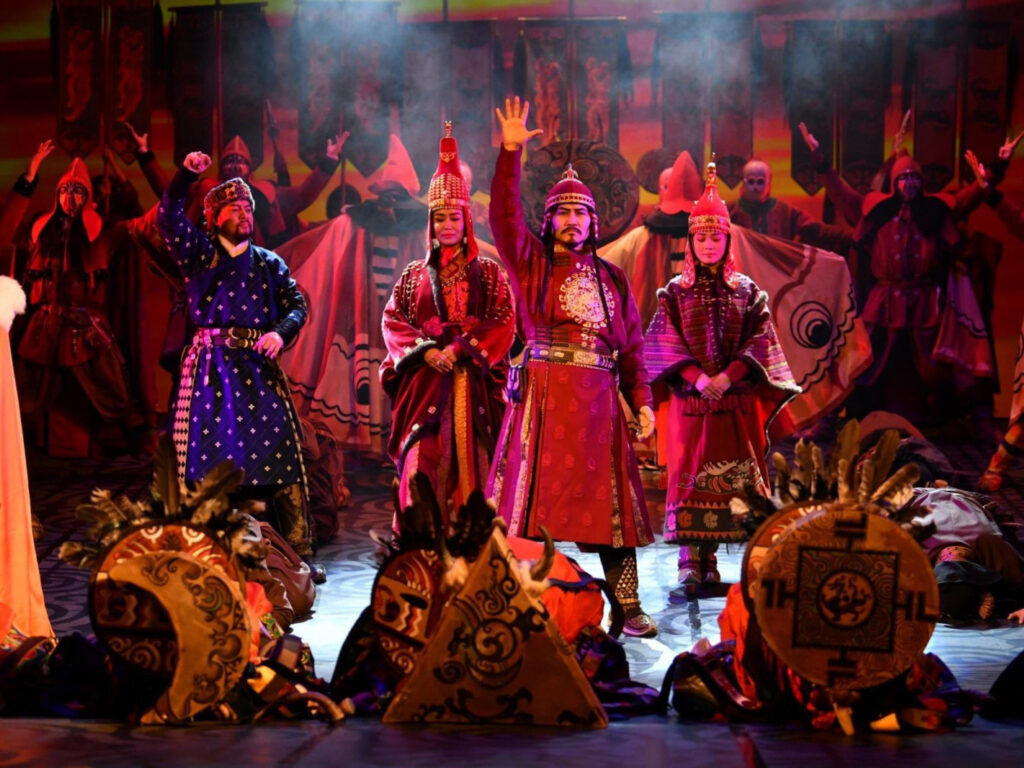
From this revered stage emerged generations of world-class singers, dancers, and musicians who carried Mongolia’s name onto the international stage. Among them are renowned artists such as Ariunbaatar Ganbaatar and Amartuvshin Enkhbat, whose voices have brought Mongolian opera to audiences across the world.
The State Academic Theatre of Opera and Ballet remains a sacred home of Mongolia’s classical arts and a source of national pride.

In recent decades, Mongolia has made notable progress in several areas:
- Economic Growth: Driven by mining, especially copper and gold projects like Oyu Tolgoi
- Democracy: A stable democratic system with regular free elections
- Urban Development: Rapid expansion of Ulaanbaatar and infrastructure improvements
- Education & Technology: Increasing access to education and digital innovation
- Cultural Preservation: Strong continuation of nomadic traditions alongside modernization
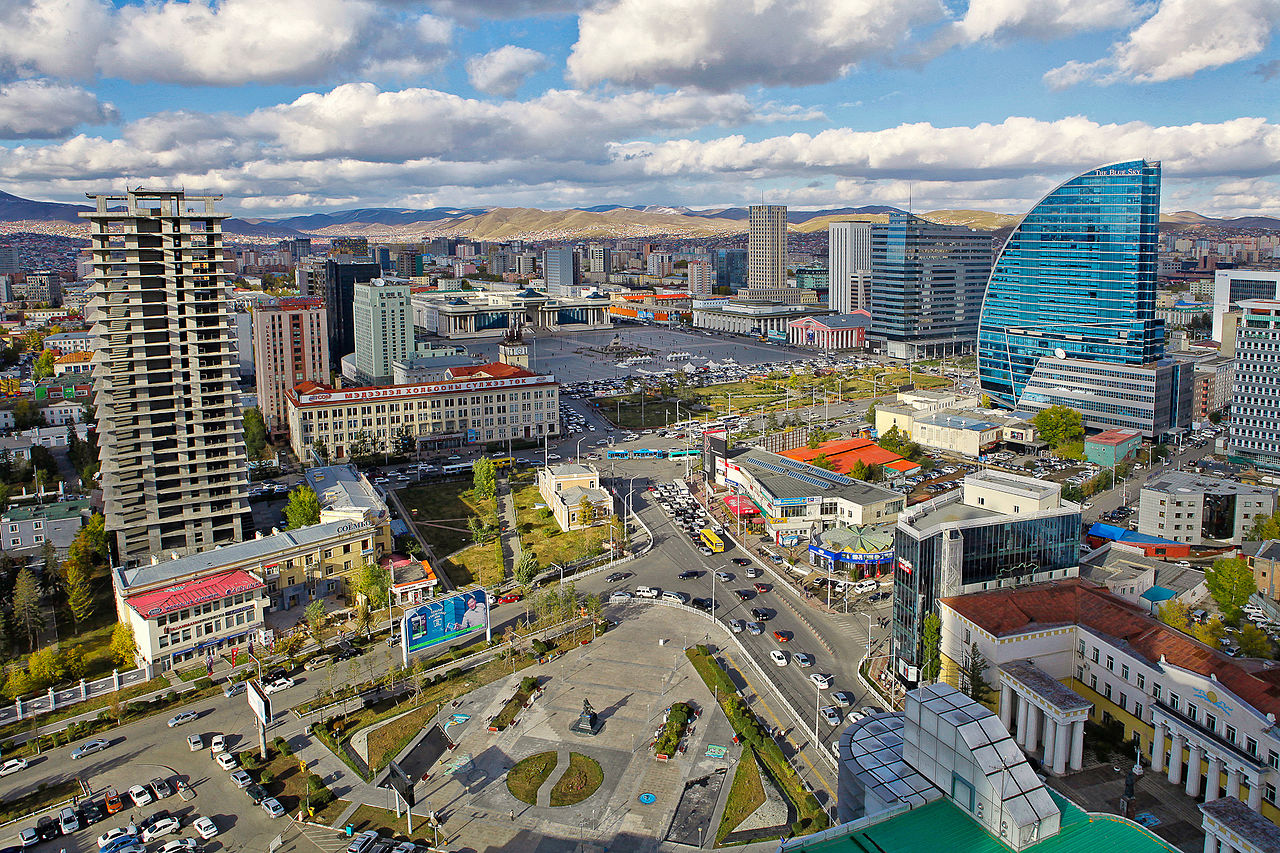
Culture and Identity
Despite modernization, Mongolia remains deeply connected to its heritage. Traditional practices such as herding, throat singing, and the Naadam Festival continue to play a central role in national identity.
The balance between modern progress and ancient tradition defines the spirit of modern Mongolia.
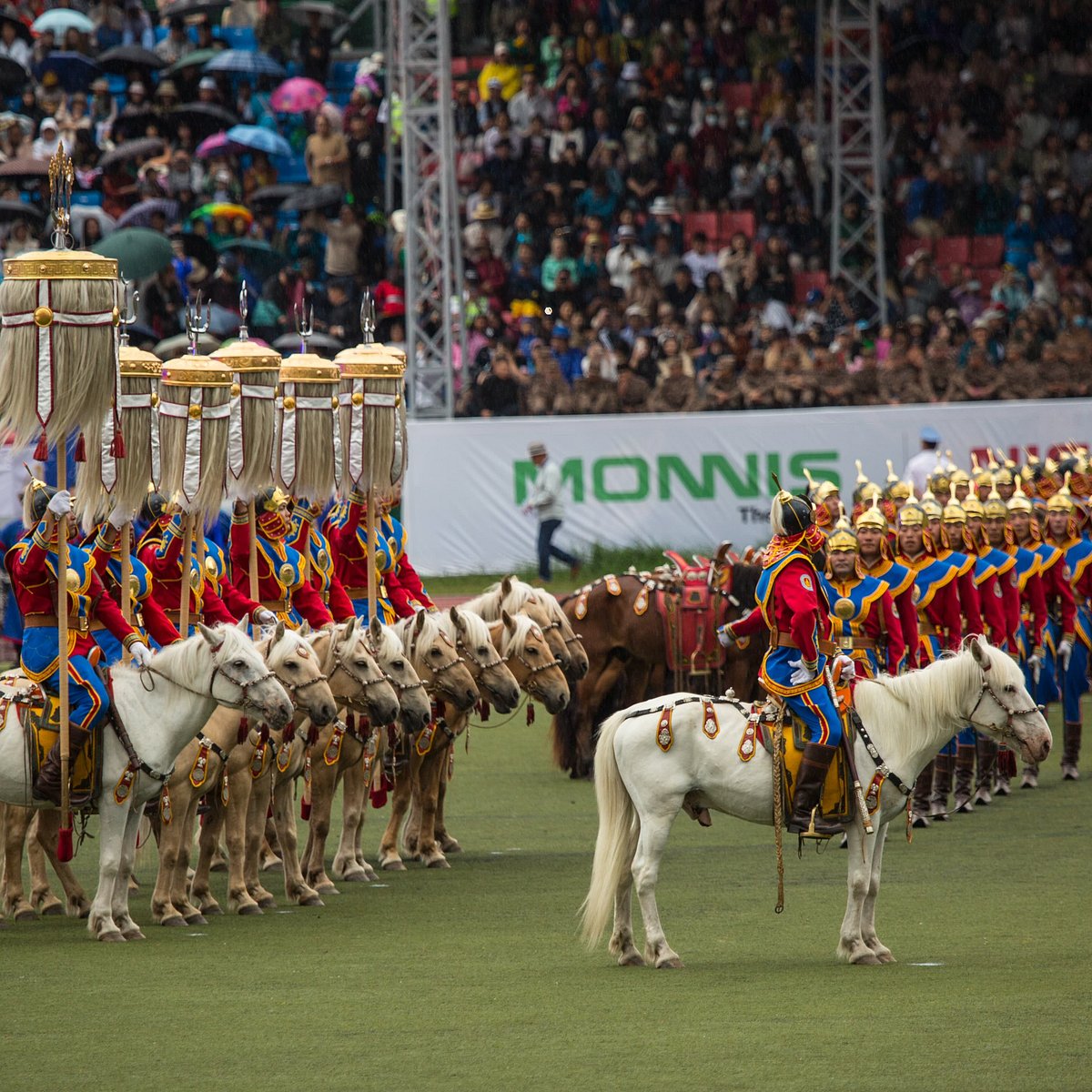
 The Festival of the Three Manly Games, NAADAM The Festival of the Three
Beneath the eternal blue sky, as the wind moves across the vast steppe and the thunder of hooves awakens the land, the Mongolian people celebrate Naadam. It is not merely a festival—it is a living expression of history, identity, and the spirit of the nomadic world.
Known as the “Three Manly Games”, Naadam brings together horse racing, wrestling, and archery—three disciplines that embody strength, endurance, skill, and honor. These traditions date back centuries, rooted in the time of the Mongol Empire when they were essential for survival and warfare.
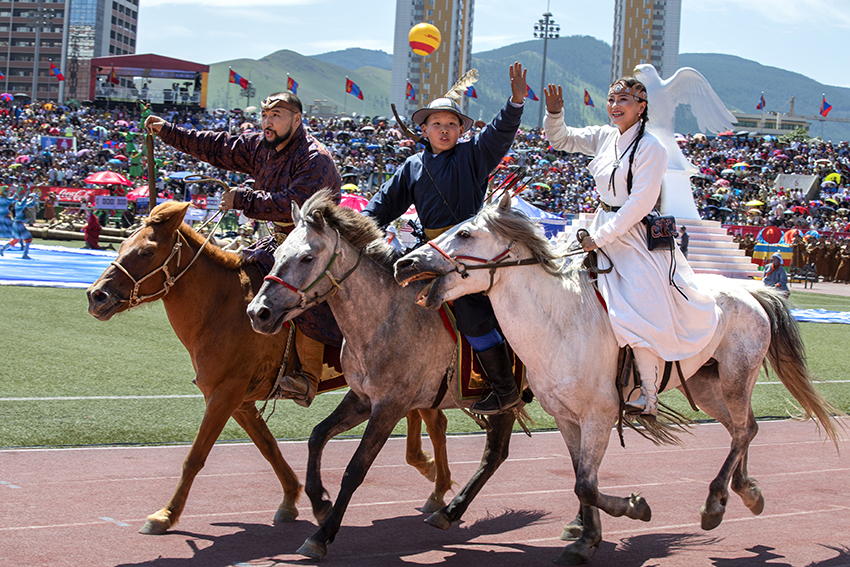
Naadam Opening Ceremony
The Naadam opening ceremony is a grand cultural spectacle held at the national stadium in Ulaanbaatar. It brings together music, dance, and historical reenactments that celebrate Mongolia’s heritage, from the age of empires to the modern nation. Performers dressed in traditional costumes create a vivid and powerful display of identity, unity, and pride beneath the Eternal Blue Sky.
🐎 Horse Racing — The Spirit of the Steppe
Horse racing in Naadam is unlike any other in the world. It is not confined to short tracks but unfolds across the open steppe, covering long distances that test the endurance and resilience of both horse and rider.
Young riders, often children, guide their horses across vast landscapes, becoming one with the rhythm of the land. The winning horse is honored as a champion, and its victory is celebrated with traditional songs and blessings.
This is not just a race—it is a profound connection between human, horse, and nature.
Wrestling — Strength and Honor
Mongolian wrestling is a symbol of power, dignity, and tradition. Wrestlers enter the arena performing the “eagle dance,” spreading their arms like wings in a ritual that honors strength and freedom.
The contest is not only about physical force but also strategy, balance, and respect. There are no weight classes, and victory comes when one wrestler forces the other to touch the ground with any part of the body except the feet.
Even in defeat, respect remains central—wrestlers uphold a code of honor that reflects the values of Mongolian society.
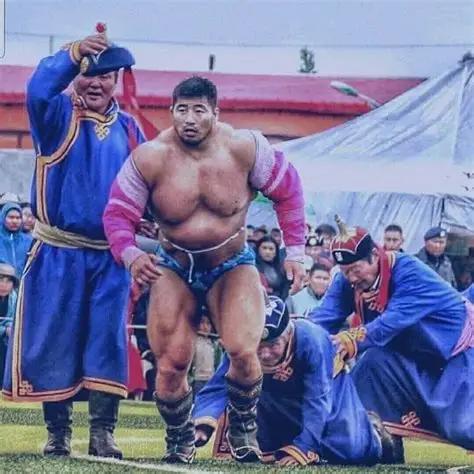
🏹 Archery — Precision and Inner Focus
Archery represents precision, patience, and inner harmony. Using traditional bows, archers aim at small targets from a distance, guided by calm breathing and intense focus.
As arrows fly, the crowd chants “Uukhai!”, a traditional cheer that celebrates accuracy and encourages the archer. This ritual creates a powerful atmosphere where skill and spirit unite.
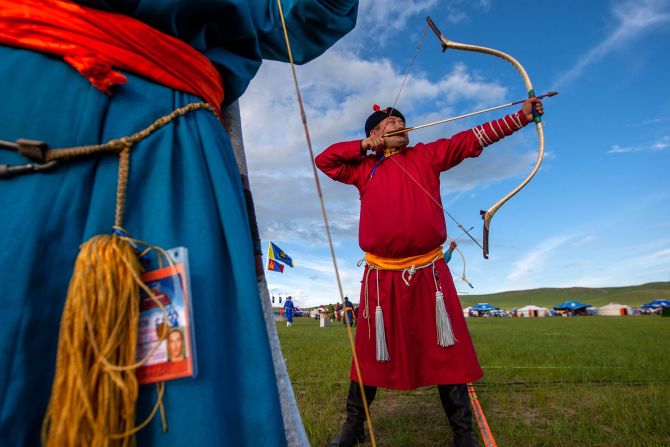
✨ The Essence of Naadam
Naadam is more than a celebration—it is a bridge between past and present.
Here:
- Horses run like the wind
- Wrestlers stand like mountains
- Arrows fly as straight as the sky
It is a festival where history lives, culture thrives, and the identity of Mongolia is proudly expressed.
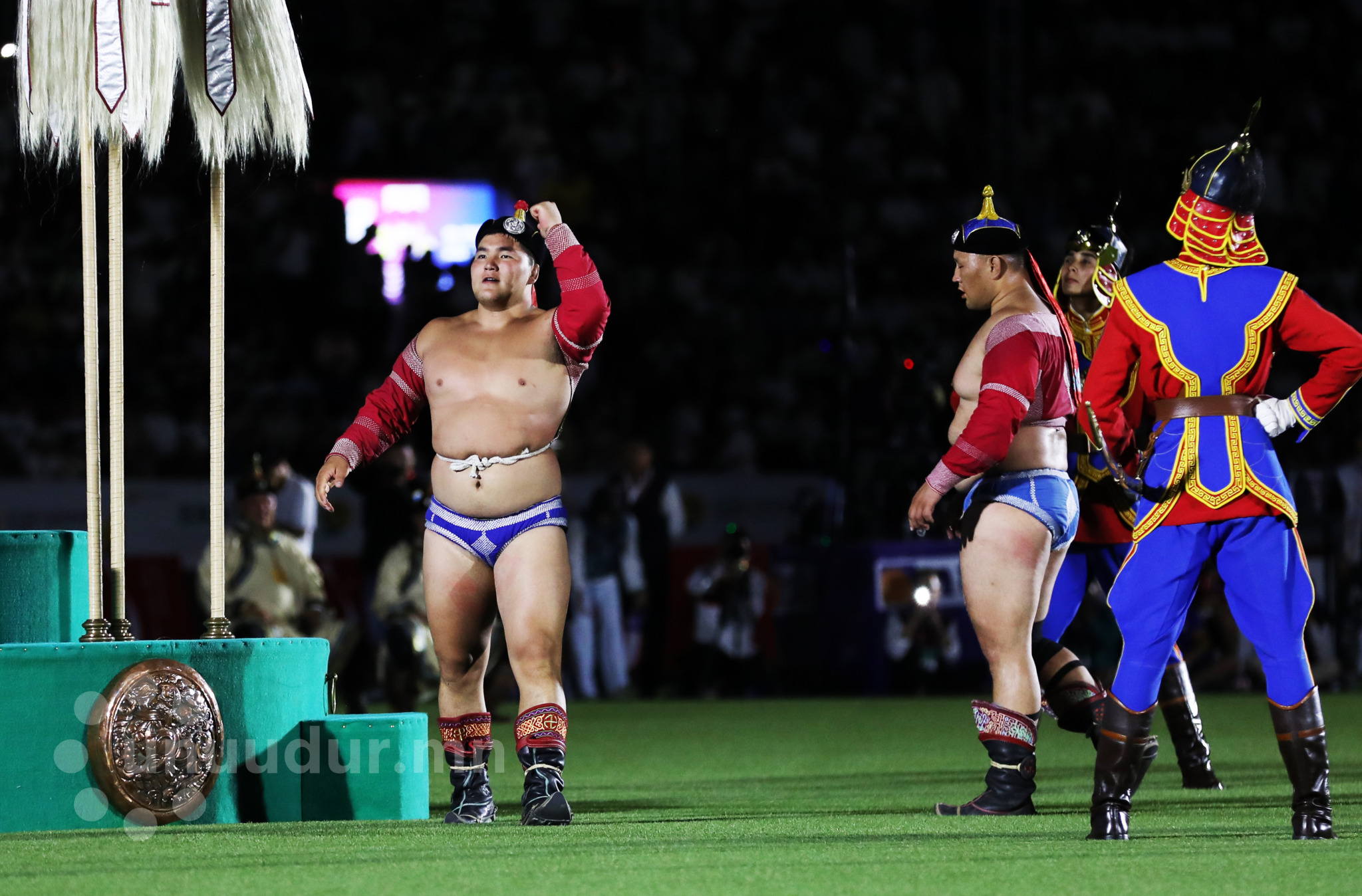
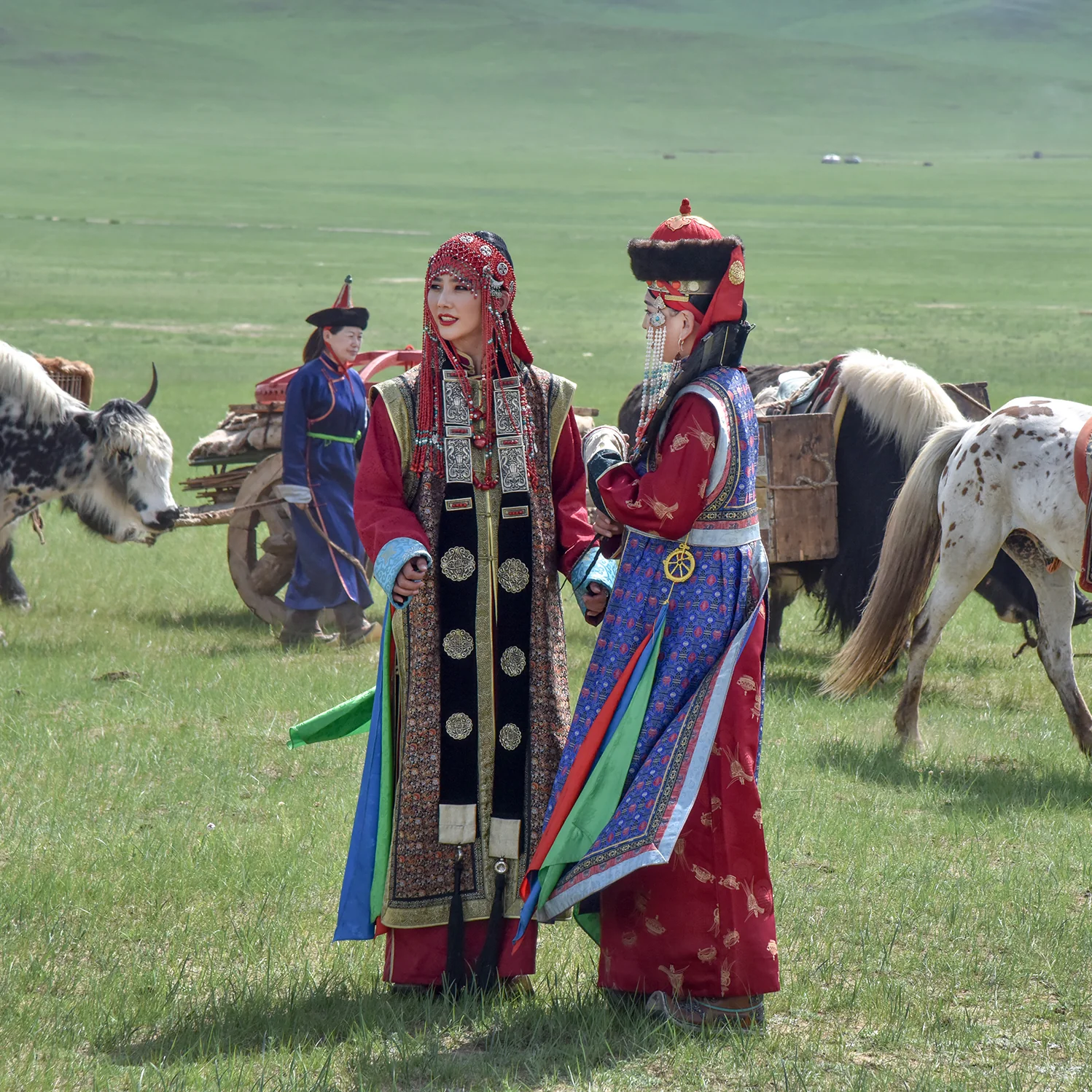
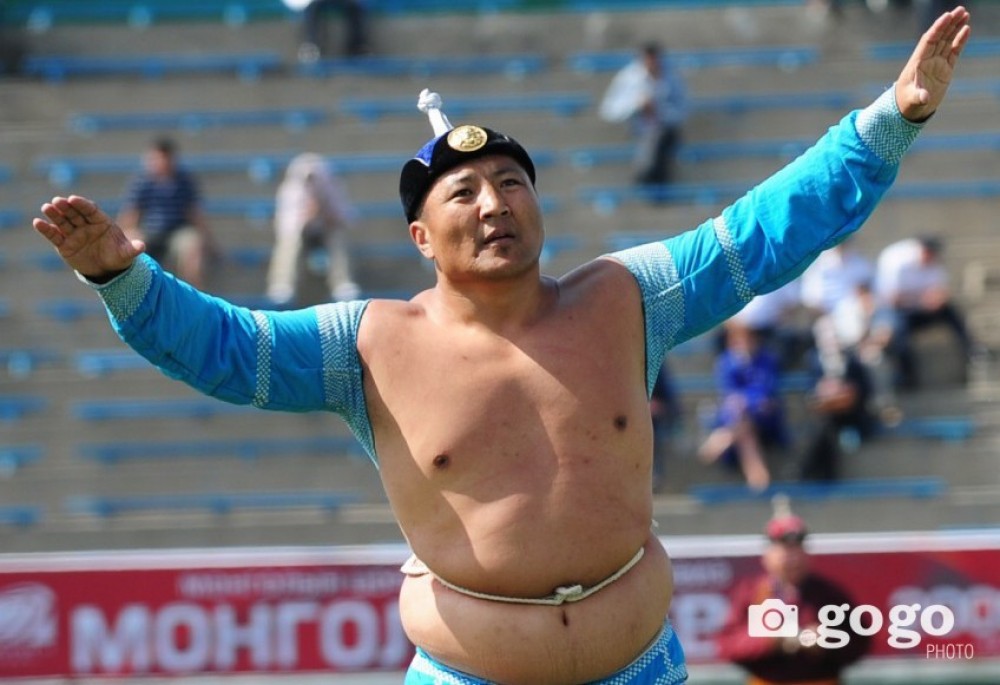
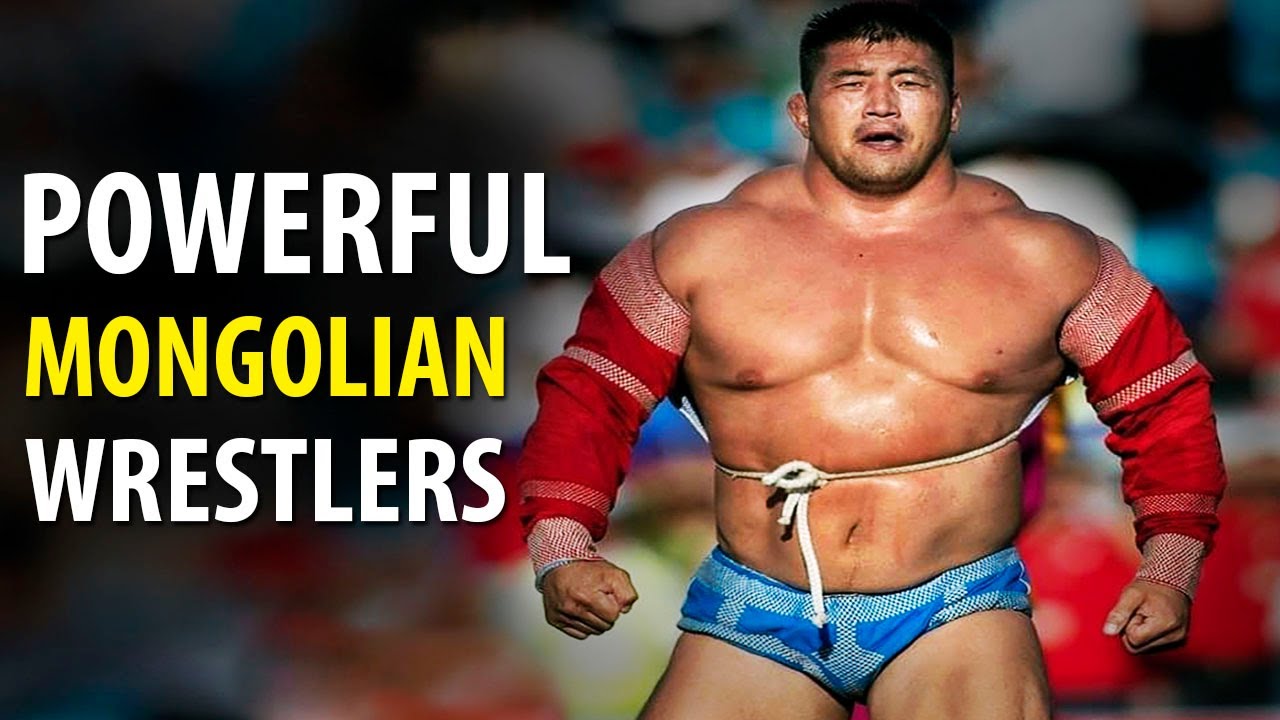
Statesman, Scholar, and Defender of Mongolia's Sovereignty
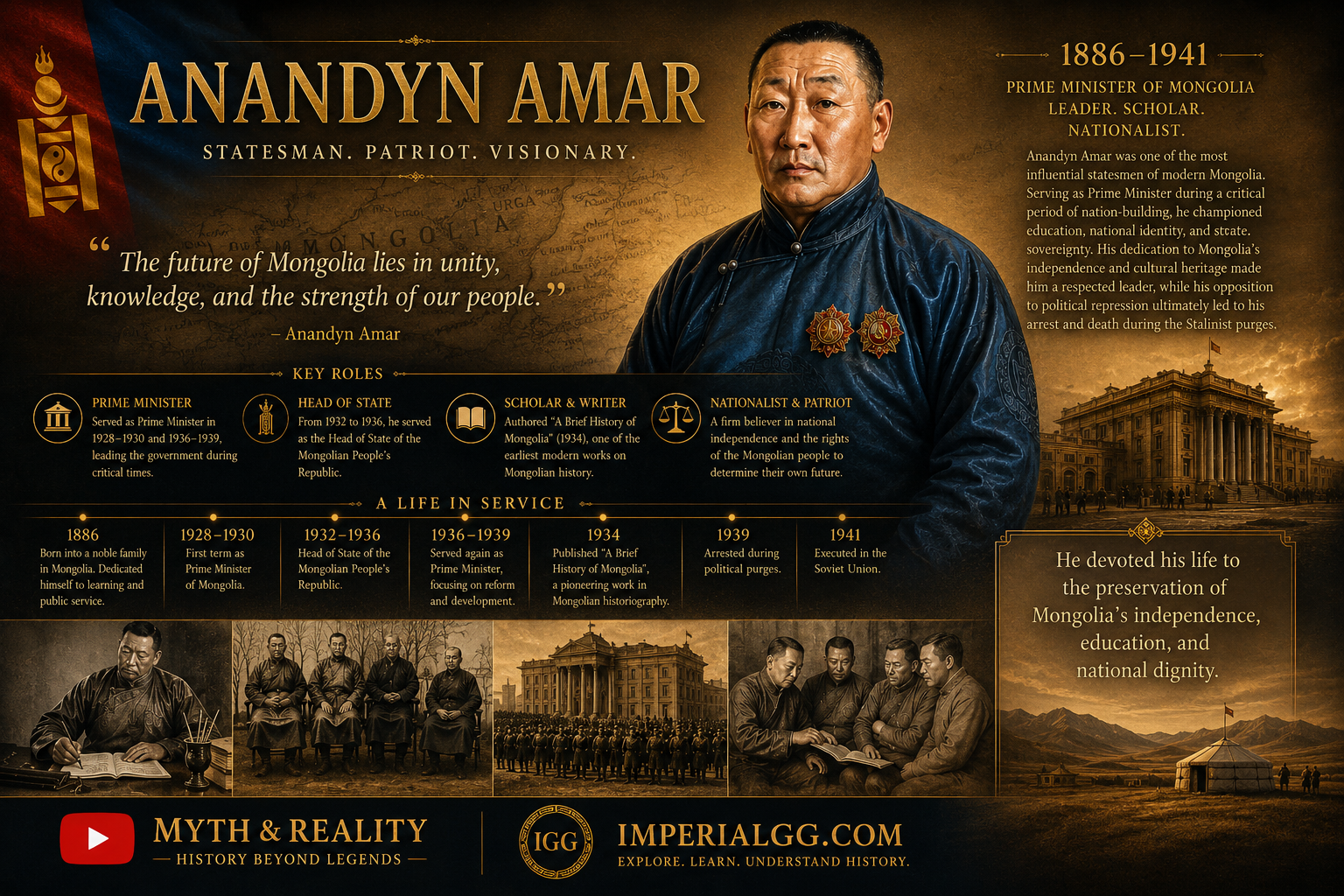
ANANDYN AMAR
Statesman, Scholar, and Defender of Mongolia’s Sovereignty
Anandyn Amar was one of the most influential statesmen of modern Mongolia. Serving as Prime Minister during a critical period of nation-building, he championed education, national identity, and state sovereignty. His dedication to Mongolia’s independence and cultural heritage made him a respected leader, while his opposition to political repression ultimately led to his arrest and death during the Stalinist purges.
1886
Born in present-day Mongolia.
1928–1930
Served as Prime Minister of Mongolia.
1932–1936
Head of State of the Mongolian People’s Republic.
1936–1939
Served a second term as Prime Minister.
1934
Published A Brief History of Mongolia, one of the earliest modern historical works written by a Mongolian statesman.
1939
Arrested during the political purges.
1941
Executed in the Soviet Union.
“He devoted his life to the preservation of Mongolia’s independence, education, and national dignity.”
“For Amar, the future of Mongolia rested upon knowledge, national consciousness, and sovereign statehood.”
▶ Myth & Reality
History Beyond Legends
◎ ImperialGG.com
Explore • Learn • Understand History