Gampaigns, Routes, Frontiers, and the Geography of Eurasian History
Latest Research
Nicola Di Cosma
THE FALL OF ONG KHAN: REWARD, LEGACY, AND THE PRICE OF BETRAYAL
LOYALTY, HONOR, AND THE MEMORY OF THE DEAD
DIPLOMACY AS DECEPTION: TEMÜJIN’S STRATEGIC MOVE AGAINST ONG KHAN
TEMÜJIN’S WORDS: FROM RECONCILIATION TO POLITICAL CONFRONTATION
THE BROKEN OATH OF FATHER AND SON
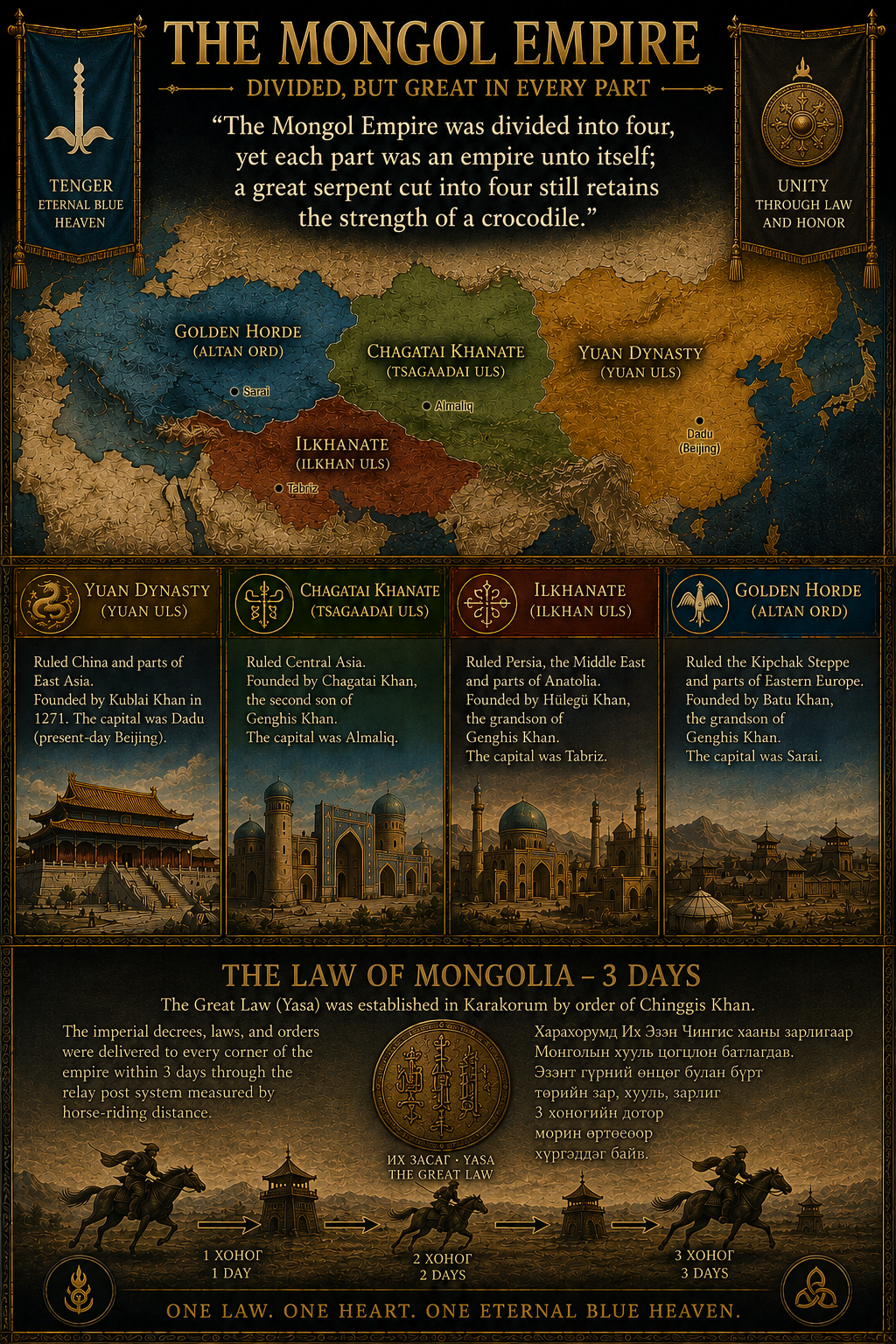
The Mongol Empire: Divided, Yet Great in Every Part
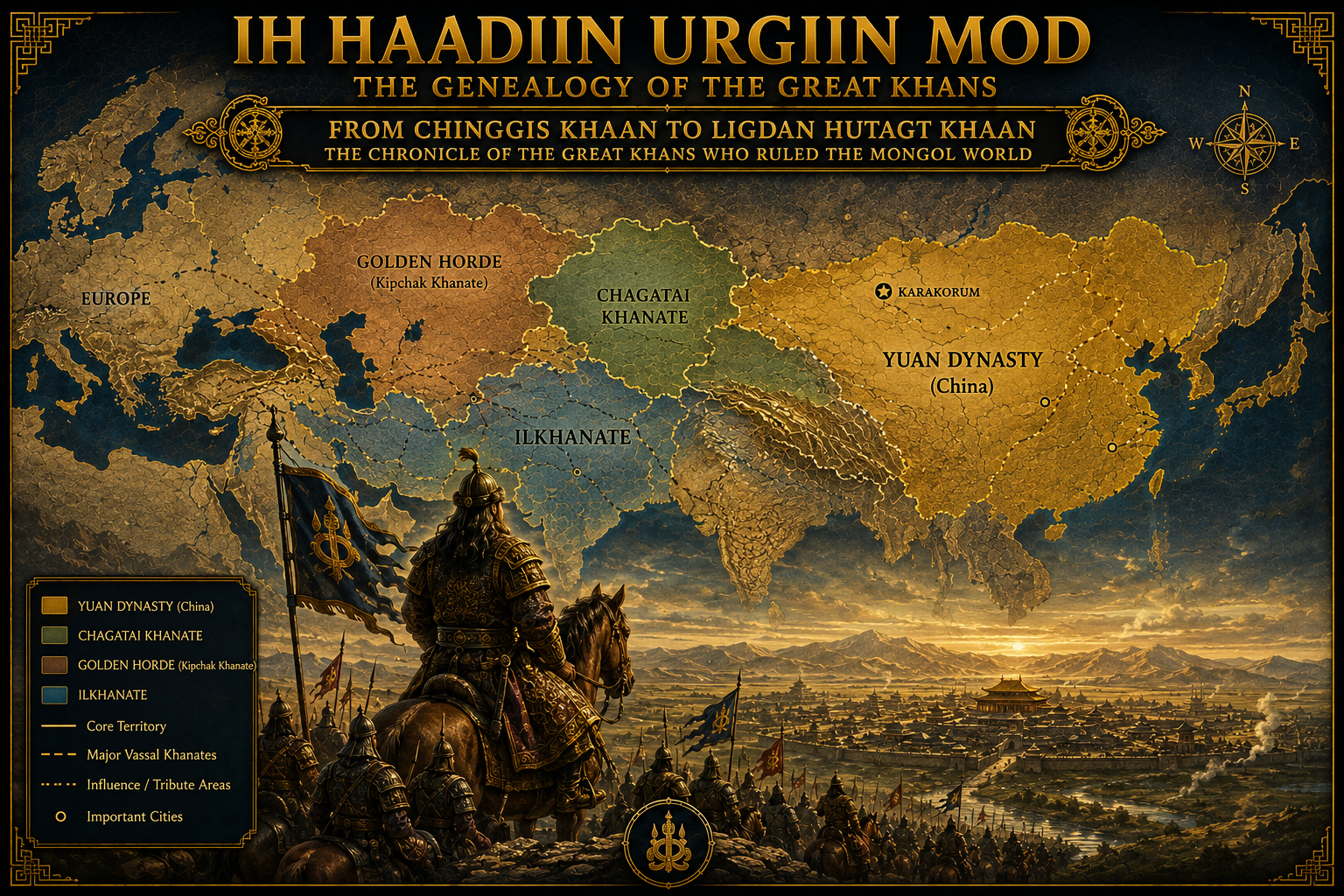
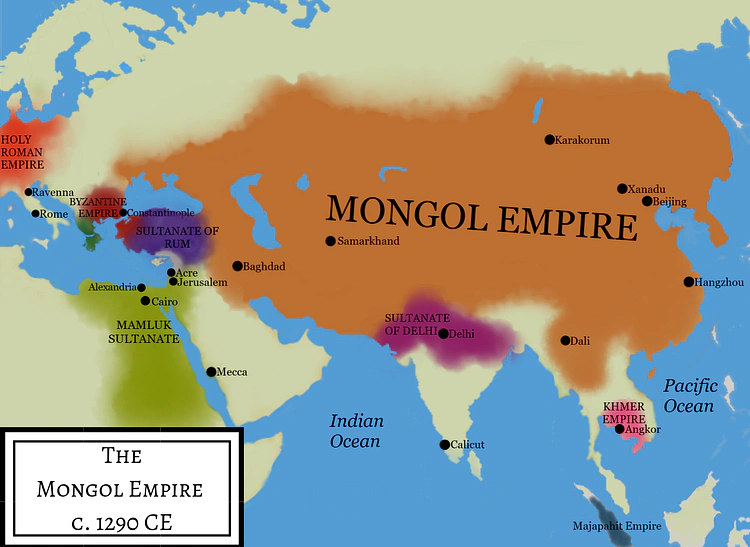
At its height in the mid-thirteenth century, the Mongol Empire was the largest contiguous land empire in history, stretching from Korea and China to Eastern Europe and the Middle East.
In 1259, the fourth Great Khan, Möngke Khan, died during the Mongol campaign against the Southern Song dynasty in China. His death triggered a succession crisis between his brothers, Kublai and Ariq Böke, and gradually weakened the political unity of the empire.
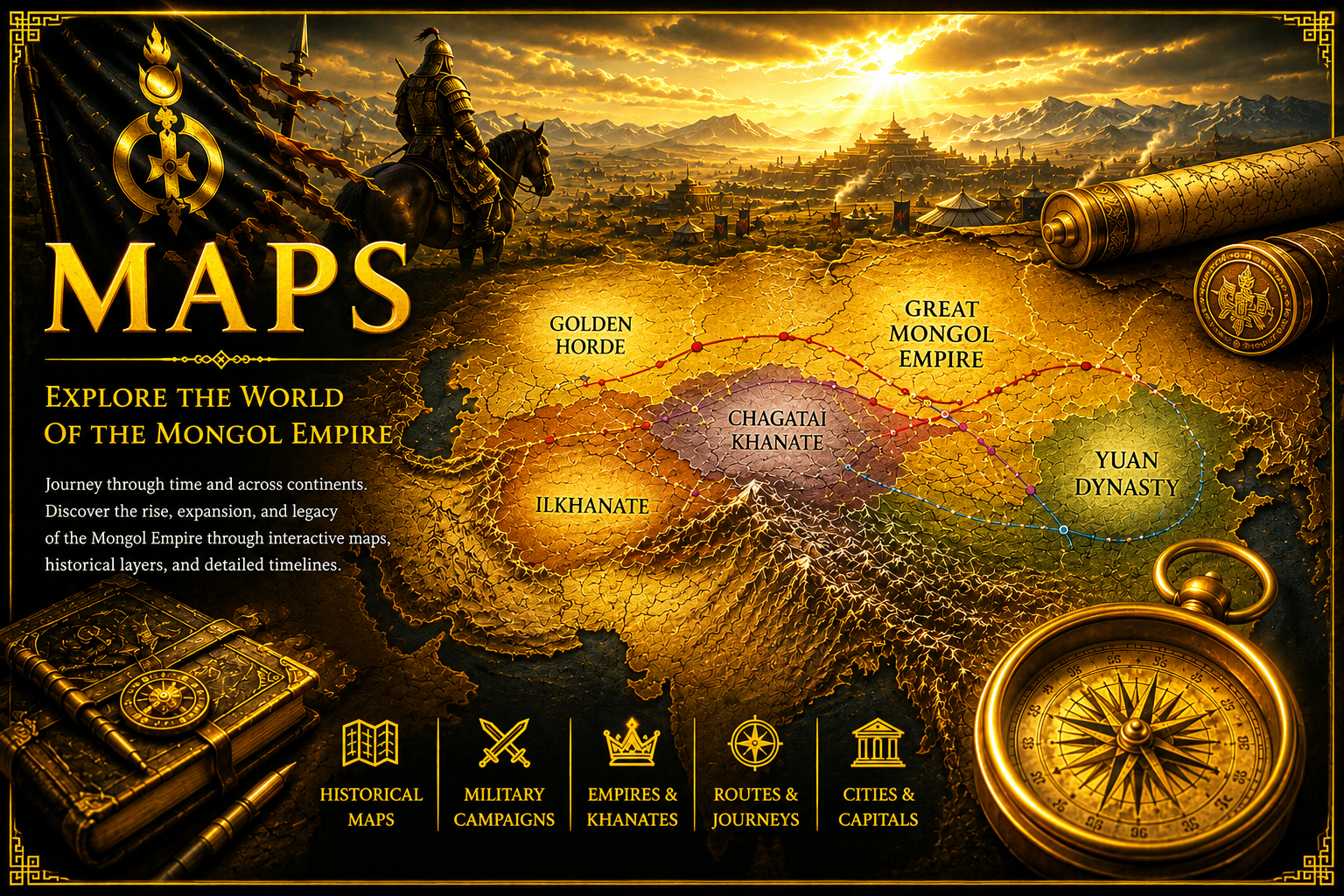
Over the following decades, the empire evolved into four major political centers:
- The Yuan Dynasty in China and Mongolia, founded by Kublai Khan.
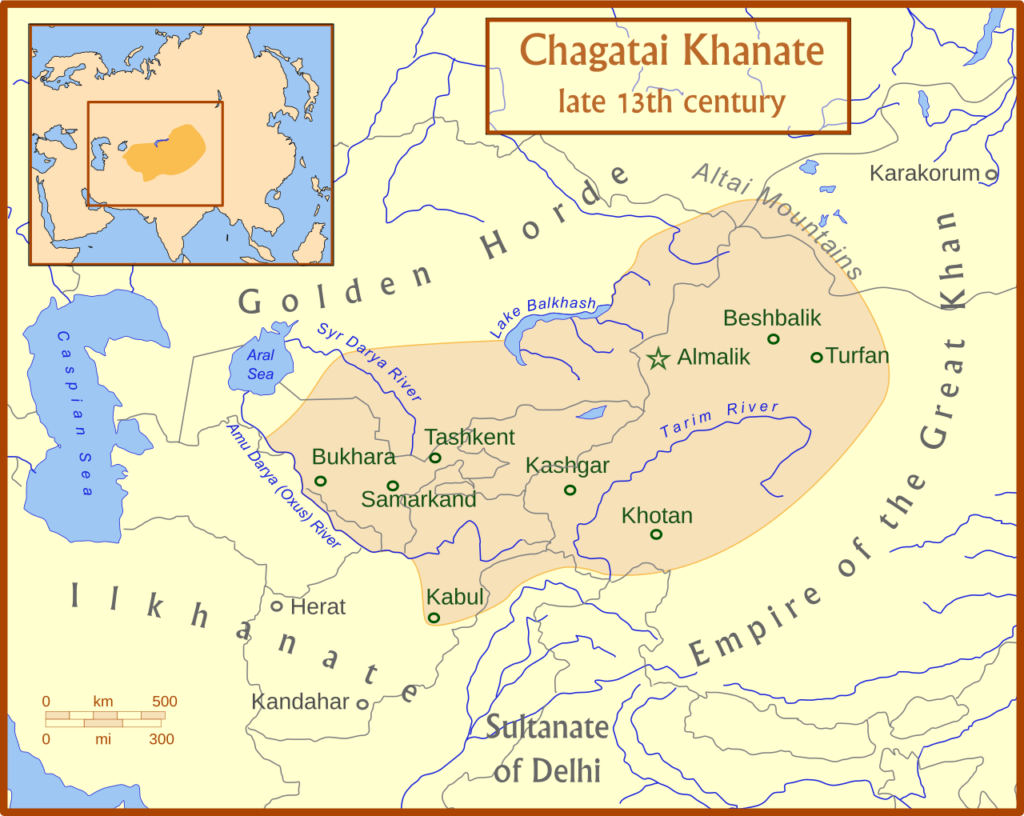
- The Chagatai Khanate in Central Asia, descended from Chagatai, the second son of Chinggis Khan.
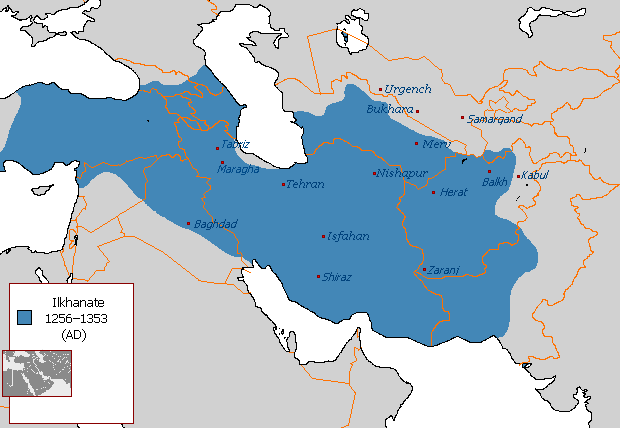
- The Ilkhanate in Persia and the Middle East, founded by Hülegü Khan.
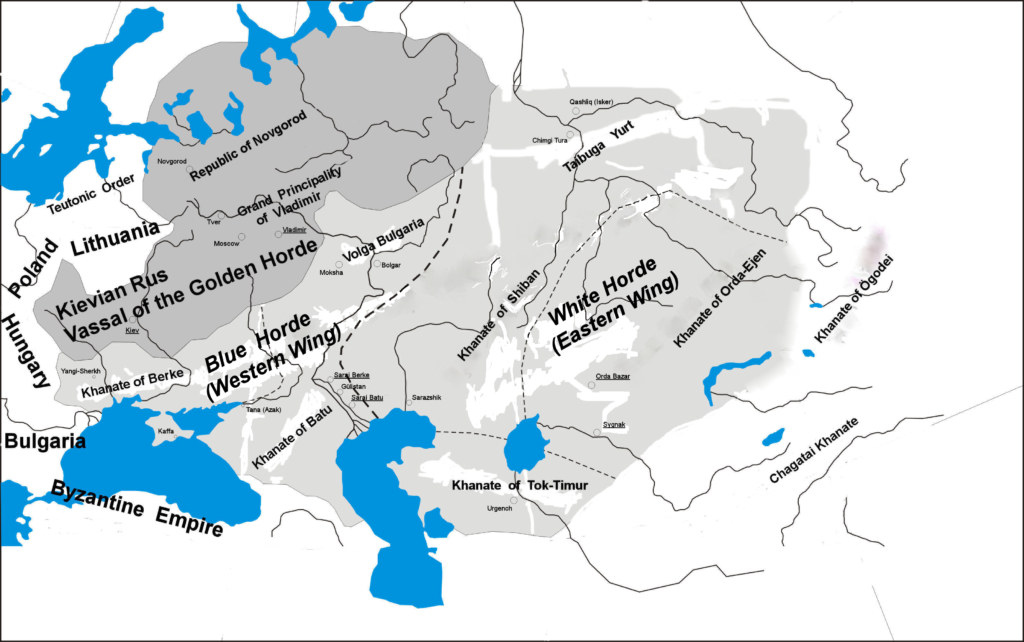
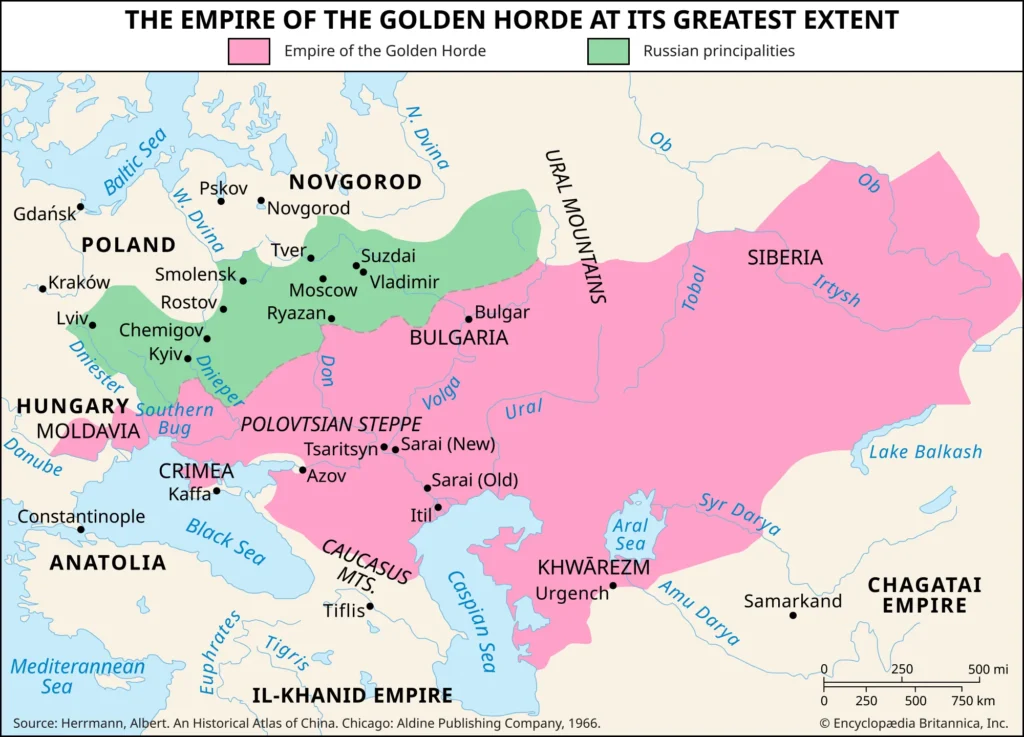
- The Golden Horde in the Kipchak Steppe and Eastern Europe, founded by Batu Khan.
Although politically separate, these states shared a common Mongol imperial heritage. They continued to govern vast territories, maintain diplomatic relations, facilitate trade across Eurasia, and preserve many institutions inherited from the empire of Chinggis Khan.
A traditional Mongolian saying reflects this historical reality:
“The Mongol Empire was divided into four, yet each part was an empire unto itself; a great serpent cut into four still retains the strength of a crocodile.”
The saying emphasizes that the division of the empire did not mark its immediate decline. Rather, each successor state remained a formidable empire in its own right.
The Law of Mongolia – Three Days
According to Mongolian historical tradition, laws and imperial decrees issued from Karakorum could be transmitted to the farthest corners of the empire within three days through the remarkable Yam relay-post system.
This expression symbolizes the extraordinary administrative efficiency of the Mongol Empire and its ability to govern a vast transcontinental realm through communication, organization, and law.
One Law. One Heart. One Eternal Blue Heaven.
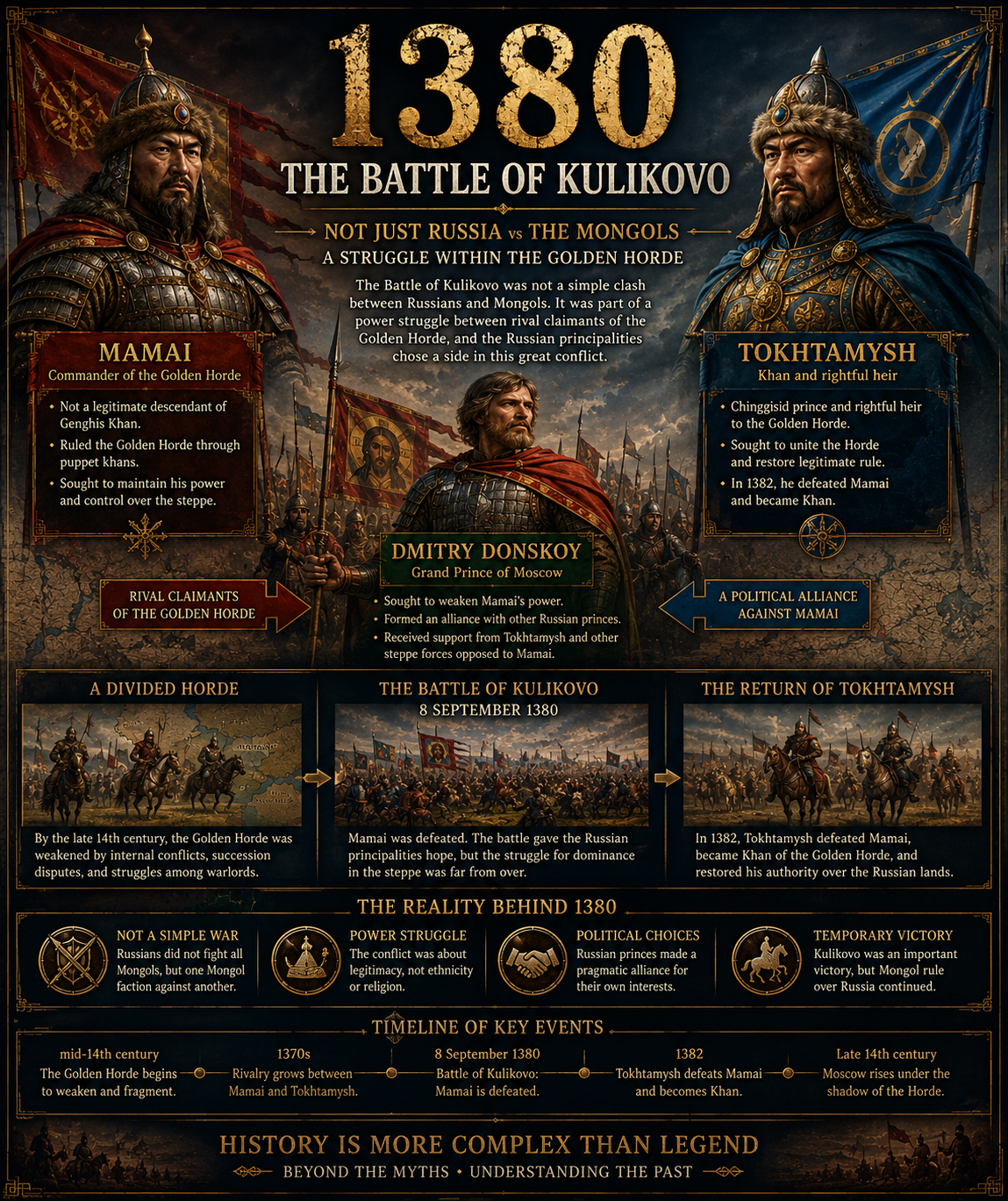
MOSCOW’S RISE UNDER THE GOLDEN HORDE
Loyalty, Privilege, and Power
The rise of Moscow was not initially built through resistance to the Golden Horde, but through cooperation with it.
During the thirteenth and fourteenth centuries, the Khans of the Golden Horde granted the princes of Moscow the right to collect tribute from other Russian principalities and deliver it to the Horde. This privilege strengthened Moscow’s political position and provided access to wealth and influence unavailable to most rival princes.
As Moscow became one of the Horde’s most trusted vassals, its rulers received repeated confirmations of authority through charters known as yarliks. Acting as intermediaries between the Khans and the Russian lands, the princes of Moscow expanded their power, consolidated neighboring territories, and invested resources into fortifications, administration, and religious institutions.
By the late fourteenth century, Moscow had emerged as the leading Russian principality. Its growth was shaped not only by military success but also by decades of cooperation with the political system established by the Golden Horde.
AN OVERLOOKED CHAPTER OF HISTORY
The traditional narrative often portrays Moscow solely as a challenger of Mongol rule. However, many historians emphasize that Moscow’s early rise was closely connected to its relationship with the Golden Horde.
Rather than emerging in opposition to the Horde from the beginning, Moscow gained strength within the Horde’s political framework before eventually becoming powerful enough to pursue an independent course.
TIMELINE
1240s–1260s. The Golden Horde establishes authority over the Russian principalities.
1328. Ivan I Kalita receives the right to collect tribute for the Golden Horde.
14th Century. Moscow accumulates wealth and political influence while serving as one of the Horde’s most reliable partners.
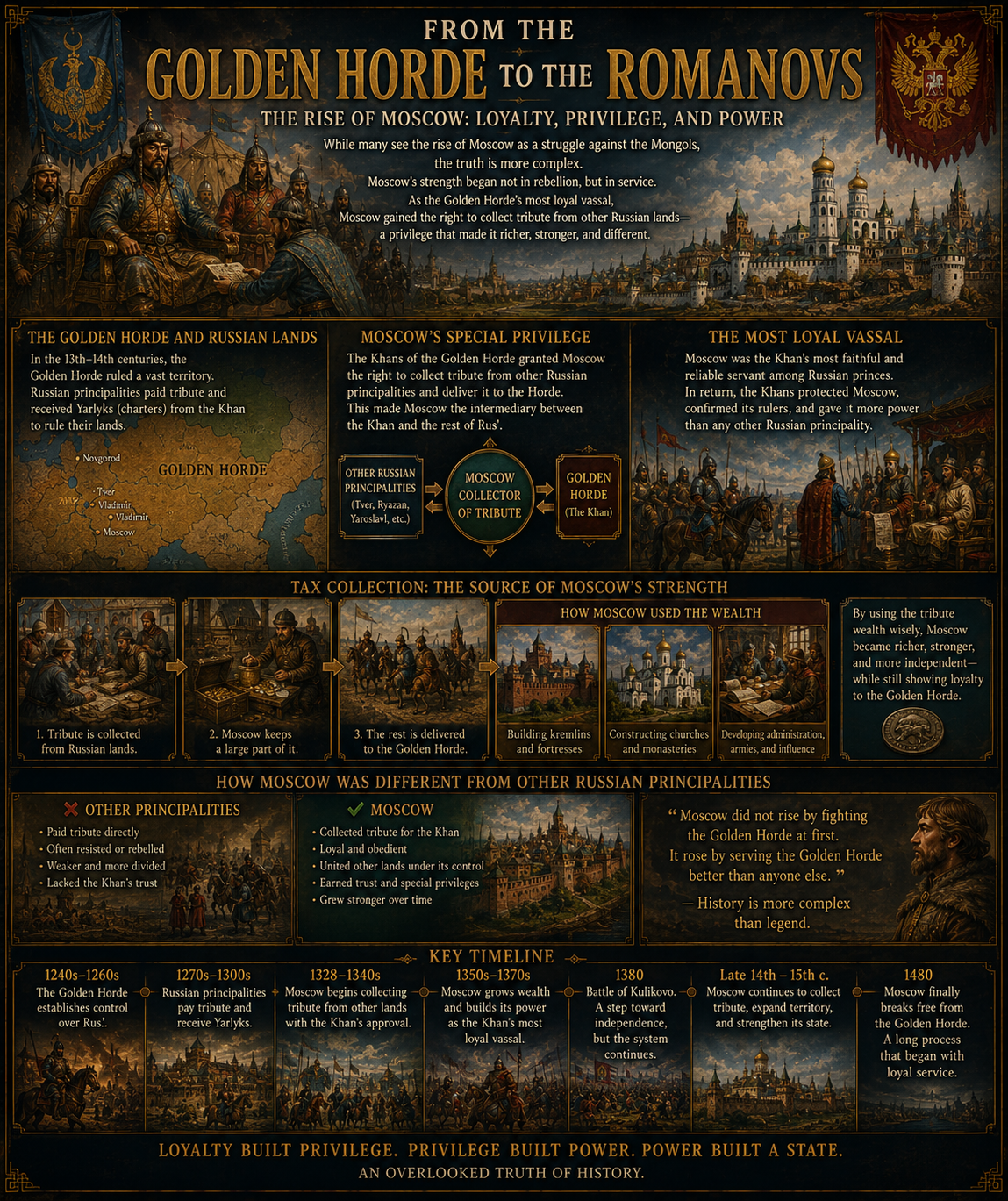
1380. Battle of Kulikovo weakens Mamai’s position but does not end Golden Horde influence.
1382. Tokhtamysh captures and burns Moscow, restoring Horde authority.
1480. Great Stand on the Ugra River marks the end of Horde suzerainty over Moscow.
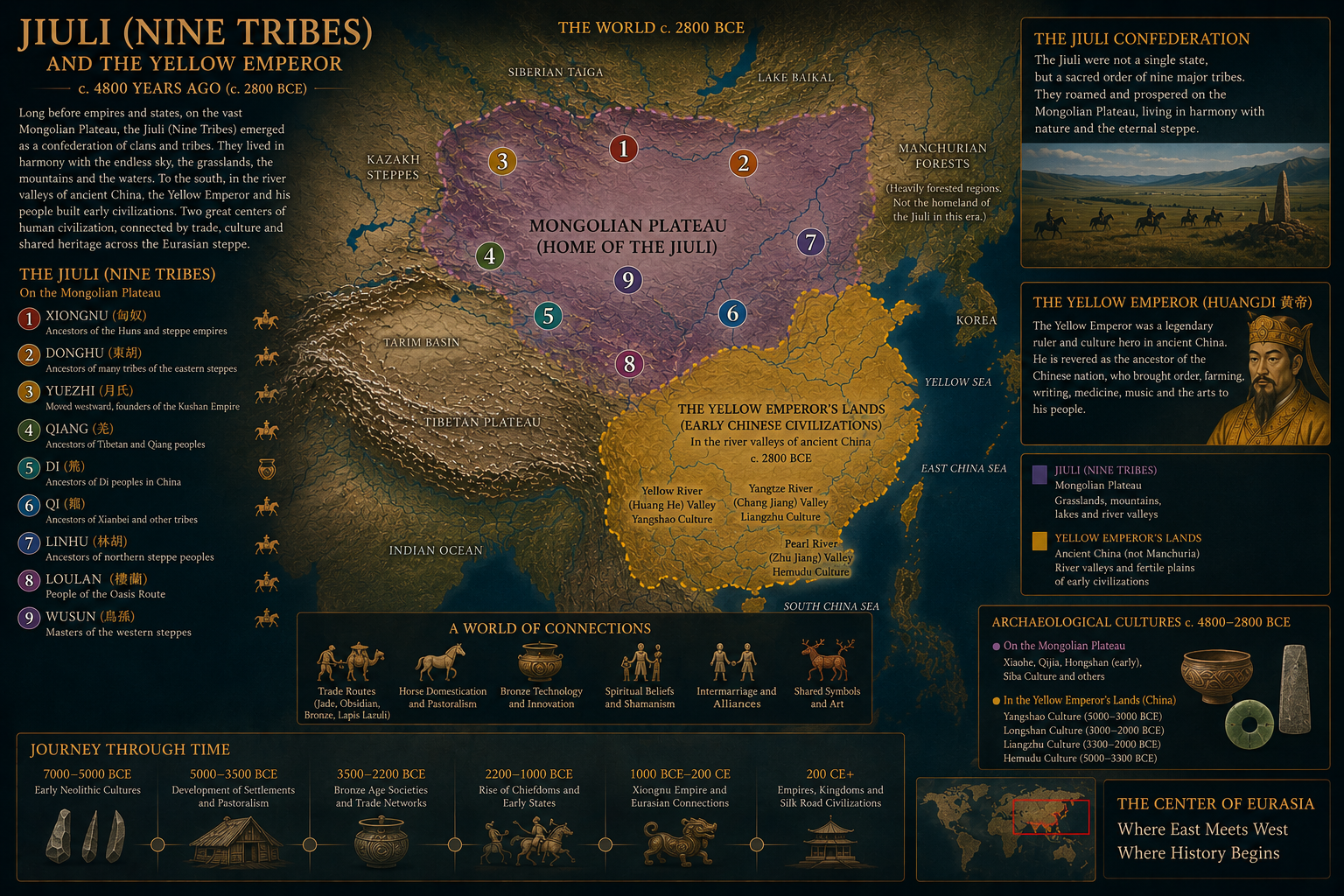
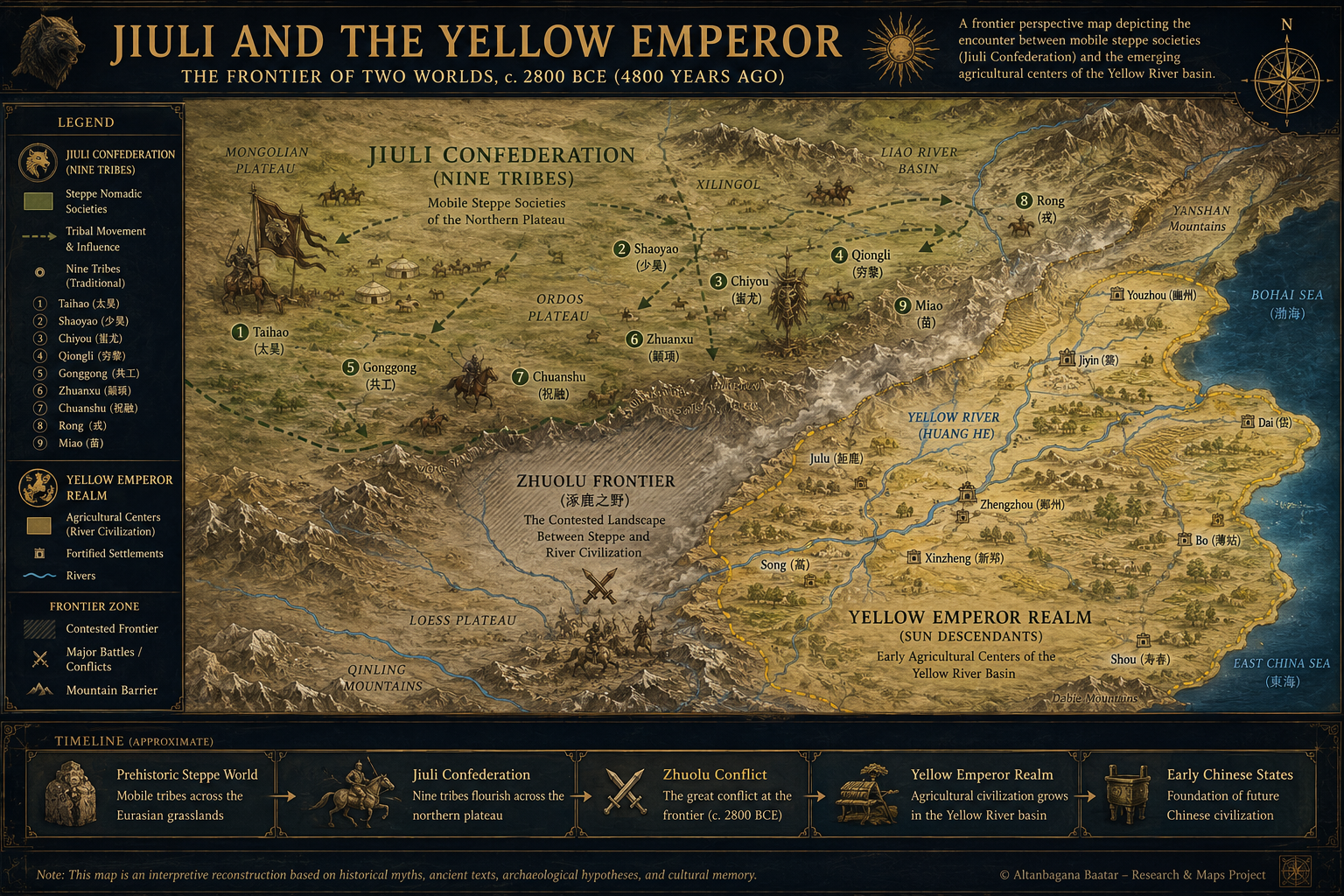
Jiuli and the Yellow Emperor: A Frontier of Two Worlds
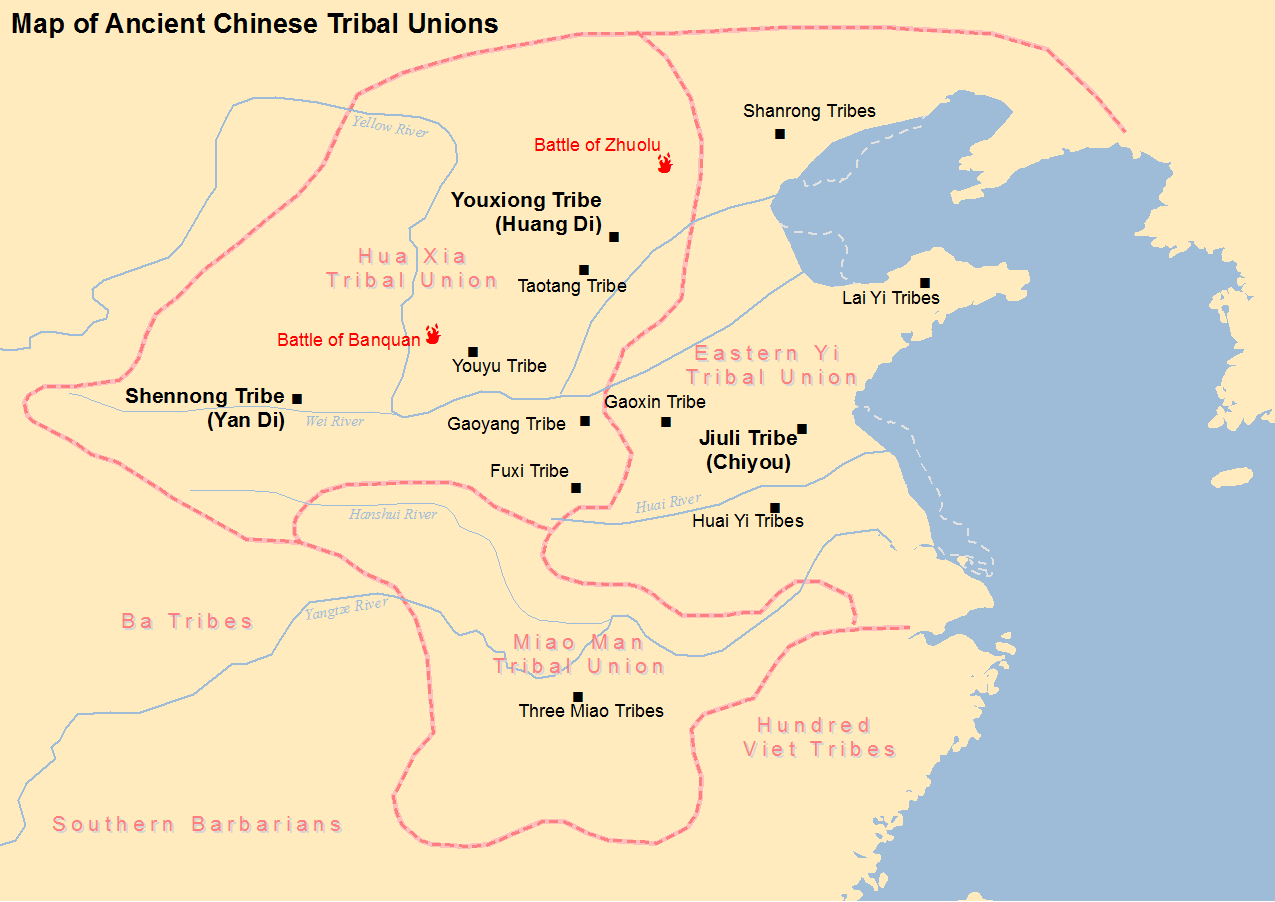
Around 4,800 years ago, Chinese tradition remembered a legendary conflict between the Jiuli Confederation, associated with the warrior leader Chiyou, and the Yellow Emperor (Huangdi), one of the founding figures of early Chinese civilization.
In later historical memory, the Jiuli were often portrayed as formidable rivals from the northern frontier. They are described as mobile tribal societies whose way of life was closely connected to the open landscapes beyond the Yellow River basin. Ancient accounts emphasize their skill in warfare, their use of the natural environment, and their strong spiritual traditions.
The Yellow Emperor, by contrast, came to symbolize the emerging agricultural communities of the Yellow River valley. These societies developed permanent settlements, cultivated farmland, and laid the foundations for early state organization.
The famous Battle of Zhuolu, whether understood as history, legend, or a mixture of both, represents more than a struggle between two leaders. It reflects a broader frontier encounter between mobile steppe traditions and the growing river civilizations of northern China.
Although many details remain uncertain and continue to be debated by historians and archaeologists, the story of the Jiuli and the Yellow Emperor remains one of the most influential origin narratives in East Asian history.
Before the rise of kingdoms and empires, the northern frontier of East Asia was remembered as a meeting ground of different worlds. To the north stood the Jiuli Confederation, associated with the legendary warrior Chiyou and the mobile societies of the great steppe. To the south lay the agricultural communities of the Yellow River basin, united in tradition under the Yellow Emperor.
From this frontier emerged one of the most enduring stories of ancient Eurasia: the struggle between movement and settlement, tribe and state, steppe and river civilization. Whether viewed as myth, memory, or historical tradition, the Jiuli–Yellow Emperor conflict continues to offer a glimpse into the formative age of East Asian civilization.
Routes and Frontiers
JIULI (九黎) — A Steppe Perspective
Rather than viewing the Jiuli merely as a defeated tribe in early Chinese myth, they can be understood as a reflection of mobile, ritual-centered societies once spread across the greater Eurasian landscape. Associated with the legendary war leader Chiyou, the Jiuli embody a worldview in which warfare, nature, and spirit were inseparable.
The myths describing Chiyou’s ability to summon fog and disorient his enemies echo a deeper steppe logic — where battle was not only fought with weapons, but through mastery of terrain, atmosphere, and psychological force.
In this sense, the conflict between the Jiuli and the Yellow Emperor represents more than a mythic war. It reflects a symbolic boundary between two modes of existence: the fluid, spirit-bound world of the steppe, and the structured, centralized order of early state civilization.
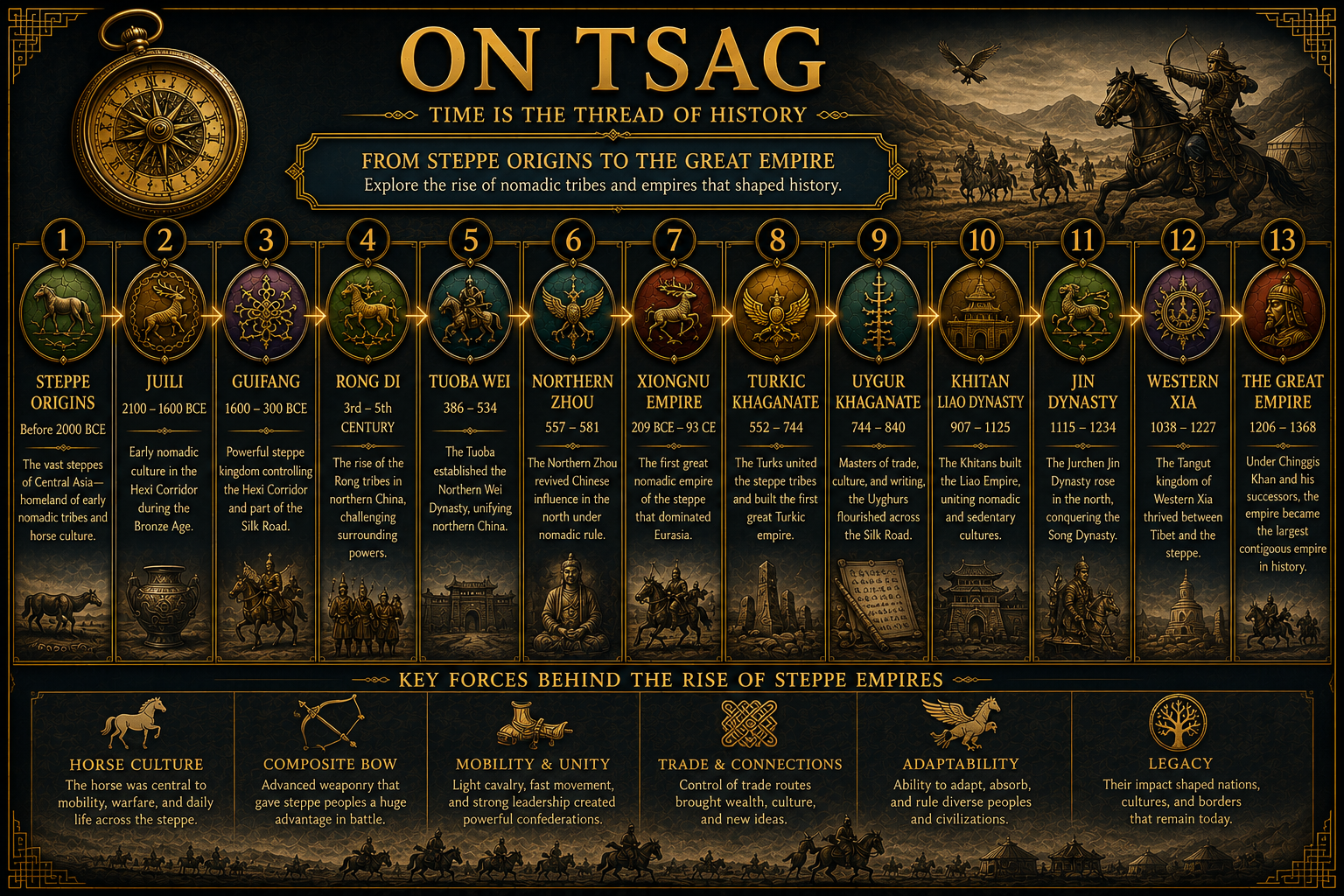
XIONGNU EMPIRE
209 BCE – 93 CE
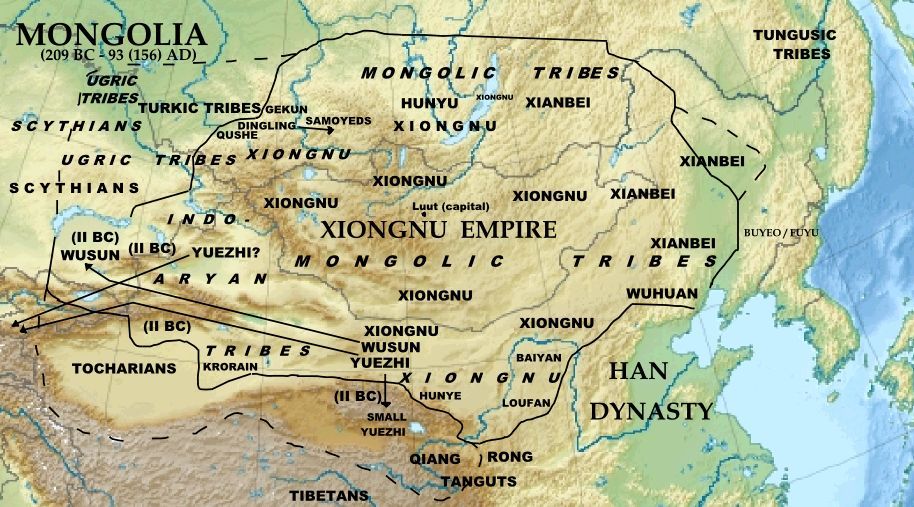
The Xiongnu Confederation emerged as the first great nomadic empire of the eastern steppe under Modu Chanyu. Uniting many tribes of Inner Asia, the Xiongnu established a powerful military tradition, dominated the steppe routes, and became a major rival of early Chinese states. Their legacy influenced later steppe empires across Eurasia.
XIONGNU EMPIRE TIMELINE
209 BCE — Modu Chanyu unites the steppe tribes and establishes the Xiongnu Empire.
200 BCE — Battle of Baideng; Han Emperor Gaozu is surrounded by Xiongnu forces.
198 BCE — Han–Xiongnu Heqin alliance system begins.
174–160 BCE — Expansion under Laoshang Chanyu; Xiongnu influence extends across Inner Asia.
133 BCE — Han–Xiongnu War begins after the collapse of peaceful relations.
121–119 BCE — Han campaigns under Huo Qubing and Wei Qing push into steppe territories.
60 BCE — Internal divisions weaken imperial unity.
48 CE — Division into Northern and Southern Xiongnu.
89 CE — Northern Xiongnu defeated at the Battle of Ikh Bayan / Altai frontier campaigns.
93 CE — Collapse of Northern Xiongnu power.
Short version for small panel:
Founded by Modu Chanyu in 209 BCE, the Xiongnu became the first great steppe empire, dominating Inner Asia until their division and decline in the 1st century CE.
NOYON UUL ARCHAEOLOGICAL DISCOVERIES
1st Century BCE – 1st Century CE
The Noyon Uul burial complexes in northern Mongolia are among the most important archaeological remains of the Xiongnu civilization. Excavations revealed royal tombs containing silk textiles, lacquerware, carpets, horse equipment, ornaments, and finely crafted objects, demonstrating the wealth, artistry, and far-reaching connections of the Xiongnu world.
The discoveries provide evidence of advanced craftsmanship, long-distance trade networks, and cultural exchange across Inner Asia during the Xiongnu period.
Major Finds:
• Silk textiles and embroidered fabrics
• Lacquerware and wooden artifacts
• Horse harnesses and riding equipment
• Gold ornaments and jewelry
• Carpets and decorative objects
• Elite burial chambers
Short version for small image caption:
Noyon Uul royal burials revealed elite Xiongnu artifacts, including silk, lacquerware, horse gear, carpets, and ornaments, reflecting the prosperity and cultural connections of the Xiongnu Empire.
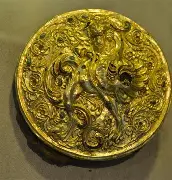
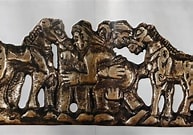

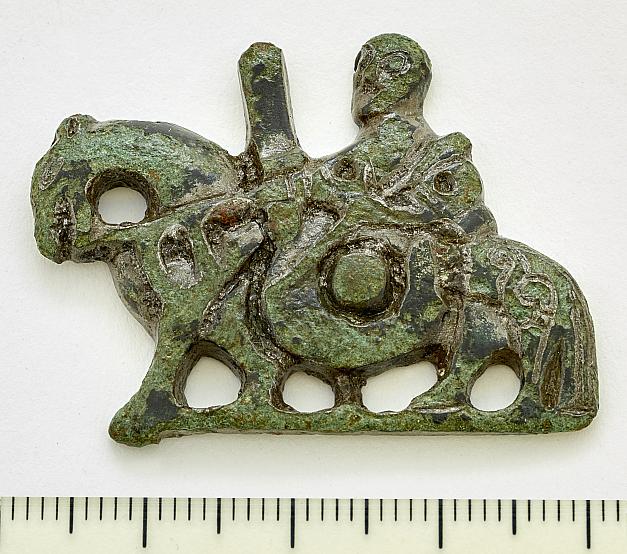
The Noyon Uul burial complexes in northern Mongolia are among the most important archaeological remains of the Xiongnu civilization. Excavations revealed royal tombs containing silk textiles, lacquerware, carpets, horse equipment, ornaments, and finely crafted objects, demonstrating the wealth, artistry, and far-reaching connections of the Xiongnu world.
Noyon Uul royal burials revealed elite Xiongnu artifacts, including silk, lacquerware, horse gear, carpets, and ornaments, reflecting the prosperity and cultural connections of the Xiongnu Empire
Major Finds:
• Silk textiles and embroidered fabrics
• Lacquerware and wooden artifacts
• Horse harnesses and riding equipment
• Gold ornaments and jewelry
• Carpets and decorative objects
• Elite burial chambers
Human Stone Statues
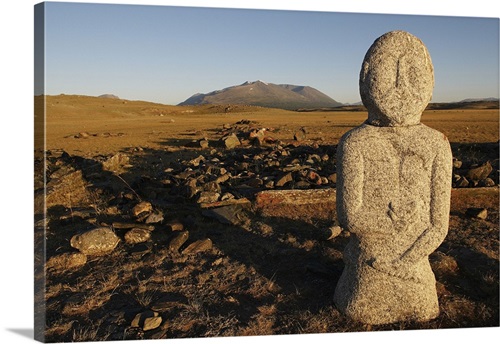
Across the Mongolian steppe, stone figures rise in silence — weathered, unmoving, yet alive with memory. These human-shaped monuments, including deer stones and balbal statues, stand as markers of ritual, burial, and ancestral presence.
Carved with deer in motion, solar signs, and weapons, deer stones express a cosmology where sky, earth, and human existence are bound together. Nearby, khirigsuur burial mounds anchor them to the land — a fixed point in a world of movement.
Balbal statues, emerging in later periods, depict human forms holding cups or weapons. They stand in lines across the steppe, often interpreted as symbols of conquered enemies or extensions of a warrior’s spirit.
Here, stone is not inert. It remembers.
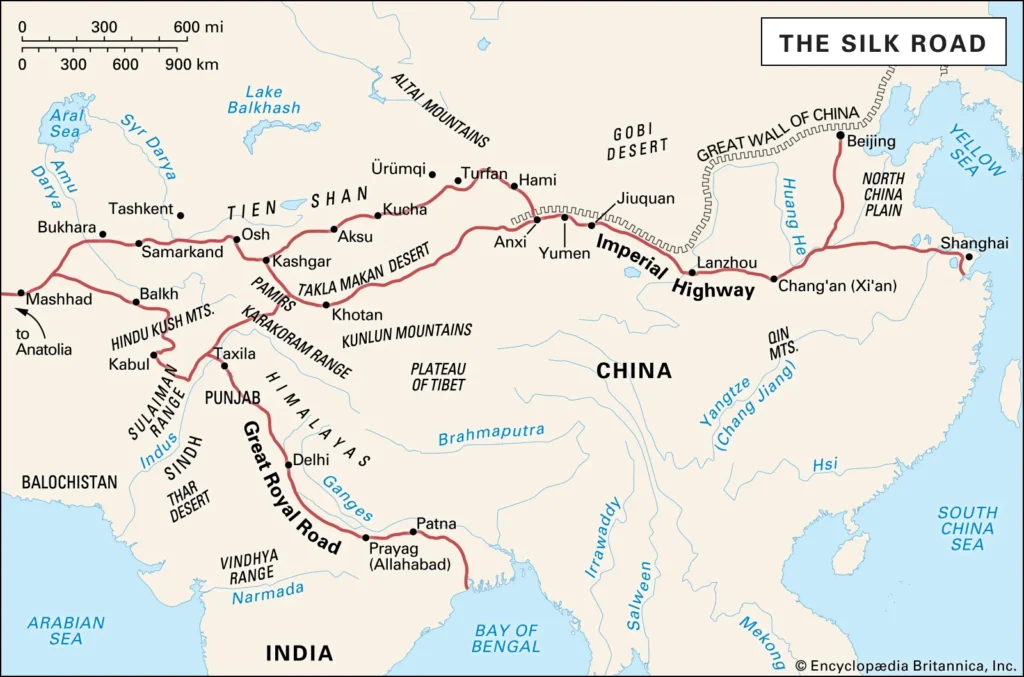
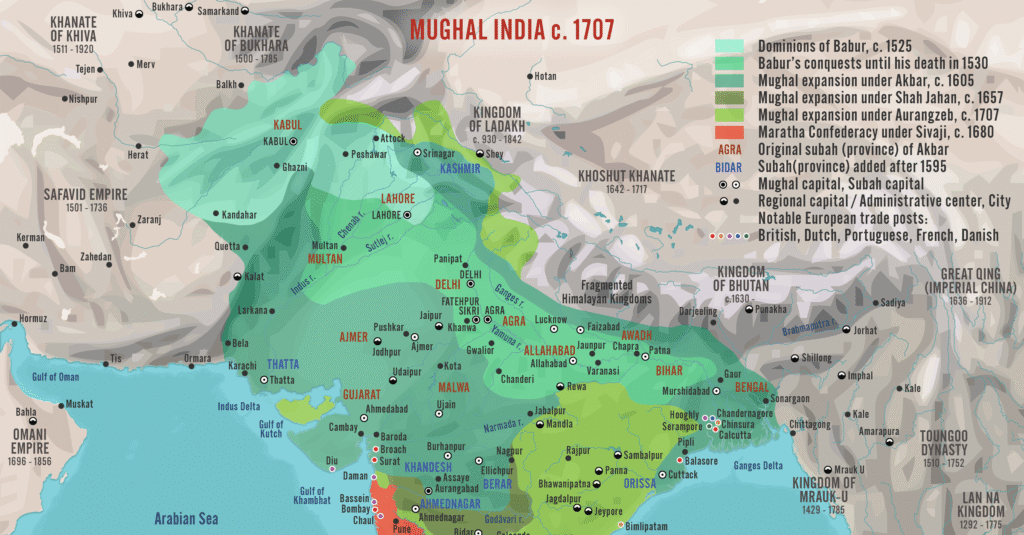
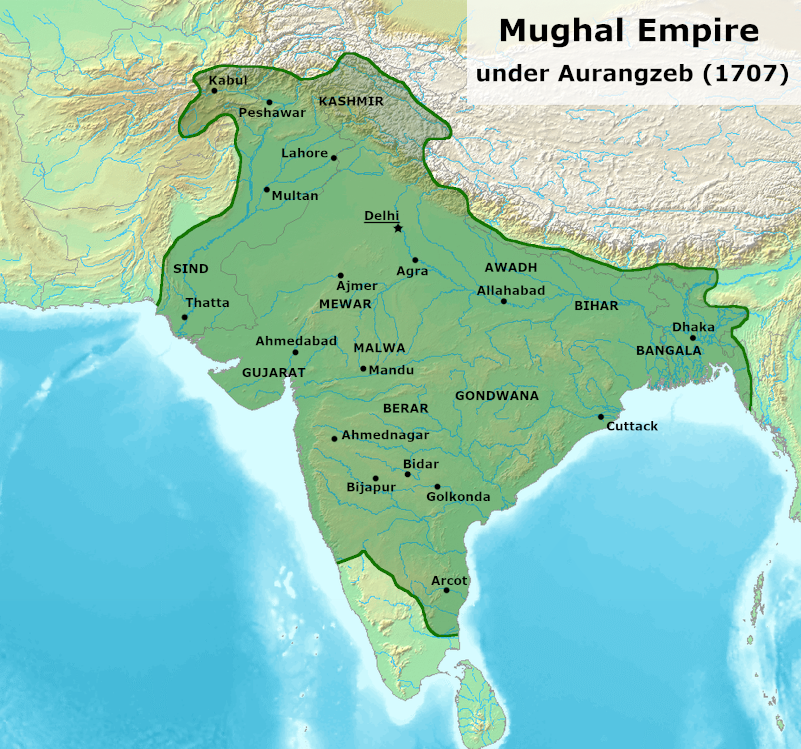
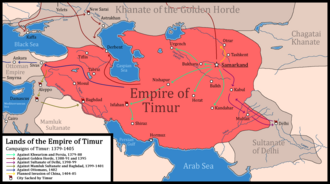
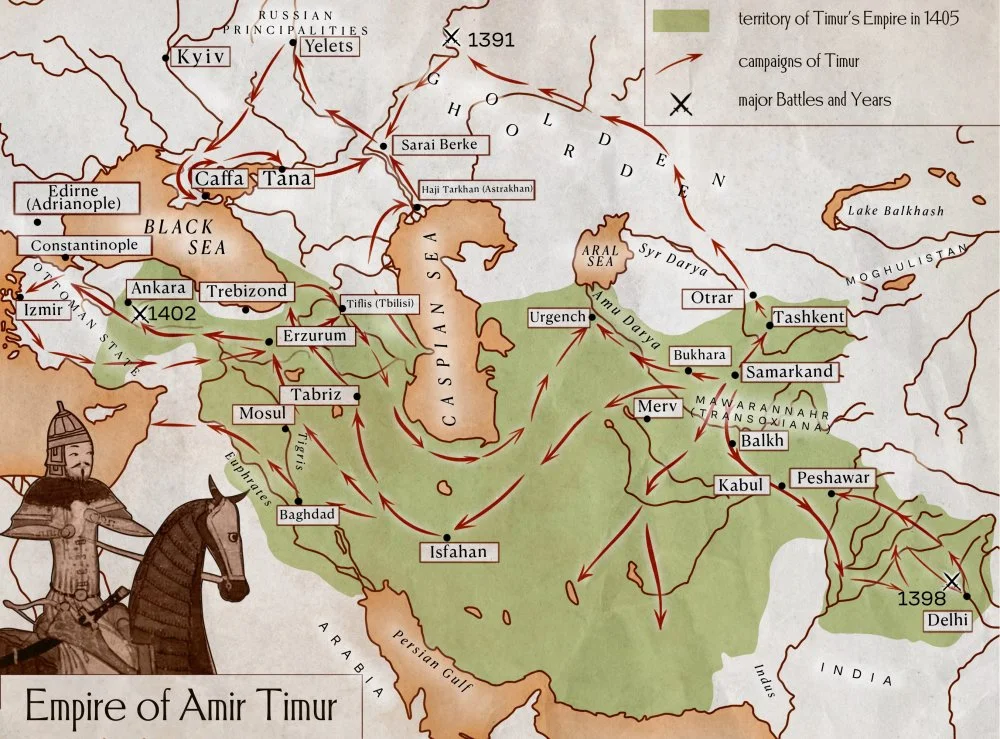
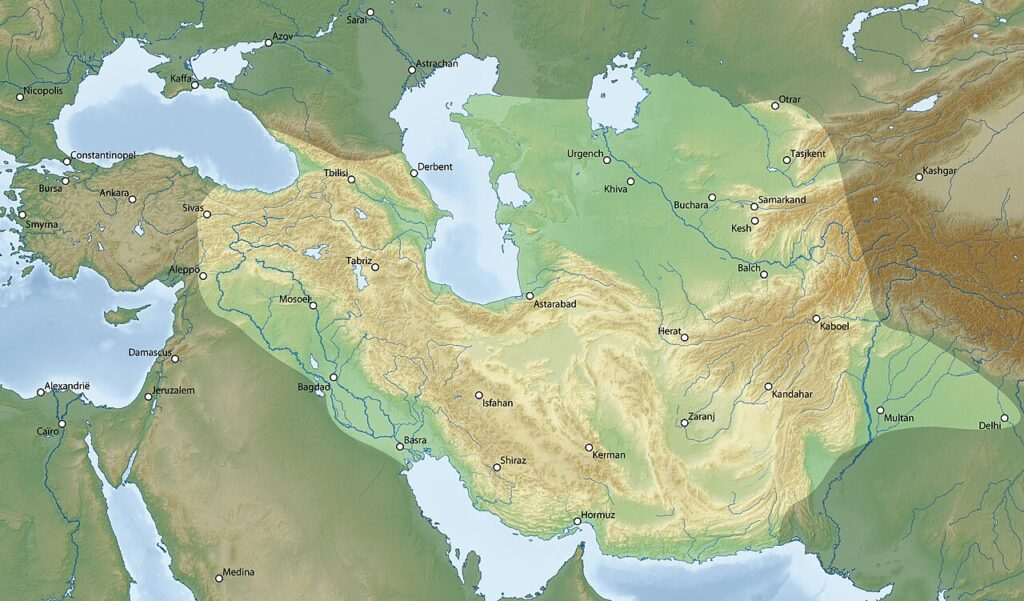
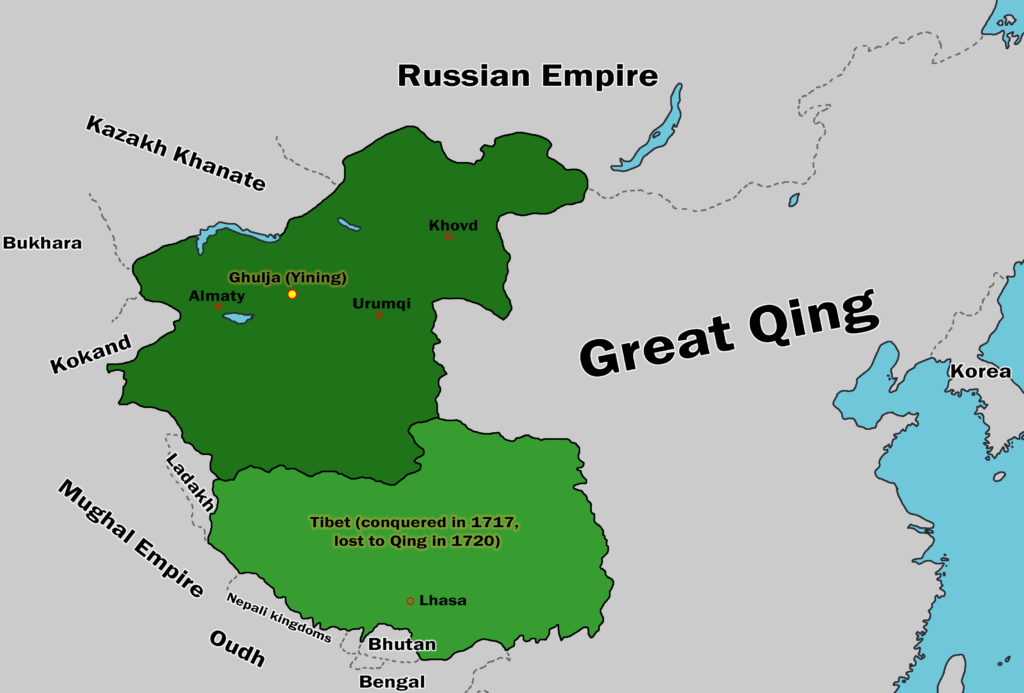
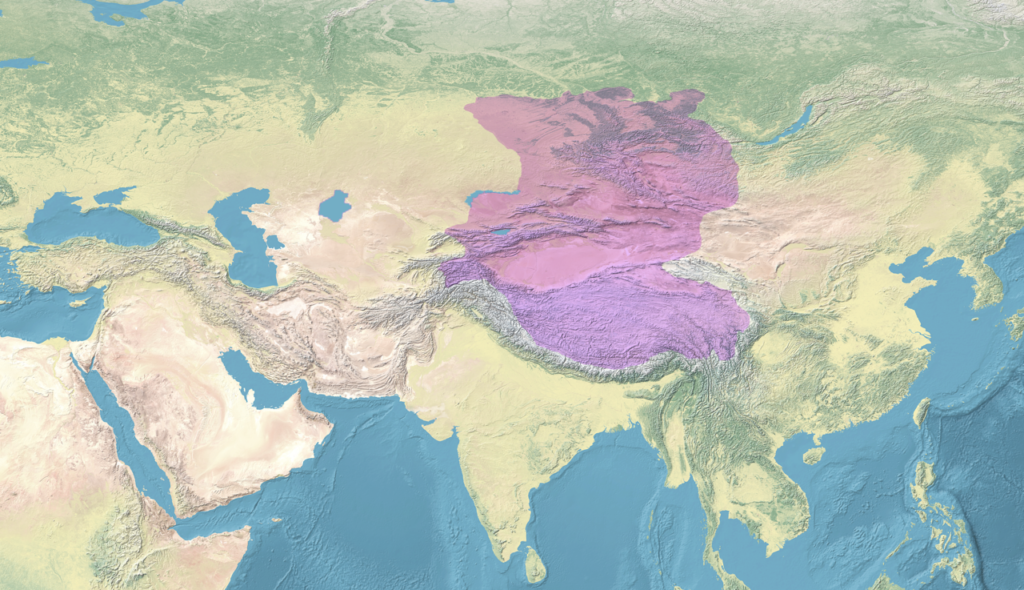
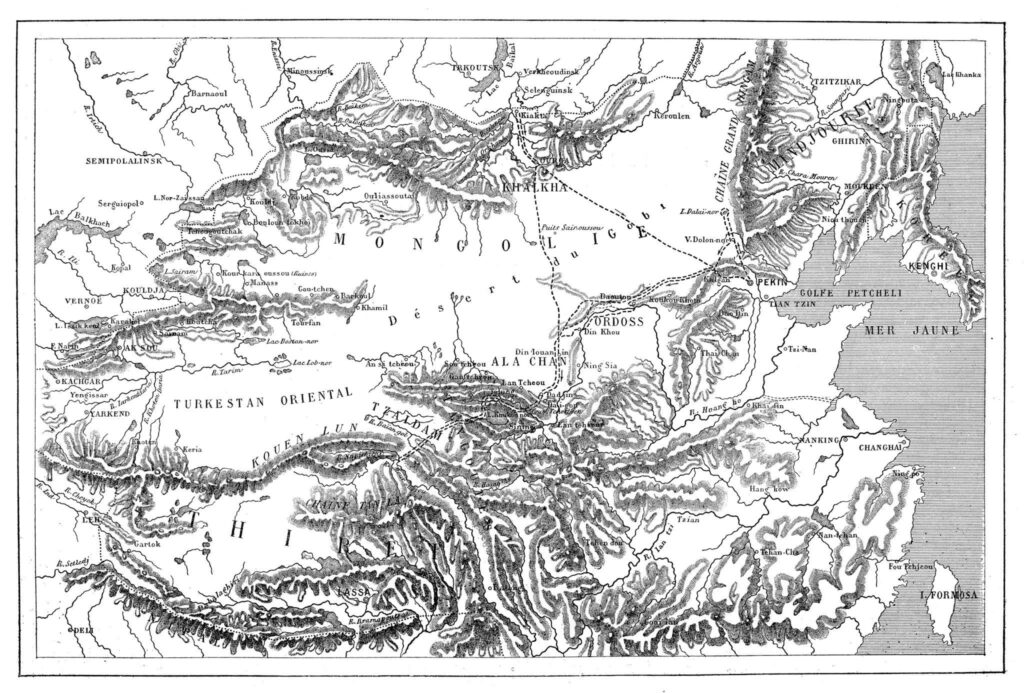
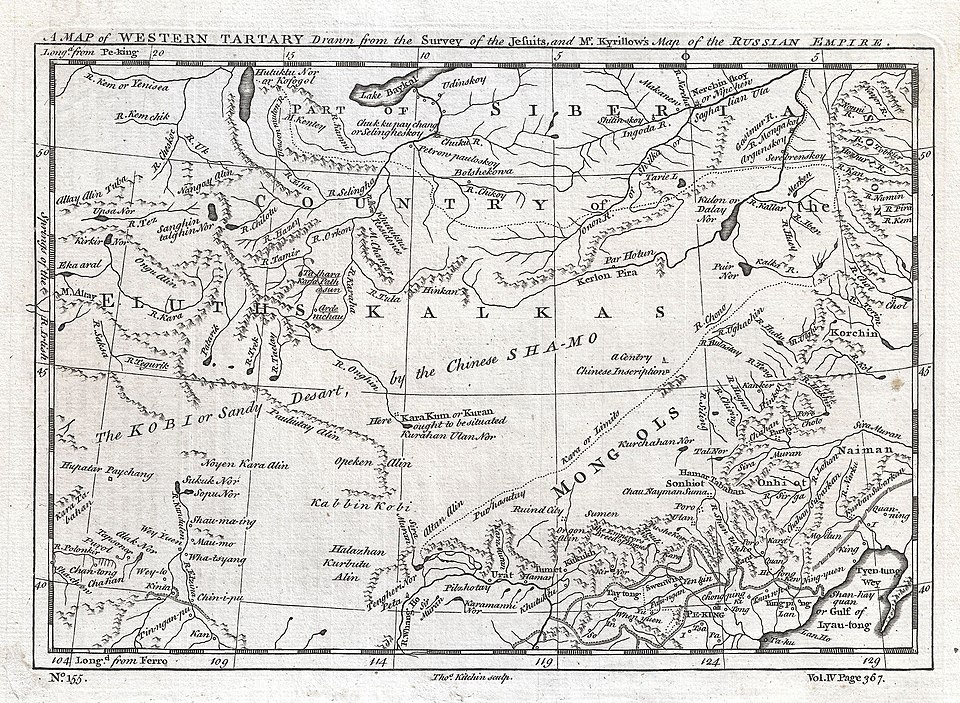
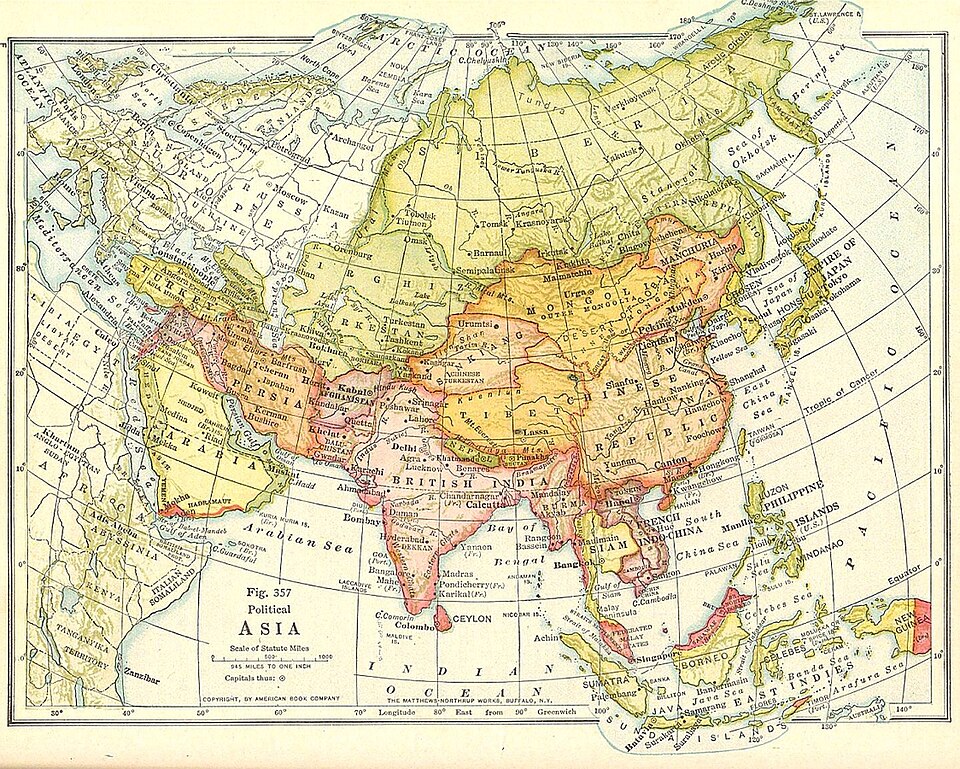
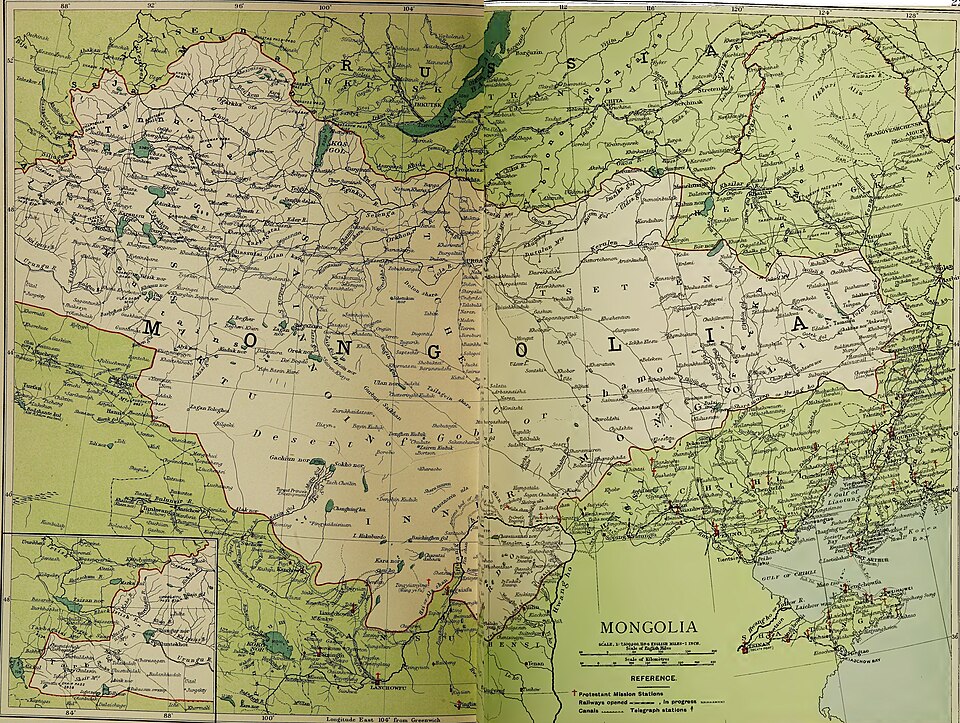
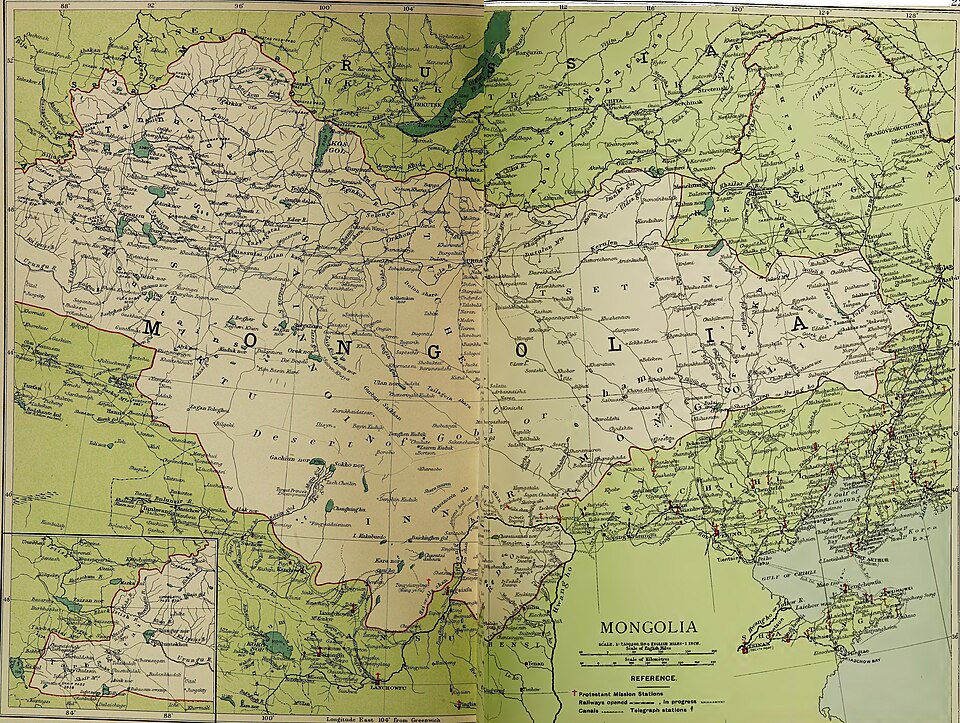
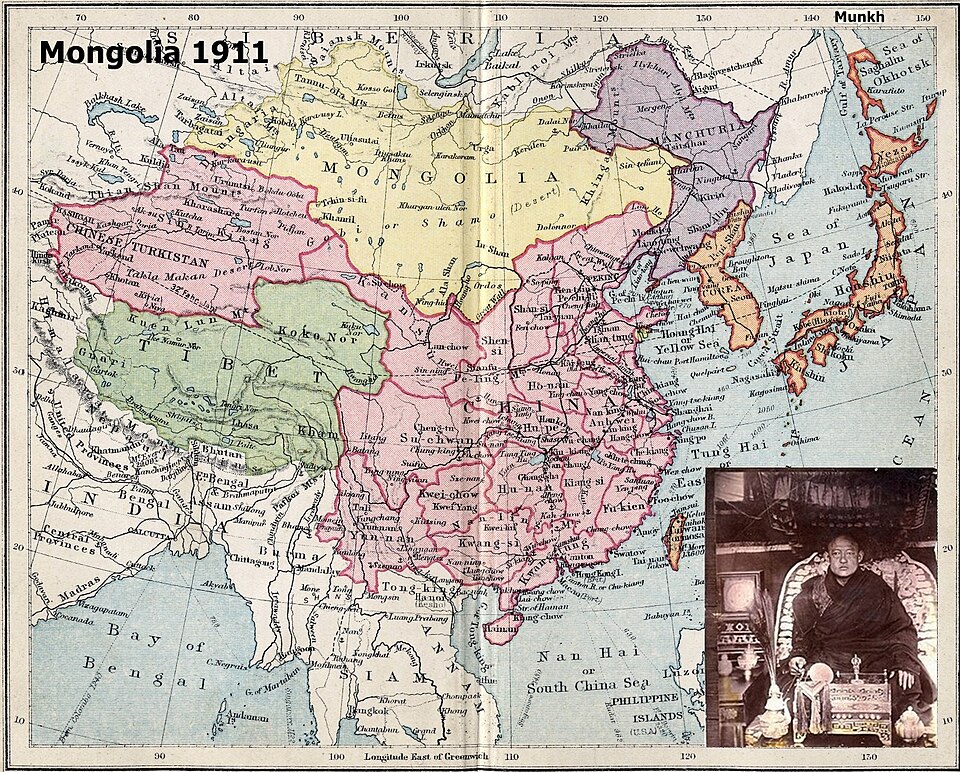
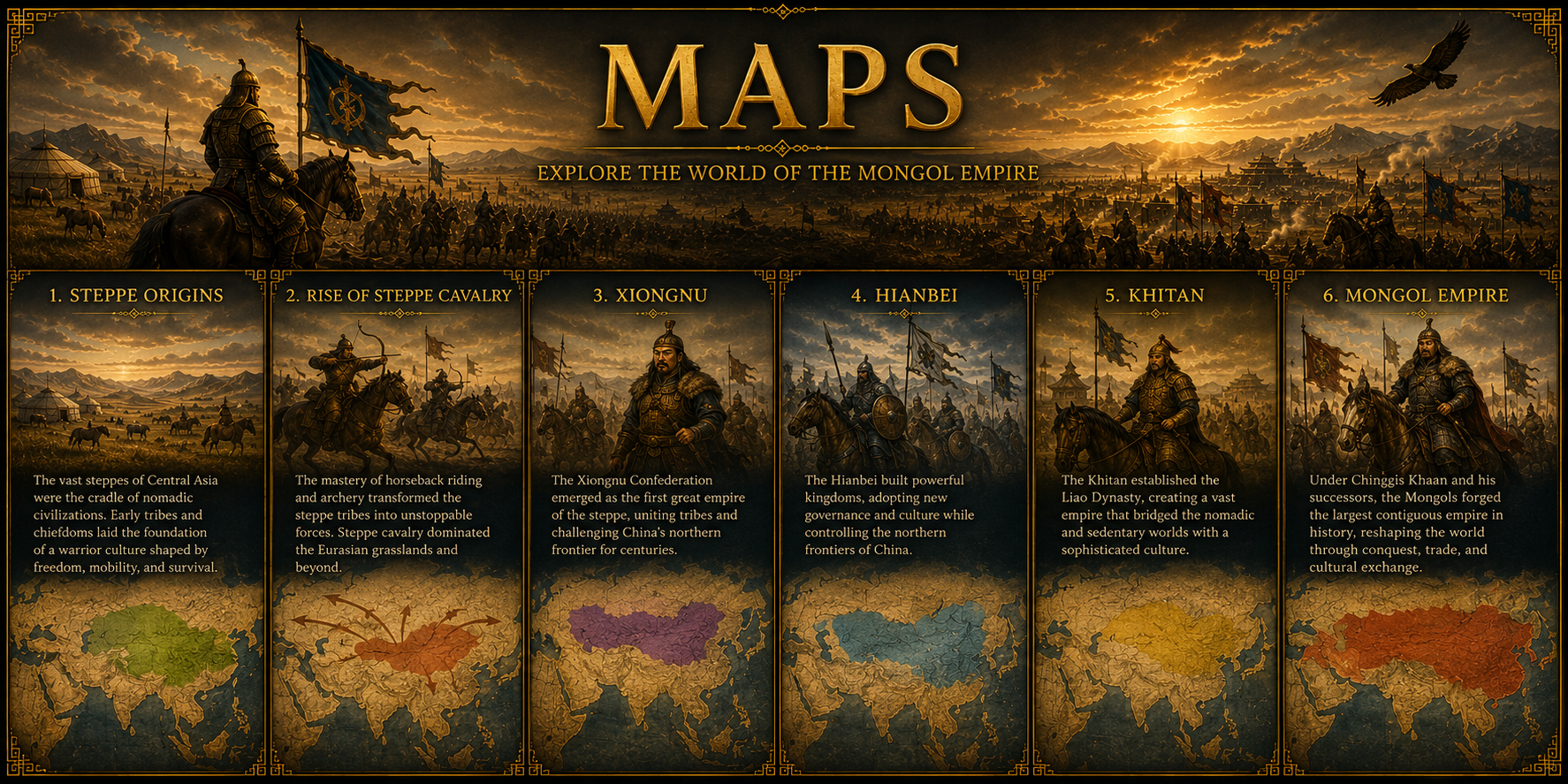
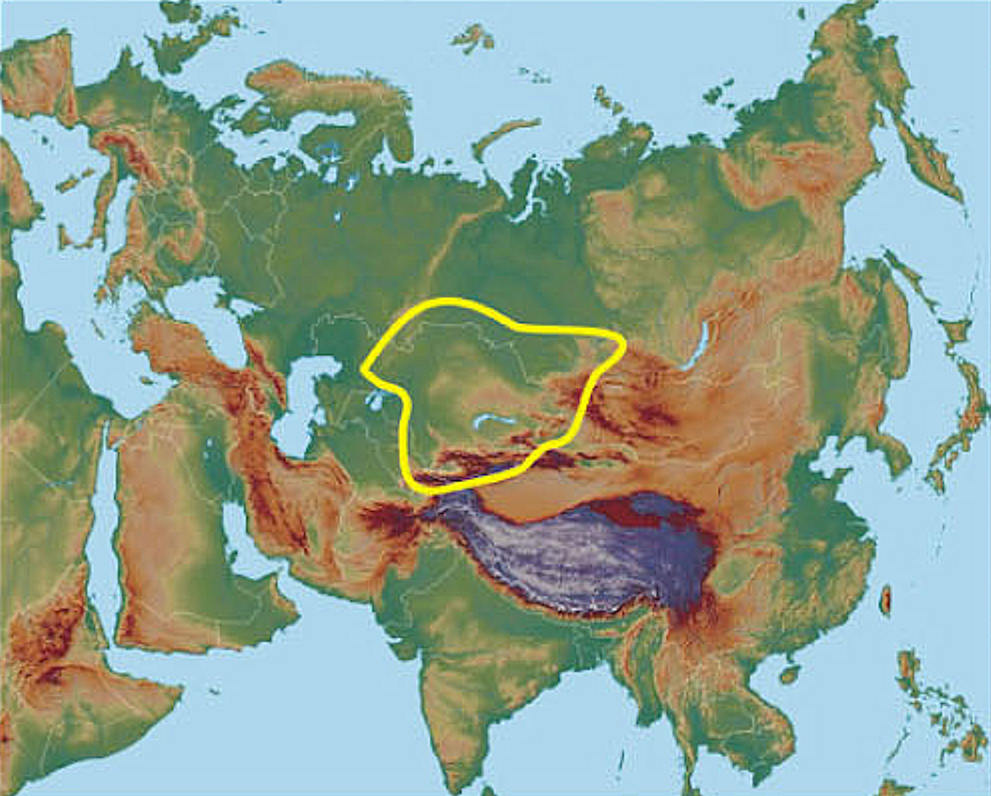
Explore the historical geography of the Euroasian steppe through maps of nomadic empires, migration routes, frontier zones, and the changing political landscape of Inner Asia.
Historical Maps of the Eurasian Steppe
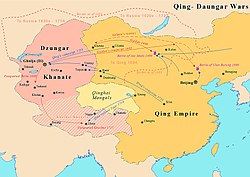
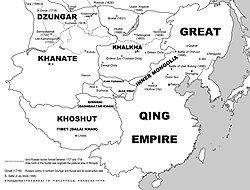
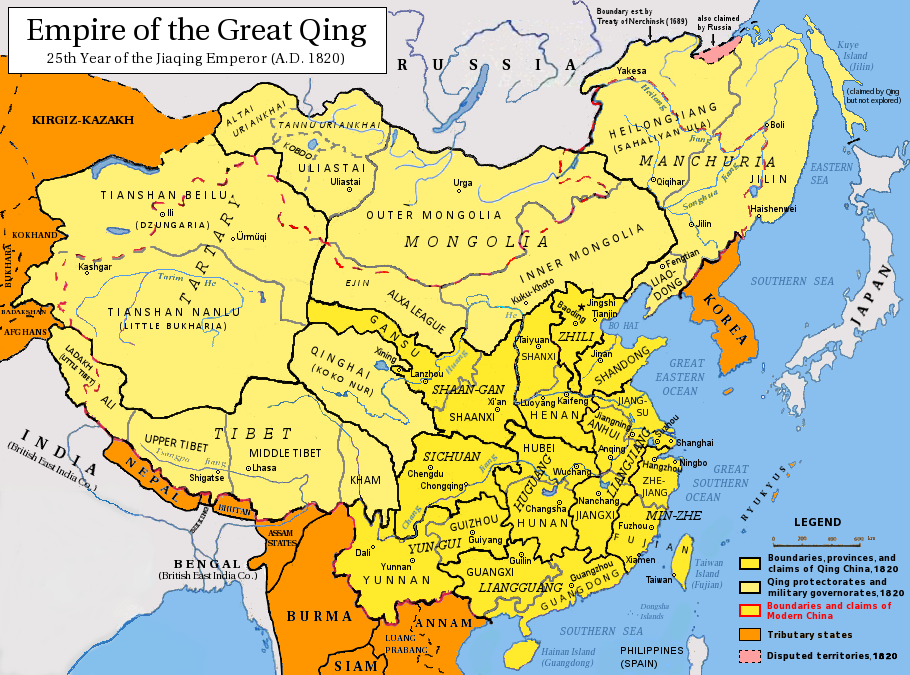
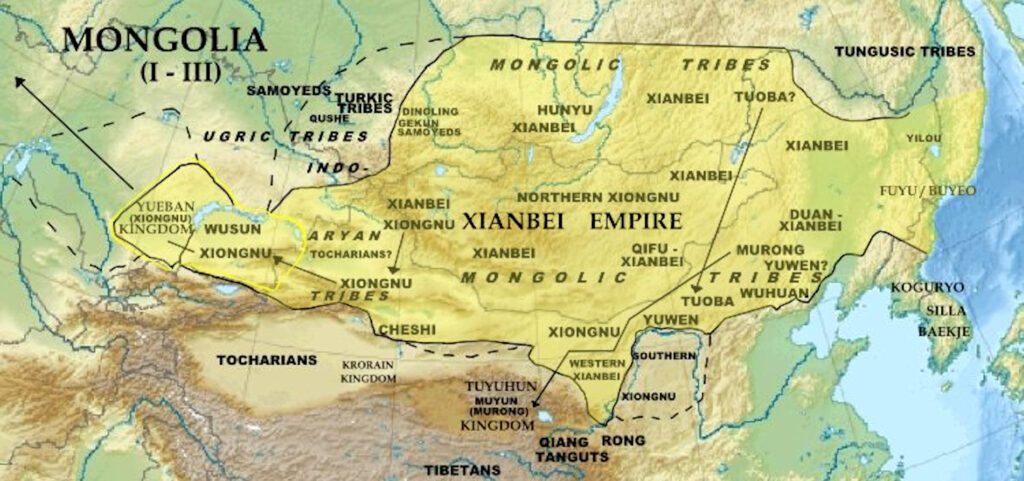
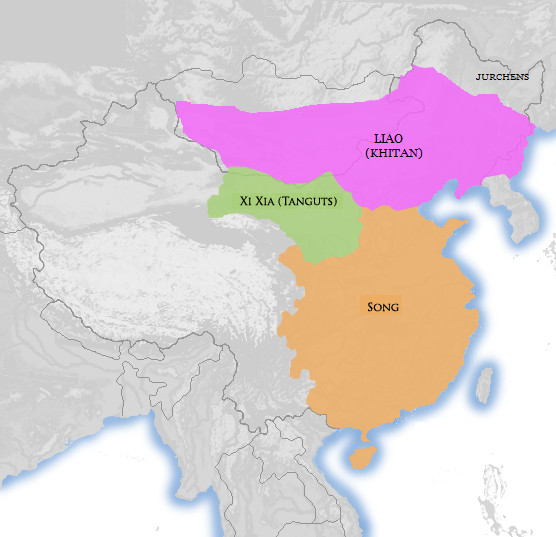
The following maps illustrate the historical geography of steppe civilizations, from early nomadic confederations to the vast empires that shaped Eurasia.
Historical geography of the steppe
From the Xiongnu to the Mongol empire beyond, geography shaped the movement, power, and cultural exchange of the nomadic world. The maps collected here highlight key regions, routes, and imperial formations across Eurasia.
1279. A.D