
ATLAS
From Stone to Steppe
Tracing the Rice of Nomadic Empires Across Eurasia
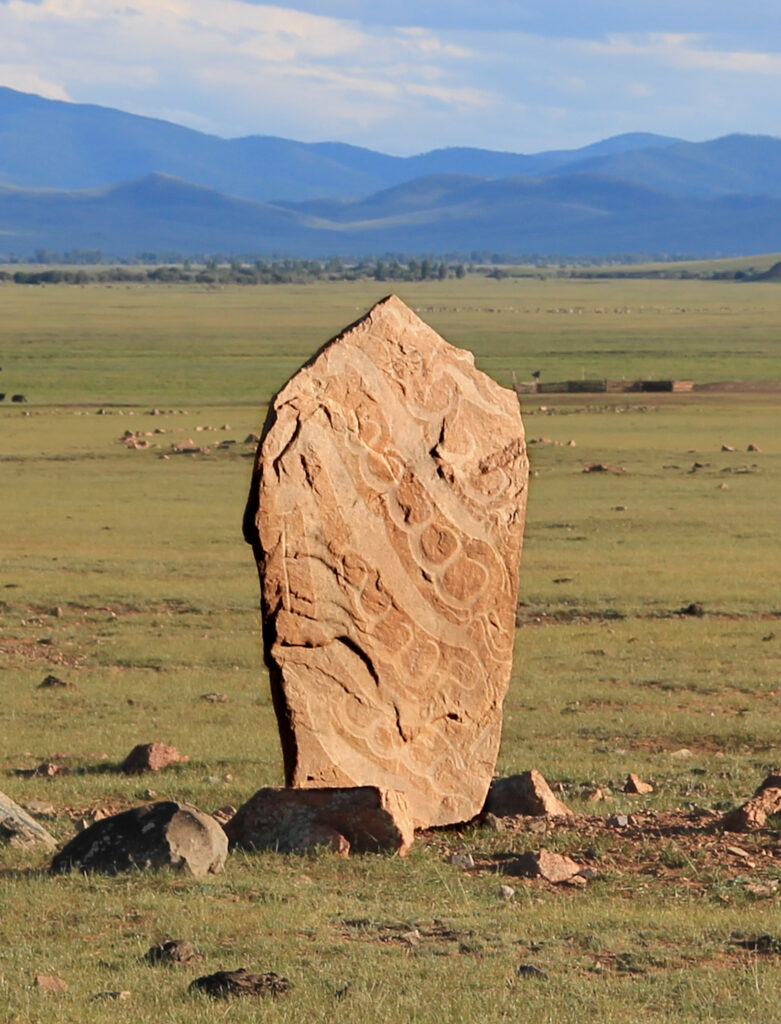
DALAN KHAR (YINSHAN) MOUNTAINS
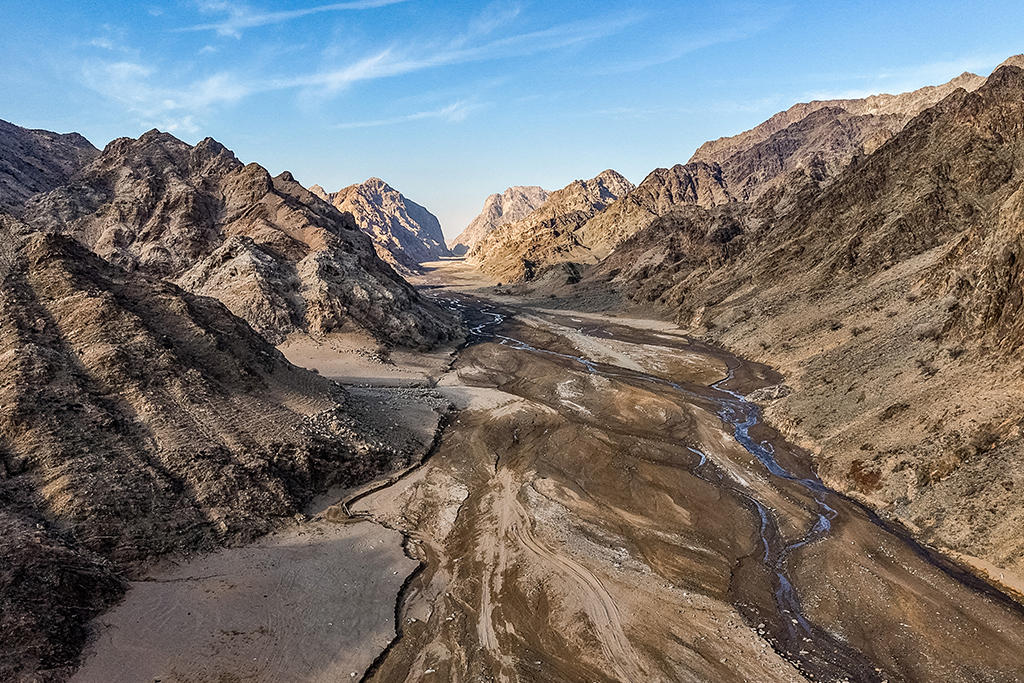
Known in Mongolian tradition as “Dalan Khar” — the long, dark mountains — the Yinshan range forms a continuous ridge along the northern frontier of the Yellow River bend.
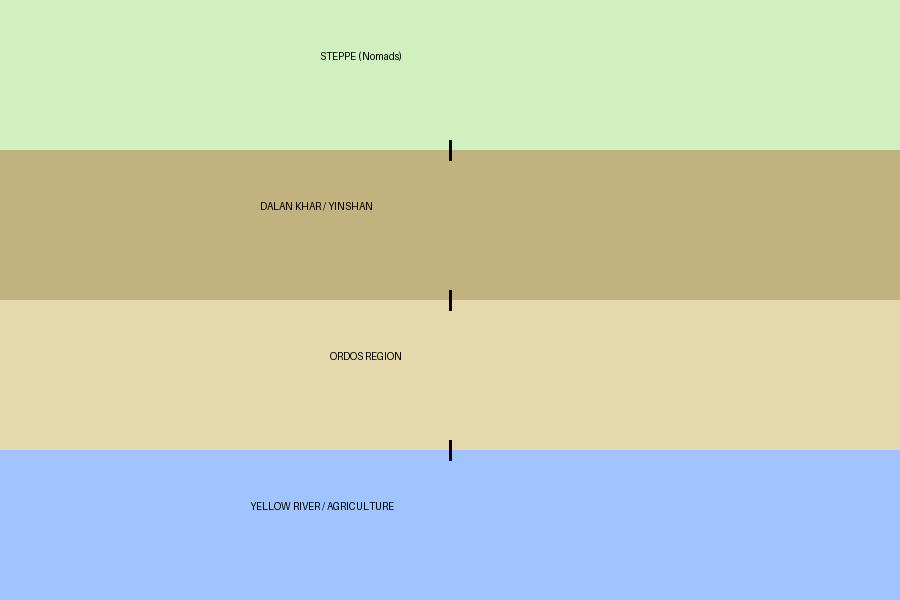
Rather than a fixed barrier, this mountain system acted as a natural spine between the steppe and the agrarian world. For nomadic societies, it offered mobility, shelter, and strategic advantage; for settled states, it marked the threshold of the unknown north.
Controlled Mobility, Frontier Ecology, and Proto-Steppe Confederation
Reframing Jiuli in Early Northern China
Abstract
This paper proposes a cautious reinterpretation of Jiuli (九黎) not as a securely identifiable historical polity, but as a mythologized memory of early non-sedentary, multi-tribal populations on the northern or northwestern margins of early Chinese civilization. Rather than treating early frontier groups as radically mobile peoples moving without spatial constraint, the paper argues that steppe mobility was structured by ecology, neighboring territorial claims, and persistent frontier corridors. In North China, the Ordos region, the Yellow River bend, and the Yinshan range formed a strategic interface that shaped movement and contact between pastoral and agrarian societies. This framework does not prove that Jiuli were “the first nomadic confederation,” but it does support treating Jiuli as a plausible proto-steppe confederational memory within a longer history of northern frontier formations later represented in sources as Guifang, Xianyun, Di, Rong, and eventually the Xiongnu. Early Chinese sources preserve these groups through politically charged naming practices, so any ethnic or linguistic reconstruction must remain provisional.
1. Introduction
The figure of Chiyou and the group called Jiuli occupy an ambiguous space between myth, political memory, and ethnographic imagination in early Chinese tradition. Later accounts associate Chiyou with warfare and present Jiuli as a collective opponent of the Yellow Emperor, but these narratives are not straightforward historical records. They are retrospective constructions embedded in state-centered traditions that defined the civilized center partly by contrast with dangerous or alien peripheries. For that reason, Jiuli should not be read literally as a fully documented ethnic group. At the same time, dismissing them as pure fiction risks ignoring the way early texts preserve memories of frontier populations in mythic form.
This paper therefore asks a narrower question: can Jiuli be interpreted as a memory of an early confederated frontier population with steppe-like features, without overstating the evidence? The answer proposed here is yes, but only if the claim is framed as a hypothesis grounded in frontier ecology, comparative nomadic organization, and the politics of ethnographic labeling in early Chinese texts.
2. The Northern Frontier Was a System, Not an Empty Void
Scholarship on early China’s northern frontier has long emphasized that it was not a simple line dividing “China” from “the steppe,” but a broad zone in which ecology, exchange, warfare, and political formation interacted. Nicola Di Cosmo, in particular, argues against rigid binaries and treats the northern frontier as a historically dynamic region where distinct social formations emerged and interacted over time. That framing is important here because it allows Jiuli and later northern groups to be interpreted not as isolated anomalies, but as parts of a frontier system.
The Ordos and neighboring zones illustrate this especially well. Recent archaeological synthesis describes the Ordos as a frontier macro-region whose development cannot be reduced to a hard boundary alone. The Yinshan mountains to the north create a significant topographic barrier relative to the Gobi, while the Yellow River bend and adjacent ecological zones shaped settlement, circulation, and strategic contestation. In other words, geography did not merely separate populations; it organized contact through corridors, bottlenecks, and transitional landscapes.
3. Mobility on the Steppe Was Structured, Not Unlimited
One of the paper’s central claims is that nomadic movement should not be imagined as limitless wandering. Anthropological and archaeological work on pastoral mobility instead emphasizes patterned, seasonal, and place-based movement. Long-term occupation and repeated circulation through familiar zones are well documented in Inner Asian pastoral contexts, including Mongolia. Mobility, in this view, is not the absence of territorial order but a different form of spatial order.
This matters for early northern China because the natural setting itself constrained movement. Rivers, mountains, arid belts, and pasture availability shaped where herding populations could move and when. The Yellow River could function as both resource and obstacle; the Yinshan range complicated rapid mounted movement except through usable corridors; and the Ordos functioned as an ecological hinge rather than an open plain available to anyone at any time. The implication is that frontier mobility was controlled by landscape.
A second constraint was social rather than ecological. Steppe and semi-steppe landscapes were not ownerless space. Access to pasture, routes, and seasonal stations was embedded in relations with neighboring groups. That does not mean every frontier society had fully fixed borders in the modern sense, but it does mean movement was negotiated, contested, and often territorially meaningful. This is one reason “confederation” is a useful concept: mobile populations often acted collectively within bounded strategic worlds.
4. Jiuli as a Proto-Steppe Confederational Memory
The strongest defensible version of the Jiuli argument is not that Jiuli were demonstrably the first nomadic empire, nor that they can be cleanly equated with any later steppe people. Rather, Jiuli can be read as a literary memory of a multi-tribal non-central population whose mode of organization was unlike that of early agrarian states. The term itself points to collectivity, and later traditions consistently place Jiuli and Chiyou outside the victorious line that becomes normative Huaxia political memory.
Several attributed features make the proto-steppe reading plausible, though not provable: multi-tribal organization, martial emphasis, ritualized power, and location in conflict with early agrarian centers. Mythic motifs such as fog, disorientation, and supernatural warcraft should not be mined as literal ethnography, but they may encode how frontier adversaries were perceived by sedentary narrators: mobile, dangerous, difficult to control, and associated with unfamiliar ritual power. That profile fits a broad comparative pattern found in state representations of mobile outsiders.
This is where caution is essential. The evidence does not allow a direct historical chain from Jiuli to Guifang to Xianyun to Xiongnu in the sense of a single continuous ethnicity. What it does allow is a long-durée model in which early Chinese sources repeatedly encounter and rename northern and northwestern frontier populations that share certain structural features: non-central political organization, martial pressure on agrarian states, and residence in ecologically distinct zones.
5. Naming the Enemy: Guifang and the Politics of Ethnographic Labels
The case of Guifang is instructive. Oracle-bone and related scholarship shows that the late Shang world recorded many surrounding polities or fang groups, some of which were adversarial. Modern historians do not treat these labels as transparent ethnic self-designations. They are names preserved in the documentary language of a court that classified, ranked, feared, and fought neighboring peoples.
This matters for your larger theory. If frontier names in early Chinese texts were exonyms shaped by political hostility, then descriptive distortion is not only possible but likely. That does not prove specific readings such as “Melkhi = frog people,” and it would be too speculative to present that as established fact. But it does justify the broader methodological point: hostile textual traditions may preserve real frontier populations under names that reflect the center’s perception rather than the groups’ own self-understanding.
On that basis, Guifang is best translated cautiously as a Shang-period designation for northern groups or polities, not as a fully decoded ethnic label. It is useful evidence for sustained northern frontier interaction, but not secure evidence for a single stable people extending unchanged across centuries.
6. Language Boundary and the Limits of Reconstruction
A linguistic boundary likely reinforced the frontier, but this part of the argument must also be phrased carefully. It is safe to say that later historically attested steppe polities north of China included populations speaking non-Sinitic languages from several different families, and that such linguistic difference could reinforce cultural and political separation from the agrarian states of the Central Plain. It is not safe to assign a known language family directly to Jiuli.
Even for the Xiongnu, language affiliation remains disputed. Encyclopaedia Iranica notes the scale and importance of the Xiongnu empire but does not resolve the language problem, which remains debated among Turkic, Mongolic, Yeniseian, Iranian, and mixed or multiethnic models. That uncertainty is methodologically useful: it warns against back-projecting later linguistic identities too neatly into the mythic and pre-imperial past.
Accordingly, the paper should argue only that a durable language boundary between Sinitic-speaking agrarian centers and various non-Sinitic frontier groups was historically significant, not that Jiuli can be linguistically identified.
7. Bronze Age Background Without Overclaiming
The deeper prehistoric background should also be handled with restraint. Archaeological cultures such as Afanasievo and Andronovo demonstrate that long before the Xiongnu, the broader Eurasian steppe supported mobile and semi-mobile societies with pastoral, metallurgical, and regional interaction systems. But those archaeological horizons cannot be collapsed into a direct genealogy for Jiuli. They are best used to show that the wider steppe world had deep chronological depth and that mobile societies in Inner Asia long predate historically documented nomadic empires.
This yields a stronger and more defensible formulation: Jiuli need not be treated as descendants of any one archaeological culture. Rather, they can be placed conceptually within a long northern frontier context in which mobile and multi-tribal societies were already possible and, in some areas, well established.
8. Conclusion
The paper’s main contribution is interpretive rather than positivist. It does not claim to solve the historical identity of Jiuli. Instead, it proposes that Jiuli are best read as a mythologized memory of an early multi-tribal frontier formation whose structural features are compatible with a proto-steppe interpretation. This interpretation becomes more plausible when three points are combined: first, the northern frontier was a dynamic ecological-political system rather than a hard civilizational wall; second, pastoral mobility was structured and territorial, not limitless; and third, early Chinese labels for frontier adversaries were politically charged exonyms that require critical reading.
The safest submission-level thesis, then, is this: Jiuli may be interpreted as a confederational memory of early non-sedentary frontier populations within the long history of northern steppe–sown interaction, but not as a securely identified, linguistically recoverable, or linearly ancestral nomadic state.
Suggested References
Di Cosmo, Nicola. “The Northern Frontier in Pre-Imperial China.” In The Cambridge History of Ancient China, Cambridge University Press.
Di Cosmo, Nicola. “The Rise of Nomadic Power in East Asian History.” In The Age of Empires / The Rise of Nomadic Power in East Asian History; Cambridge excerpt indexed as “Steppe Highway.”
Schwartz, Adam Craig. The Oracle Bone Inscriptions from Huayuanzhuang East. Open access edition via OAPEN/Archive.
The Archaeology of Han China, chapter on “Imperial Geography and Border Formations in the Ordos and Lingnan Regions.” Cambridge University Press, 2024.
Houle, Jean-Luc. Long-Term Occupation and Seasonal Mobility in Mongolia. Brill.
“Nomadic Pastoralism.” Annual Review of Anthropology.
“Xiongnu.” Encyclopaedia Iranica.
“Altaic languages.” Encyclopaedia Britannica. Use cautiously only for broad structural comparison among Turkic, Mongolic, and Tungusic traditions, not as proof of a single accepted macro-family.
“Afanasyevskaya culture.” Encyclopaedia Britannica.
“Andronovo culture.” Encyclopaedia Britannica.